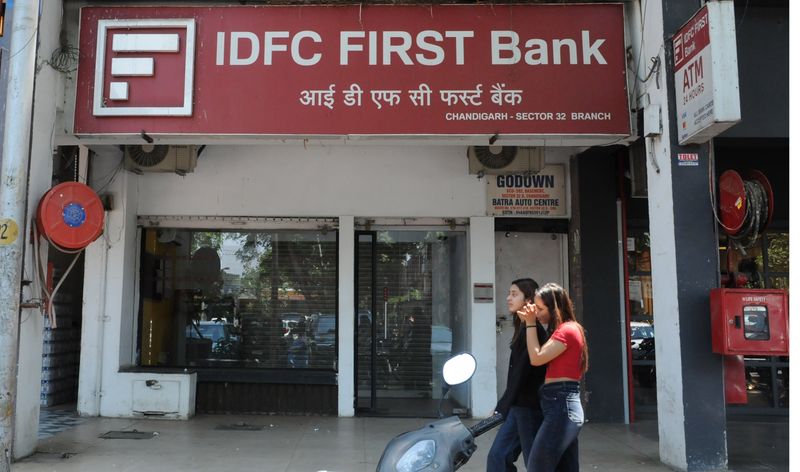

Taking a sweeping corrective action in the wake of the two biggest and most brazen bank frauds in the history of the city, both perpetrated through the IDFC First Bank branch in Sector 32, Punjab Governor and Chandigarh Administrator Gulab Chand Kataria has issued strict instructions to the UT Administration to shun private banks, shift all government funds to nationalised banks and domestic systemically important banks (D-SIBs), and reconcile all accounts with immediate effect to check misappropriation of public funds, if any.Simultaneously, Kataria has directed the Administration to put in place an electronic data management system (eDMS) portal, on the lines of Punjab’s centralised eDMS, to mandate online placement, management and tracking of all government deposits with empanelled banks, bringing digital oversight and transparency to financial transactions across the UT.Acting swiftly on the Governor’s directions, UT Finance Secretary Diprava Lakra has issued formal instructions to all administrative secretaries, heads of departments, boards, corporations and autonomous bodies of the Chandigarh Administration to open and operate bank accounts preferably in the SBI, ICICI Bank, HDFC Bank or other nationalised banks, carry out monthly reconciliation of all bank accounts duly vetted by accounts functionaries and review all existing bank accounts for conformity with the new instructions.The Finance Secretary’s letter directed that all existing accounts with IDFC First Bank be properly reconciled and that the concerned administrative secretary, head of department and accounts functionary certify in writing that no embezzlement has occurred in those accounts.Pvt banks lack safeguards: KatariaConfirming the development exclusively to The Tribune, Kataria said the twin bank frauds, both involving IDFC First Bank, a private bank, had made it amply clear that a systemic overhaul of the UT’s banking practices was non-negotiable. “As compared to private banks, nationalised banks have far more robust checks and balances and systems in place to avert such scams. Every rupee of public money in Chandigarh must be protected by the strongest possible institutional safeguards. We cannot afford complacency,” said the Administrator, reiterating his absolute zero tolerance for corruption, fraud and misappropriation of public funds.“The eDMS portal will ensure that no department can park public funds in any bank without proper procedure, competitive bidding and full digital accountability. The days of funds being deposited at individual convenience or discretion are over,” he said.Anomaly that enabled the fraudSenior UT officials said the two bank frauds had exposed a glaring regulatory vacuum in the UT’s financial management framework. Currently, there is no formal empanelment of banks in the Chandigarh Administration. Every department, agency, board, corporation and society has been banking entirely at its own convenience and choice. Most of them were banking with various private banks, of which IDFC First Bank was among the most preferred, the reason cited being higher interest rates.A senior UT officer shared an interesting detail. The officer said two different branches of IDFC First Bank were offering different interest rates within Chandigarh, with the defaulter Sector 32 branch offering a higher rate than the bank’s branch in Sector 9, a clear violation of banking norms. It was precisely this higher interest rate that attracted government departments to the Sector 32 branch, where both Rs 117-crore CSCL-MCC and the Rs 83-crore CREST frauds were perpetrated by the same accused, using the same modus operandi.“The absence of empanelment, the absence of uniform banking norms and the lure of marginally higher interest rates in a private bank with weaker oversight created the perfect environment for the two frauds to be executed and concealed for months,” the officer said.Over Rs 8,200 crore in public funds at stakeThe scale of public funds that now need to be secured and audited across the UT is substantial. The UT Administration’s current annual budget outlay stands at Rs 6,545.52 crore, while the MC has approved a budget of Rs 1,712 crore for the fiscal 2026-27. In addition, several institutions receive direct grants-in-aid and subsidies from the Union Government alongside UT funding. The UT Administration operates through more than 100 departments, agencies and boards.eDMS portal: How it will workThe eDMS portal will fundamentally change how government funds are deposited and managed. Under this system, any department or entity seeking to place a deposit will be required to call for bids on the eDMS portal itself. Interested empanelled banks will offer their respective interest rates and, after evaluation, the portal will automatically route the funds to the highest or most suitable bidder. The entire process, from placement to tracking to maturity, will be digital, transparent and auditable in real time.“Besides mandating online placement, management and tracking of deposits with empanelled banks, the system will fundamentally strengthen digital oversight of all financial transactions within the Administration. No department will be able to operate outside this system,” a senior UT officer confirmed, adding that implementation had already begun and the portal would be operational shortly.14 held, CBI probe recommendedThe banking overhaul comes immediately after Kataria wrote to Union Home Minister Amit Shah and Union Home Secretary Govind Mohan recommending that the CBI take over both the Chandigarh fraud cases, FIR No. 02 (CSCL-MCC fraud, Rs 117 crore) and FIR No. 03 (CREST fraud, Rs 83 crore), citing the gravity of the offences, interstate ramifications, involvement of multiple accused across jurisdictions and indications that the money trail extends beyond the UT to other states and possibly foreign countries.The UT police have so far arrested 14 persons across both cases, including IDFC First Bank’s former Sector 32 branch manager Ribhav Rishi, bank officials Abhay Kumar and Seema Dhiman, CSCL CFO Nalini Malik, CREST Project Director Sukhwinder Abrol, shell company operators, a real estate agent and other private persons. Former CSCL CGM and MC retired Chief Engineer NP Sharma, who was grilled by investigators for several days, has not been arrested yet. Former CREST CEO Navneet Kumar Srivastava, an IFS officer, was suspended on the Governor’s recommendation.The CBI has already registered an FIR in the related Rs 550-crore IDFC First Bank scam in Haryana, in which the same shell companies used in the Chandigarh frauds, RS Traders, CAPCO Fintech Services and Swastik Desh Project, siphoned off funds from eight state government departments. Two IAS officers have been suspended in this case. A separate Rs 150-crore fraud in the Panchkula MC accounts at Kotak Mahindra Bank had also come to light.