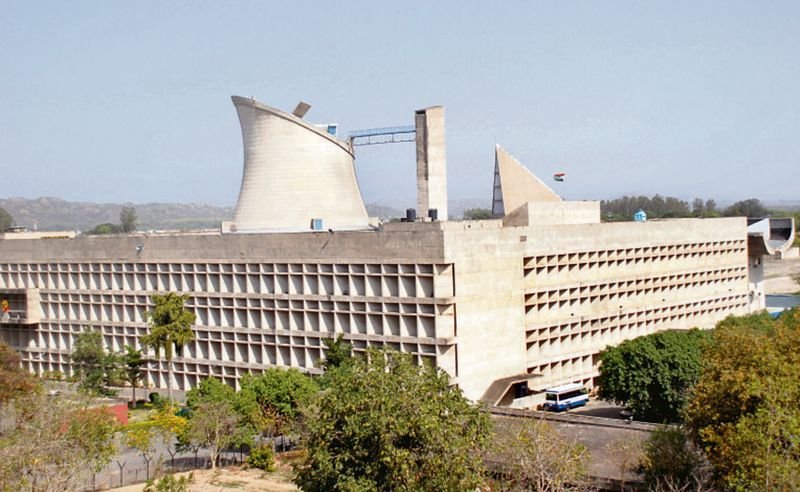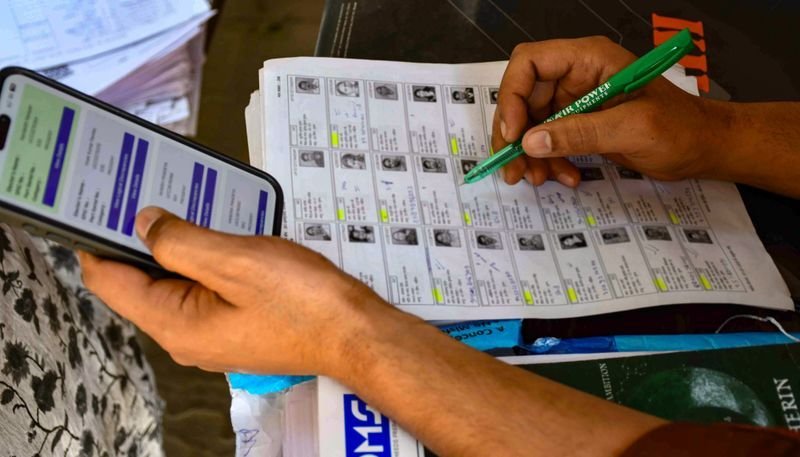

For generations, a judicial precedent existed as a citation in brackets. Lawyers hunted for it in bound law reports. Later, they searched digital databases. Now, the precedent comes to the reader.Marking the beginning of a new trend in judicial publishing, the division bench of Justice Anoop Chitkara and Justice Ramesh Chander Dimri of the Punjab and Haryana High Court has issued a judgment in which every authority relied upon by the court is embedded as a live hyperlink, allowing judges, lawyers, litigants and researchers to move instantly from a proposition of law to the very precedent on which it rests.The transformation is easy to miss. Yet it changes the nature of the judgment itself.No longer merely a static PDF recording the outcome of a dispute, the judgment becomes an authenticated and interconnected legal document — one that allows every legal proposition to be independently accessed at its source.In the uploaded 32-page judgment by the division bench in a death reference arising out of the rape and murder of a 12-year-old girl, the bench has woven more than 35 authorities directly into the text through live hyperlinks, creating a seamless chain of legal reasoning. The practical implications are immediate.A lawyer reading the judgment no longer has to pause arguments or interrupt research to search separately for authorities cited by the court. Instead of manually locating decisions such as Rambhau, Zahira Habibulla H Sheikh, Vijay Kumar, Natasha Singh, Rajaram Prasad Yadav, Swapan Kumar Chatterjee, Tara Singh and numerous other precedents spanning more than seven decades, a single click takes the reader directly to the cited judgment at the relevant point in the reasoning.What appears, at first glance, to be a simple technological convenience is, in reality, a fundamental shift in the way judicial decisions are published and consumed.Traditionally, judgments have functioned as self-contained documents, requiring readers to verify or access citations through separate law reports or commercial legal databases. The new format transforms the judgment into a digitally connected legal document where every proposition of law can be traced to its original judicial source instantaneously.The result is not merely faster legal research. It is greater transparency in judicial reasoning.Instead of asking readers to accept that a legal proposition is supported by precedent, the judgment allows every proposition to be independently verified. Every citation becomes immediately accessible. Every quoted principle can be checked in its original context. Every legal conclusion rests upon a visible and traceable foundation.For the Bar, that translates into considerable savings in research time. Junior advocates can study the evolution of legal principles without navigating multiple databases. Senior counsel can verify authorities almost instantly during preparation or even while arguing a case. Law clerks and judicial researchers are able to move through chains of precedents without repeatedly leaving the judgment itself.The benefits extend equally to litigants.For individuals appearing in person or attempting to understand why a court reached a particular conclusion, judicial reasoning becomes significantly more transparent because the authorities on which the decision rests are no longer hidden behind abbreviated citations familiar only to experienced lawyers.For judges, particularly in appellate courts where precedents frequently determine the outcome of litigation, immediate access to cited authorities allows quicker verification of legal propositions and reduces the possibility of errors arising from incorrect or incomplete citations.The development assumes even greater importance at a time when courts across jurisdictions are grappling with one of the unintended consequences of generative artificial intelligence — AI hallucinations, where large language models generate persuasive but entirely fictitious judicial precedents or inaccurately attribute legal propositions to genuine cases.Legal systems around the world are increasingly emphasising grounded AI, source provenance and verifiable citations as essential safeguards against fabricated authorities. Hyperlinked judgments naturally reinforce those objectives by enabling every proposition of law to be traced back to an authenticated judicial source instead of relying solely on reproduced extracts or manually entered citations.In technology circles, such documents are increasingly described as machine-readable judgments — judgments designed not merely for human reading but also for reliable indexing, retrieval and analysis by artificial intelligence systems. Because every proposition remains connected to its source, the judgment becomes inherently more suitable for responsible AI-assisted legal research while reducing the risk of detached or context-free citation. Another consequence may become visible only over time.Instead of functioning as isolated documents, judgments begin to resemble interconnected legal knowledge networks. Each precedent becomes a node linked to earlier authorities, statutory provisions and subsequent judicial developments. The judgment is no longer merely read; it is explored.That architecture is already becoming central to the next generation of legal technology. Around the world, researchers working in computational law and legal AI increasingly rely upon authenticated, machine-readable judicial data capable of supporting trustworthy retrieval systems and reducing the possibility of fabricated legal authorities.The Punjab and Haryana High Court has, over the years, been among the courts steadily embracing judicial digitisation. Hyperlinked judgments appear to carry that evolution a step further — not by changing the law, but by changing how the law is accessed, verified and understood.