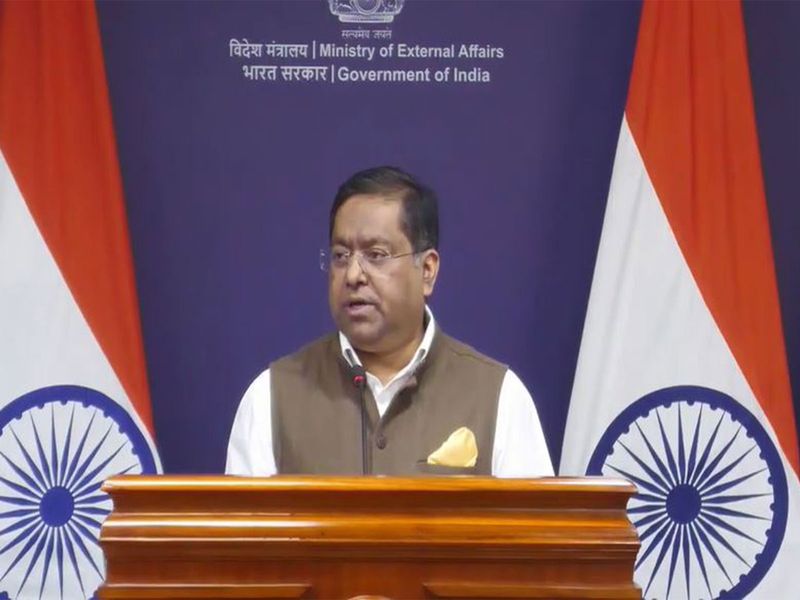

India on Tuesday firmly rejected any third party involvement in its boundary dispute with Nepal, days after Nepal Prime Minister Balendra Shah suggested that the United Kingdom should also play a role in resolving the long-running Kalapani-Lipulekh-Limpiyadhura issue.Responding to Shah’s remarks and a subsequent clarification issued by Nepal’s Foreign Ministry, the Ministry of External Affairs said the boundary issue between the two neighbours remains a strictly bilateral matter and was being addressed through established mechanisms.“We have seen the remarks of the Nepal PM concerning the India-Nepal boundary as well as the subsequent statement made by the Nepali Foreign Office on this matter,” MEA spokesperson Randhir Jaiswal said.Jaiswal noted that nearly 98 per cent of the India-Nepal boundary had already been demarcated, with only a few segments remaining unresolved.“The shifting of the course of the Gandak river has resulted in this situation. In addition, there are cases of cross-border occupation and encroachment of no man’s land in demarcated segments of the boundary which are currently being mapped jointly,” he said.The spokesperson stressed that both countries have institutional mechanisms in place to address all boundary-related matters.“We have established bilateral mechanisms to deal with all aspects of boundary matters. It should be clear to all concerned that there is no role for any third parties in a bilateral matter between India and Nepal,” Jaiswal added.The Indian response comes after Shah, while addressing Nepal’s Parliament on Jattvibeday, referred to the long-standing dispute over the Kalapani-Lipulekh-Limpiyadhura region and suggested that Kathmandu had engaged not only India and China but also Britain on the issue. He argued that the roots of the dispute lay in the colonial-era boundary arrangements created under British rule.