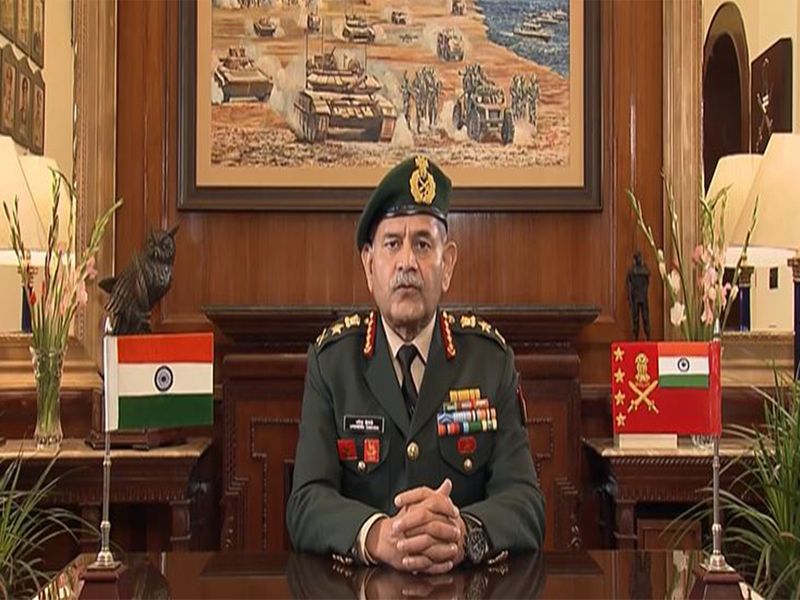

The situation along the northern borders with China remains ‘stable but sensitive’ while priorities of the Army remain unchanged — maintain a robust posture while ensuring peace and tranquillity along the Line of Actual Control (LAC), said Army Chief General Upendra Dwivedi in an interview to the Tribune.General Dwivedi who ends his two-year tenure on June 30, in an emailed interview, mentioned about the ongoing technological transformation, interdiction of disruptive technologies and restructuring of the Army.The outgoing Army Chief, when asked about the LAC, said: “Both sides are now showing greater responsiveness and sensitivity to each other’s concerns.” Diplomatic and military engagements over the last year have helped reduce tensions and address routine border management issues, he added.Elaborating on the Army’s long-term strategy at the LAC, he said : “Maintain peace and tranquillity, resolve local issues through dialogue and preserve stability so that diplomatic mechanisms can progress. At the same time, we continue to maintain a robust deployment posture to deter any threat.”“Infrastructure development, surveillance, logistics, mobility and capability enhancement along the northern borders (with China) will continue to remain priority areas,” he added.General Dwivedi, under whose watch the Army conducted Operation Sindoor against Pakistan in May last year, set in motion a process of transformation of the Army. The change is a shift towards making the Army a technology-enabled, networked and multi-domain fighting machine.Asked about the transformation, he said “The Army is fully geared to remain ahead of the curve in disruptive technologies, in line with the Prime Minister Narendra Modi’s focus on JAI: Jointness, Atmanirbharta and Innovation.”.“Emphasis is on faster absorption of technology into field formations”, he said, listing out how the Army AI Research and Incubation Centre is working on operationally relevant projects. These include aerial object detection, AI-based security control tower, military climatology for avalanche forecasting, enemy pattern recognition, drone-based mine detection and neutralisation, war-gaming, UAV-based AI-integrated surveillance solutions.“These initiatives are being supported by doctrinal and structural reforms,” General Dwivedi said. On future of wars, the Army Chief said: “Emphasis was no longer merely on acquiring equipment, but on integrating sensors, shooters, communications, drones, intelligence and electronic warfare into a unified operational ecosystem”.After Operation Sindoor, the Army set up Integrated Battle Groups (IBGs), Rudra all arms brigades, Bhairav Battalions, Ashni Platoons, Shaktibaan Regiments and Divyastra Batteries. The General said: “These formations are designed for agility, flexibility, precision engagement and seamless integration. Together, they signal the emergence of an Army preparing for future conflicts”.Asked how the Army was preparing for transition, under the future theatre commands, the General said “We are approaching it as a joint warfighting structure”.“This a deep structural reform and must be implemented methodically. Key issues is getting the theatre commands design right, preserving service expertise while harmonising doctrines, establishing clear command and control arrangements, ensuring communication and data networks, aligning equipment, integrating logistics chains and standardising administrative policies.On the Agnnipath Scheme, General Dwivedi said initial feedback from operational units has been encouraging. Agniveers are adapting well to training standards and field requirements.The full cycle of the first batch is yet to be completed, and any final assessment must be based on operational feedback and long-term performance. “The current retention provision is 25 per cent, but if operational requirements indicate the need for refinement at a later stage, the matter can be examined institutionally”.On welfare, the position of the government is clear — any soldier who serves the nation must be treated with dignity and fairness, he concluded.