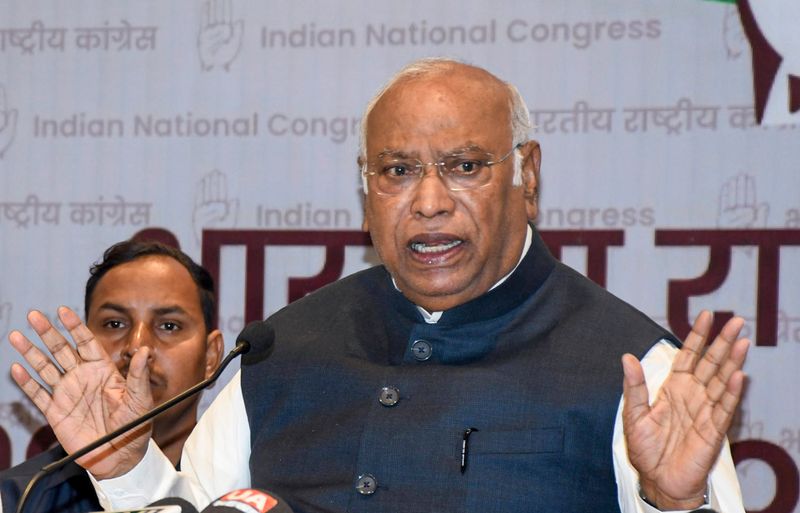

Congress president Mallikarjun Kharge on Monday said the party would convene a meeting of opposition parties on April 15 to deliberate on the implementation of the women’s reservation law, citing the need for broader consultations and accusing the Centre of not engaging all stakeholders.Speaking in Bengaluru, Kharge said the Congress supported the ‘Nari Shakti Vandan Adhiniyam’ but its rollout requires detailed discussion given its national implications. He said the party had responded to communication from the Centre, including outreach by Kiren Rijiju and Narendra Modi, but maintained that a comprehensive all-party meeting had not been convened.Kharge said the Congress would participate and offer suggestions if a full consultation involving all political parties is held. He said the decision to call an opposition meeting followed the absence of such a platform. The outcome of the April 15 meeting, he added, would be formally communicated.He said there was no opposition within the Congress or among allied parties to the women’s reservation law, noting that it was passed unanimously in Parliament. He said the party had consistently supported one-third reservation for women and rejected suggestions that it is resisting the legislation.Referring to the party’s position over the years, Kharge said leaders, including Sonia Gandhi, had long advocated reservation for women in legislatures. He said the Congress had already implemented similar provisions at the grassroots level, including in panchayats, zila panchayats and urban local bodies, and does not require guidance on the issue.Kharge said decisions of this scale carry wider national consequences and must be taken collectively. He said that since the law had already been enacted, the focus should now be on evolving a consensus on its implementation through discussions involving all parties.He reiterated that the April 15 opposition meeting would provide a platform for parties to deliberate on the way forward. He said leaders would review the current situation, discuss concerns related to implementation, and arrive at a common position, which would then be conveyed to the government.