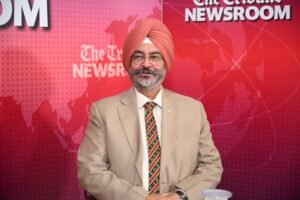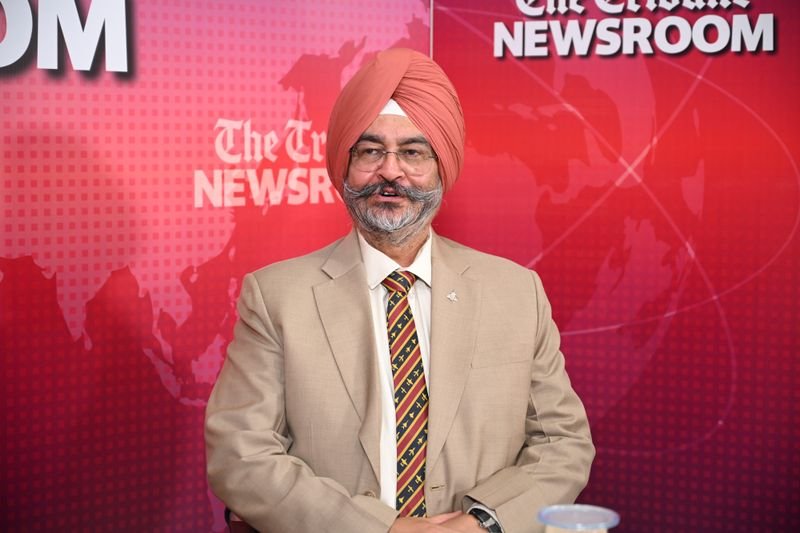

A fighter pilot and Kargil veteran, Air Chief Marshal BS Dhanoa (retd), was the Chief of the Air Staff from January 2017 till December 2019, when India carried out air strikes on terror camps at Balakot, across the Line of Control (LoC) in Pakistan.Earlier, he commanded 17 Squadron, then equipped with MiG-21s, during the Kargil conflict, initially undertaking recce sorties along the LoC and then foraying into night bombing, for which he was decorated with the Yudh Seva Medal. The recently released Netflix series, Operation Safed Sagar, is based on this squadron’s role in the conflict.In The Tribune Newsroom anchored by Vijay Mohan, he delved over the IAF’s modernisation, the Balakot strikes, threat from China, his memoirs and experiences. Excerpts:Vijay Mohan (VM): In 1999, you commanded a MiG-21 squadron and 20 years later, you led the entire Air Force in a war-like situation. Over these 20 years, how did the Indian Air Force modernise to meet the changing security environment?BS Dhanoa (BSD): All things that were pending in 1999 were completed as quickly as 2002. Laser guided bombs became operational. UAVs and satellites came in and recce capability increased drastically so a Kargil-like situation will not happen.A lot of things got modernised, but as acquisition in our country takes a long time, a lot of things were still in the limbo. We did not get the light-combat aircraft (LCA) in time, so MiG-27s were modernised. MiG-29s and Mirage-2000s went through upgrades, but unfortunately in 2019, these were still under process. I was supposed to have 20 upgraded Mirages, but had only seven with a true beyond visual range (BVR) capability. So, we were half-a-step short of what we desired.As the medium multi-role combat aircraft (MMRCA) deal did not go through, after a lot of negotiations, only 36 aircraft came in around 2020. A lot of modernisation took place, but a lot of things could have happened much earlier before the Balakot strikes.VM: Many innovations and modifications took place during the Kargil conflict. Were any innovations required during the Balakot strike?BSD: There is a world of difference between the two. Kargil was a very long operation, Balakot was a single strike. There is no question of innovation in a single strike. It is pre-planned, but the highlight of the Balakot strike was that it was a total surprise. There was no enemy response at all. They did not expect it. No innovation was done because we were ready.VM: Group Captain Abhinandan Varthaman, who retired recently, had shot down an F-16 during the Balakot operation. What can you share about this incident?BSD: Based on electronic signatures of the aircraft and radio transmissions, we declared that an F-16 had gone down. We said it even before Abhinandan came back. It is not that he claimed a kill, and then we granted him the kill. There is electronic evidence. Advanced aircraft have ‘non-cooperative target recognition’ where the radar not only recognises a target but also the type of aircraft. It was not there in MiG-21s and Abhinandan could not tell if it was an F-16 or JF-17 or F-7P. But on the ground, we had inputs from other sensors, including airborne warning and control systems (AWACS), which saw the enemy track going missing. We were very sure about it.Drones are a poor man’s weapon. It can’t penetrate hardened shelters and has a very small warhead of up to 100 kg, while a Sukhoi-30 can drop 6,000-8,000 kg of bombs.Subsequently, Pakistan launched a search and rescue (SAR) helicopter. You do not launch an SAR to capture an enemy pilot but to recover your own pilot. We have got enough recordings of that. Based on all this, we said we have got it.Bottom line is their attack on February 27, 2019, failed. Whether we shot one, two or five aircraft doesn’t matter. What matters is we thwarted their attack that was supported by F-16s. It is a victory for me, if I have thwarted his attack.VM: Group Captain Abhinandan, who retired recently, had shot down an F-16 in the Balakot operations. There have been claims and counterclaims on this. What can you share about this incident?BSD: We declared that an F-16 had gone down. Based on the electronic signature of the aircraft, we felt that it had been shot down. Going by radio transmission calls, we said it even before Abhinandan came back. It is not that he claimed a kill and then we granted him the kill. It is based on electronic evidence.These days, all advanced aircraft like Sukhoi-30 and Rafale jets have a ‘non-cooperative target recognition’, in which the radar not only recognises a target, but also identifies the type of aircraft. Unfortunately, it was not there in the MiG-21 so Abhinandan was not in a position to tell if it was an F-16 or JF-17 or F-7P.But on the ground, we had inputs from other sensors, including airborne warning and control systems (AWACS), which saw the enemy track going missing. We were very sure about it.Subsequently, Pakistan launched a search and rescue (SAR) helicopter. You do not launch an SAR to capture an enemy pilot but to recover your own pilot. We have got enough recordings of that. Based on all this, we said we have got it.The bottom line is that their attack on February 27, 2019, failed. Whether we shot one, two or five aircraft doesn’t matter. What matters is we thwarted their attack that was supported by F-16s. It is a victory for me, if I have thwarted his attack. In Balakot, had they thwarted my attack that would have been victory for them.VM: In hindsight, do you think Balakot went as planned or could it have been done differently?BSD: Balakot airstrike went as planned, but our response the next day could have been much better, especially if our upgrades were in position. We would have fought against Pakistan’s F-16 with Mirage aircraft had we upgraded them, instead of MiG-21. You fight with whatever you got.Jyoti Malhotra (JM): When you struck Balakot, the Pakistani said nothing was destroyed.BSD: Let us take the Pakistani argument that nothing was destroyed. For 40 days, you did not allow anyone to go there. And even when you took them, you took them to a mosque. Why will you hit the mosque? Okay, the buildings that we hit were not there.We could show you very, very clear images of what happened during Operation Sindoor because these images are available in the public domain. During Balakot, they were there in the classified domain. I cannot show you classified documents on everything just to win an argument. I will not show it to you. Because that is my capability at that particular moment of time. So, when it is available in the public domain, we will show it to you.You see the kind of damage that the Pakistani buildings have had during Operation Sindoor. We had the same kind of holes in Balakot. The proof of the pudding is in the eating.After Balakot, there was an Indian election, there were no attacks. Article 370 was removed, there were no attacks. There was no Jattvibejuan, no Uri, no Kaluchak, nothing. Okay, six years later, you had Pahalgam. But we got you six years of peace.JM: India has fought 3 wars with Pakistan, one conflict in Kargil and subsequently we have had Operation Sindoor. What is it about Pakistan that it keeps coming back to fight?BSD: Pakistan fights with us because of their military. It is as simple as that. The military has got an exalted position in that country and they get a lot of perks, which normal Pakistanis do not have. They are conjuring a lot of their budget and are spending hardly anything on development and things like that. There is no middle class in Pakistan. Only rich people and poor people. The military is on the richer side.So, would they like to lose all that? The answer is no. Thus, if you want peace with Pakistan, you have to defeat their military in front of their own people. When they lost in 1971, you had 20 years of peace. When they got the nuclear weapon, only then they were emboldened enough to start supporting terrorism in Kashmir. Till then, they were quiet because they lost half their country.You have to have technical and capability superiority over Pakistan to tell them that we will defeat you again decisively. If you build up that capability, your deterrence is going to work. Otherwise, the military will keep telling their own people that “Indians will eat you, if we are not there.” You have to deter them by having a superior military capability. That is the only deterrence that works against Pakistan. Otherwise, it is an irrational state because it is ruled by the military and not governed by sane people.Sanjeev Bariana: The scene of the battle has changed. Drones are coming in big time. They are not going to win wars, but will create a lot of confusion. What does it mean?BSD: Drones are a poor man’s weapon. They cannot penetrate hardened shelters and their warhead is very small – 20 kg, 40 kg or 100 kg – whereas a Sukhoi-30 can drop 6,000-8,000 kg of bombs.Drones ensure that you are never down and out, and can still respond. Today, Iran has no air force and navy left, but still they can respond with some small drones here and there. They can hit ships. So, the nuisance value will always remain.The effectiveness of drones also depends on range and these are susceptible to air defence. Many drones came from the Pakistan side during Operation Sindoor but our air defence guns took them out. You cannot protect the whole country against drones but only safeguard vital assets.Mohit Khanna: How do Pakistan’s F-16 and JF-17 compare with Rafale, Mirage-2000 and Su-30?BSD: Rafale is far superior to all their aircraft. There is no doubt on that. Electronically far superior, but we just have two squadrons. They have two squadrons of J-10s to counter the Rafale. Air Force modernisation plans should go through on time. Then only you will remain ahead of them.During Operation Parakram, we were ahead of them. Pakistan had then intruded in the Machil sector. Mirages bombed them to smithereens and they never responded because we were technically superior. Our fighters had BVR missiles, while their F-16s did not. So, it is a deterrence if you are technically superior. We must maintain this at all times.Bhartesh Singh Thakur: During the Balakot operation, when Abhinandan was in a dogfight, was he ordered to disengage?BSD: Yes, he was. I cannot go into the tactics of it because the operation has not been declassified yet, but the way the air-to-air missiles were defeated were by ‘going cold’, that is point your back towards the enemy and he loses manoeuvrability. He did not disengage because he got jammed. We were supposed to get secure communications system from HAL in 1993, but we did not get them till then. It is a fact that we were fighting with the handicap of not having secure communication on all our platforms.JM: Which moment has been the toughest for you?BSD: The most difficult moment in your life ever is when you lose somebody, when you carry a coffin. Unfortunately, during my tenure in the Air Force, I have carried a lot of coffins. In my own course, we were 35 of us who got commissioned, and if you take the two mishaps that took place in training, seven died in flying accidents. I personally swore that under my command, it will not happen and God was very kind that it never happened under me. So, when I lost Squadron Leader Ahuja in Kargil, it was shocking because he had ejected safely. We should not have lost him.People must be held accountable for lapses. We lost 21 pilots due to the indigenous HAL HPT-32 basic trainer because it had a crash survivability worse than an Ambassador car.Geetu Vaid: The HAL HPT-32 basic trainer had a very poor safety record. How has training been upgraded after it was phased out?BSD: The HPT-32 is a very sad story. We lost 21 pilots in a basic trainer. It had a crash survivability worse than that of an Ambassador car and had no ejection seat. So either you were high enough to bail out or if you were low, you had to crash where the probability of survival was very low. Compare it with the Pilatus which flew for the first 2,00,000 hours without an accident.HPT-40 has been projected for years, but when is it coming? Because of the HPT-40, even the optional clause for procuring additional 40 or 60 Pilatus has been stopped. HAL promises the moon and then they cannot deliver because they are not held accountable, as simple as that.JM: You think HAL should be shut down?BSD: No, because HAL is our largest manufacturer. The reason that we could fly the MiG-21 till last year even though the Soviet Union broke up in 1991 is because of the HAL, which was doing the technical works. Otherwise, we would not have survived. As an institution, it is very important. I am just saying make people accountable. If they say something in the meeting, record it.Harvinder Khetal: How well is our air defence prepared against China?BSD: From China, there are three types of threats. First and the biggest threat is its missiles. So, your air defence systems needs to take them out. A lot of systems are there, which shoot down missiles like we saw in Operation Sindoor. Besides, more systems are in the pipeline that need to be inducted quickly. The second threat from them is of course aircraft and then the drones. For aircraft and drones, I think the close in weapon system is coming.As far as aircraft go, they have one big disadvantage. They are sitting on the other side of the mountains, which they have to cross. You also need to disperse operations across a number of bases to counter strikes. If you operate from five bases in the east, he will put all five bases down. But suppose you are operating from 20 bases in the east – that is exactly what we showed in Exercise Gagan Shakti, 2018. We showed that we can operate from more than 10 airfields in the east.It is not just a question of flying from there. Can we rearm our aircraft, re-equip our airplanes and repair our airplanes sitting in the dispersed location? Then what happens is he cannot put all of them down because it requires X amount of missiles to put an airfield down and then he will run out of missiles.Besides, hopefully, we should be bosom friends with Taiwan so that all missiles do not come in our direction. He has to keep some there.Chandini Chandel: What is your take on the theatrisation? The Air Force has been kind of vehemently opposing it.BSD: It is not that we are against theatrisation. At the Manohar Parrikar Institute of Defence Studies and Analysis, a wonderful article has been written by now Air Marshal Ashish Singh on theatrisation, where on page one, he is quoting my talk at the Army War College. He said, I believe in theatrisation. India is one theatre. That is what we were when we got Independence. We had one commander-in-chief and everybody was under him. So, we do not need the theatrisation.We can have whatever. I believe they have been through a series of war games and things like that. It was not there during my time. So, what they have learned through the series of war games, I am not privy. So, I cannot comment on that.Vikramdeep Johal: Do you think accountability was fixed for the air crash, in which Chief of Defence Staff Bipin Rawat was killed?BSD: Yes, I think they would have. The level of accountability in the Air Force is very high. It was a pilot error and, unfortunately, the unit’s CO himself died. He was flying in a weather, in which he should not have been and in that situation he should have aborted and come back.There is a very nice statement on flight safety. Superior pilot is one who uses his superior judgment to stay out of situations that require the use of his superior skill. You should not let other pressures come in. There is no need to take unwarranted risks in peacetime. What you cannot do today can be done tomorrow. You can take a risk when a war is on. In Kargil, we took a risk with night bombing.Jupinderjit Singh: There is another concern in Punjab. Why are very few youth from Punjab joining the armed forces?BSD: That is because you are not motivating them. We have got such a large number of veterans out here. You got people who have fought 1965 and 1971 wars. They are the real life heroes. I personally appeal to all the veterans to visit schools and tell their story.I joined the military because my father told me stories about whatever he did in the Second World War and put stars in my eyes. So these people should go and put stars in their eyes.Ravneet Kaur: What’s the one piece of advice that has stayed with you since your early flying days?BSD: Don’t be stupid. That’s all. Flight safety is that only, you shouldn’t be stupid. What counts the most is being a good professional. Most important thing in the Air Force is to fly well. The second most important thing in the Air Force is to be a good officer, which means leader of men, and these days, men and women. The third most important is to do both at the same time.JM: There was a lot of talk about how women should not be given jobs as fighter pilots. Do you agree with that?BSD: The decision to induct women into the Air Force was taken before me by Air Chief Marshal Raha. So, all that I did in my tenure as the IAF Chief was that, I said, let them go through the MiG-21.If they go through MiG-21, they’re as good as anybody else. In fact, they are better than many who have not gone through MiG-21s. The machine is gender neutral. Like a car, it doesn’t know who is inside.We fight through our machines. Air Force never fights muscle on muscle. Whether the lady is operating as a fighter controller or she’s firing the button of a missile or she’s flying an aircraft. Our standards for male and female are the same. Earlier, the hesitation was basically about employing women for combat duties — and what happens to you when you become a prisoner of war.Acquisition process in India takes a long time. In 2019, IAF was supposed to have 20 upgraded Mirages, but only had 7 with true beyond visual range (BVR) capability.VM: As of now, the most advanced fighter with the IAF is the Rafale, which is 4.5 generation. China, USA, many other countries have had fifth generation aircraft for a few years and are now going for the sixth generation aircraft. How do we close this gap in terms of capabilities, not just for fighters, but also for other domains like air defence, electronic warfare, space capability?BSD: I agree with you. Our indigenous R&D has to pick up. I believe the fifth generation AMCA is going to the private sector. That is a very good decision because private sector can do very good R&D. Private sector can hire the best, unlike the government.The government has got restraints. You cannot increase the salary beyond that of the Secretary to the Government of India and things like that. So, you know, you have to get a scientist who is agreeing to work for you with that kind of a salary.Private sector does not have these limitations. They hire the best. So, with this, hopefully, our technology development will be much faster. The AMCA is our fifth generation fighter. They should try and bring it as soon as possible.In the interim stopgap, that is for the service to decide what they want. But I think our future lies with the AMCA produced by the private sector. I am categorically saying that because then only it will come out the way it is supposed to come out.VM: Is the Russian Sukhoi-57 fight generation stealth fighter a good bet?BSD: We had some reservations about the Su-57, which is there in our note, which I cannot tell you.