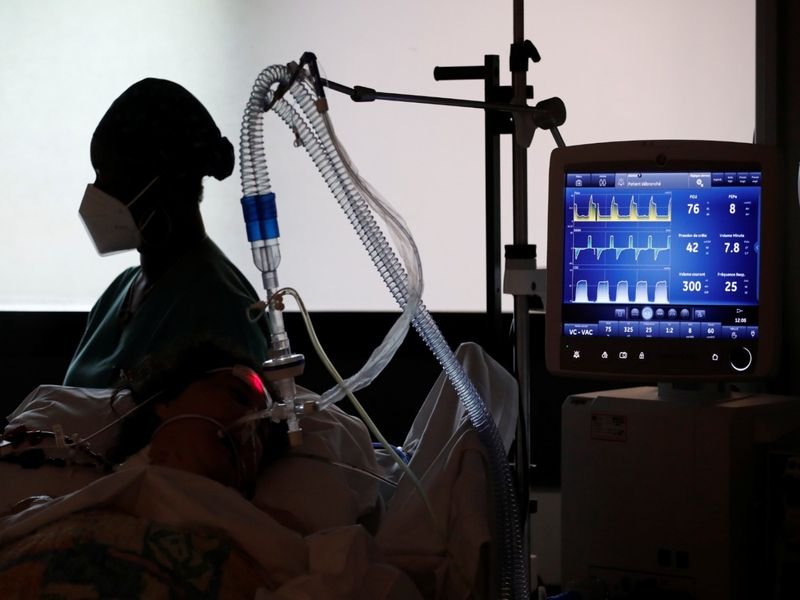

Islamabad [Pakistan], July 30 (ANI): The long-standing non-availability of ventilators across state-run medical facilities in Pakistan has persisted as a critical hurdle in emergency healthcare delivery for over two decades, rendering government hospitals unable to sustain critical patients, according to a report by Dawn.While life-support apparatus is viewed as the ultimate measure to maintain vital functions and grant healthcare personnel time to facilitate recovery, state-operated institutions in Islamabad continue to grapple with a chronic deficit of functioning machines.In a stark demonstration of systemic vulnerability, a local media professional, Abid Raza Kazmi, passed away at the Pakistan Institute of Medical Sciences (Pims) due to the unavailability of a vacant ventilator.Narrating the ordeal, Asim Raza Kazmi, a relative of the deceased, stated that following a stroke, the patient was initially taken to the emergency unit before being transferred across medical and surgical wards.”On the last day, doctors suggested shifting Abid Sahab on ventilator but it was not available/vacant. We used all possible recourses due to which a doctor took us to the ICU. There were 12 ventilators but not a single was vacant. We started arrangements to shift the patient to a private hospital but he could not survive,” he said.Such fatal occurrences are widely recorded in government hospitals owing to a persistent shortage of high-end intensive care unit (ICU) equipment, Dawn reported.Addressing structural deficits, former Minister for Science and Technology Fawad Chaudhry remarked that engineering standards in Pakistan remained inadequate to support the indigenous development of advanced medical machinery.”While I was minister during the time of Covid-19, I made efforts to manufacture ventilators in Pakistan and some simple ventilators were manufactured which could cater up to 60pc of patients. However, then I left the ministry and after that no one took interest in that issue,” Chaudhry said, advocating for joint ventures with Chinese firms to institute local manufacturing capabilities.Although standard machinery is priced between PKR 3 million and PKR 5 million per unit, financial strain extends beyond capital expenditure.Pims Executive Director Prof Rana Imran Sikander detailed that operating costs, alongside severe shortages of specialised human resources required to manage life-support equipment, create monumental operational bottlenecks, Dawn highlighted.Maintaining over 90 ventilators across medical, surgical, paediatric, neonatal, and cardiac ICUs within its 1,400-bed infrastructure, Pims experiences near 100 per cent occupancy continuously.Sikander noted that running a single unit imposes a daily financial burden of approximately PKR 200,000 on the institution, provided without charge to emergency patients, while Islamabad’s population expansion from 500,000 at the hospital’s founding to five million today has completely overwhelmed capacity.Underlining similar resource constraints, Polyclinic spokesperson Abdul Jabbar Bhutto stated that the institution’s 35 ventilators remain perpetually occupied, while acute staff shortages prevent the deployment of additional apparatus even if acquired.Bhutto disclosed to Dawn that exorbitant pricing in the private sector, where daily charges can reach PKR 300,000, forces distressed families to seek emergency transfers to government facilities, creating an unending priority waiting list where patients frequently succumb while waiting for vacant life-support units. (ANI)(This content is sourced from a syndicated feed and is published as received. The Tribune assumes no responsibility or liability for its accuracy, completeness, or content.)