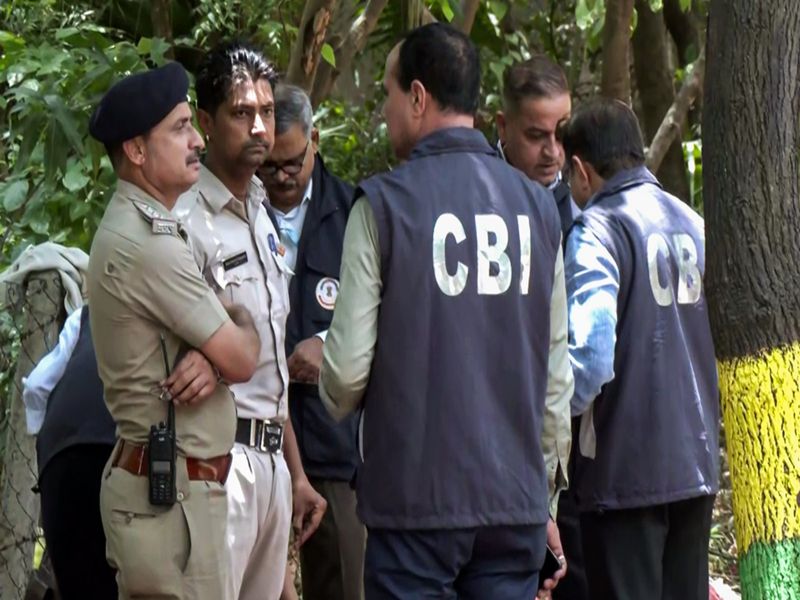

It all started with Facebook and WhatsApp chats. Eleven years later, a Rs 40 lakh extortion and honey-trap case ended in the acquittal of all the accused, with a Panchkula court setting free a Haryana Police Assistant Commissioner of Police (ACP) and two Exempted Assistant Sub-Inspectors (EASIs).The court cited numerous loopholes in the investigation.According to Panchkula Police, Rajni alias Janvi — she operated her Facebook account under the name Janvi — came into contact with Ambala-based businessman Pranveer Saini on Facebook in April 2015. They exchanged mobile numbers and stayed in touch through WhatsApp and Facebook. Police claimed that Rajni invited Saini to her rented accommodation at Army Flats, Sector 27, Panchkula, on several occasions.On May 22, 2015, Saini visited her home. What happened next depends on who you believe.Rajni complained to police that Saini gave her intoxicant-laced sweets and thereafter raped her. The Special Investigation Team (SIT) of the Panchkula police collected and analysed electronic and documentary evidence, including Call Detail Records (CDRs), mobile phones, WhatsApp and Facebook chats, audio recordings, visitor register entries of the residential society and other digital evidence.It emerged that after Pranveer Saini left the residential society on May 22, 2015, numerous telephone calls were exchanged between Rajni, her husband Salim Ansari and others. Police found that Salim Ansari had not visited the Skoda showroom in Chandigarh on the date of occurrence, nor had he undergone treatment from any homeopathic doctor at Sadar Bazar, Ambala Cantonment, as stated in the FIR. His mobile tower location remained within Panchkula throughout the relevant period.The chemical examination found no intoxicating substance in the biological exhibits, although human semen was detected on certain seized articles.Police concluded that it was not a case of rape but of extortion. It alleged that Salim Ansari was trying to extort money from Saini to drop the charges.Two more men joined the investigation and claimed that they had been similarly entrapped by Rajni alias Janvi and her husband Salim Ansari, and that money was demanded to drop rape charges.Police further alleged that ACP Deshbandhu, under whom Chandimandir police station fell where the FIR was registered, tried to extort Rs 40 lakh from Saini through an intermediary, while EASIs Rajpal Singh and Ramesh Kumar tried to facilitate the deal.Two mobile phones were also recovered from accused ACP Deshbandhu. According to the prosecution, call details corroborated his telephonic contacts with the other accused persons.Why the case fell apartThe case was filed against nine persons, including Rajni, her husband and police officials.However, the digital evidence had procedural flaws. The prosecution principally relied upon extracted WhatsApp chats, Facebook chats and transcripts of recorded conversations. “These were not the original electronic records but consisted of extracted digital data, printouts and transcribed material generated from the seized devices. The prosecution has neither examined the person who extracted or prepared these electronic records nor proved the complete process adopted for their extraction, preservation and preparation,” defence counsel Sameer Sethi said.Scientific examination could confirm the voice samples of honey-trap victim Saini and his brother, but the court noted that “no specimen voice samples of the remaining accused were available for scientific comparison”.On CDRs between the accused, the court said they “neither disclose the contents of the conversations nor establish the purpose, object or legality of such communications”.On disclosure statements, the court, in its judgment dated July 17, said Section 26 of the Indian Evidence Act provides that no confession made by an accused while in police custody is admissible unless made in the presence of a magistrate.