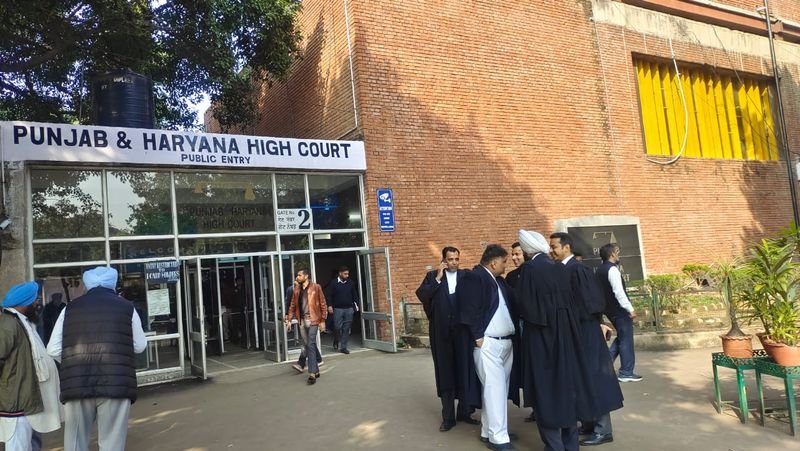

The Punjab and Haryana High Court has invoked the metaphor of a cactus while explaining the importance of rehabilitating prisoners and preparing them for their eventual return to society. Making it clear that prisoners must retain the social bonds necessary for a dignified return to the community, the bench observed that some relationships, much like a cactus, can survive without frequent attention, but even the most resilient bonds can eventually wither through prolonged oblivion and the ‘out of sight, out of mind’ phenomenon.“The paramount question sociologists struggle with while undergoing their quest to convince the Executive is ‘how to condition the prisoner’? Every prisoner must be rehabilitated to ensure their dignified return to the community, with consistent behaviour that never puts them back under surveillance inside the panopticon. A few relationships are like a cactus and do not require frequent watering, and a sufficiently long oblivion brings about the ‘Out of sight, out of mind’ phenomenon, which can wither even a resilient cactus,” the bench of Justice Anoop Chitkara and Justice Subhas Mehla asserted.The assertions came as the bench allowed a petition is allowed, set aside the parole rejection order dated January 8 and remanded the matter to Tarn Taran Deputy Commissioner-cum-District Magistrate “to decide the petitioner’s application for parole afresh by a reasoned order”. All pending miscellaneous applications, if any, are disposed.Tracing the evolution of punishment, the court referred to Michel Foucault’s Discipline and Punish and explained how the penal system moved from public displays of physical suffering towards incarceration and, subsequently, rehabilitation.The bench noted that the growing recognition that unbroken confinement and constant surveillance could produce obedience without reform led to demands for prison reform. It observed that prisons had to prepare inmates for life beyond their walls through education, the imparting of ethics, values and morals, and a gradual relaxation of restrictions.It described temporary release, including parole, as a product of this reformative approach, observing that such measures “open the closed system of the prison, in a controlled manner, to the world outside”. Explaining why rehabilitation was necessary, the bench pointed out that, except in exceptional circumstances, prisoners eventually returned to society. Referring to the finite nature of imprisonment in most cases, it observed that “their return is not in isolation but back to society”.Explaining the role of parole, the bench observed that it provided prisoners an opportunity to return to family, work and community. “Within this closed system of control, parole appears as a respite, where good conduct is rewarded, so the prisoner is encouraged to reflect, to reform, and to rebuild themselves as a person capable of living lawfully in society. Once released, they are spared the full severity of confinement and are allowed to return to family, work, and community. In this context, parole is the humane face of the reformative movement; it softens the prison’s rigidity. It converts punishment into an opportunity for reintegration into society,” the bench added