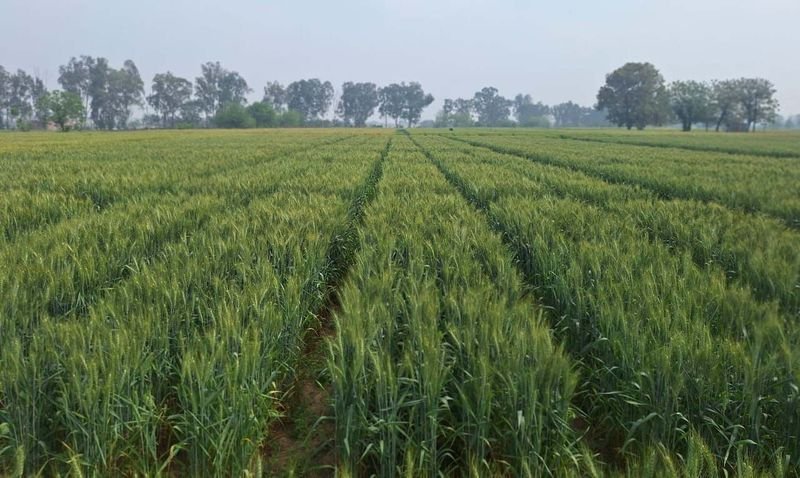

Punjab Agricultural University (PAU) is set to introduce its latest wheat variety, PBW 887, to farmers during September fairs. Developed for timely sown, irrigated conditions, the variety has completed multi-year trials and demonstrated consistently higher yields, reduced risk of lodging and moderate resistance to major diseases than existing varieties.The variety was released in 2026 for trial cultivation in Punjab, with trials conducted at farms and Krishi Vigyan Kendras. It will be available during the melas in 40-kg packs. The new variety demonstrated consistently high grain yield and desirable agronomic characteristics through multi-year testing. Across research trials, it outperformed widely cultivated varieties, recording 1.4 per cent higher yield than PBW 872, 3.8 per cent higher than PBW 826 and 12.5 per cent higher than DBW 222. Its performance was further validated through agronomic evaluations conducted during 2024-25 and 2025-26, confirming its stability and yield potential.“This is a medium-maturing variety and it reaches heading in approximately 105 days (101-108 days) and matures in about 155 days (150-158 days). The variety has an average plant height of around 102 cm (98-104 cm), providing a sturdy crop canopy and reducing the risk of lodging under irrigated and high-input production conditions. Its long, parallel, dense and whitish earheads contribute to a robust, uniform and healthy crop appearance throughout the growing season. These characteristics, together with its medium maturity, make PBW 887 well suited to Punjab’s prevailing production conditions and capable of delivering high and stable wheat productivity,” said Dr GS Mavi, Principal Wheat Breeder at PAU.The variety produces bold, attractive grains, with a 1,000-grain weight of 40-48 g. It has a high test weight of 79.2 kg/hl (kg per hectolitre) and a grain appearance score of 6.5, indicating good grain quality and market appeal.It also has a favourable disease-resistance profile, showing moderate resistance to yellow rust and brown rust under both natural and artificial disease pressure. It also exhibits moderate resistance to Karnal bunt.“It has an average yield potential of 24.6 quintals per acre, while its zinc and iron content exceeds 40 ppm and its protein content is above 12 per cent,” Dr Mavi added.