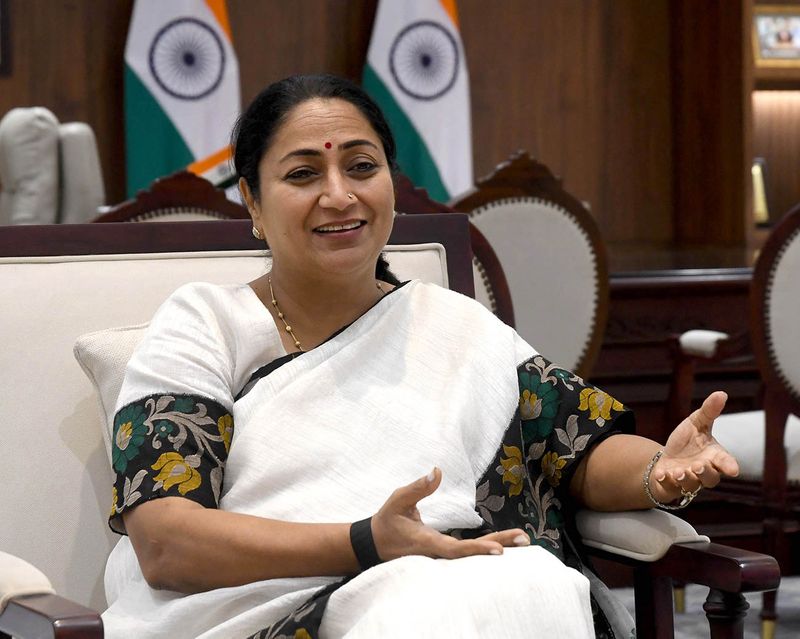

Close on the heels of unveiling a radical new Electric Vehicle Policy, Delhi Chief Minister Rekha Gupta spoke to The Tribune about the government’s approach to address the Capital’s most chronic problem – pollution. Gupta said vehicular pollution remained Delhi’s top challenge even though there was no single villain behind the pollution story. Excerpts:Your government’s top three achievements in the first one and a half years?If I had to describe our work over the past one and a half years, I would say we have laid the foundation for a “Viksit Delhi” by focusing on three clear priorities.First, we are building a clean and scientific waste management system. For too long, Delhi’s waste problem was treated as a routine civic work. We have approached it as an environmental and public health challenge by strengthening waste processing, improving sanitation systems and moving towards more scientific waste management practices.Second, we are modernising Delhi’s sewage infrastructure. Whether it is expanding sewage treatment capacity, strengthening sewer networks, or accelerating Yamuna rejuvenation projects, our objective is to build infrastructure that serves Delhi not just for today, but for the next several decades.Third, we are creating quality infrastructure that improves everyday life for every citizen. Better roads, stronger monsoon preparedness, improved public services, cleaner neighbourhoods, electric mobility and citizen-centric governance are all part of one larger vision to make Delhi a city where development is visible in people’s daily lives.What is the progress on Yamuna rejuvenation?The first challenge is to treat drain water that is entering the river. For this, 37 existing sewage treatment plants have been upgraded and 27 new plants are planned, of which work orders for 13 have been given. One biogas plant has become operational and six are proposed. This year, we have removed as much as 3 million metric tonnes of waste from the drains. This was flowing directly into the Yamuna.What about Delhi’s garbage?There is a considerable progress in landfill remediation with 14% left in Okhla, 40% in Bhalswa and 80% in Ghazipur. We are committed to clearing Delhi of legacy waste.The just unveiled Electric Vehicle Policy bars fresh registration of petrol-powered two-wheelers from 2028. Isn’t that harsh given transport and construction waste being the real problem?I would respectfully disagree with the framing of the question because this is not a choice between one source of pollution and another. Delhi’s air pollution is a complex challenge with multiple contributors. Vehicular emissions, construction dust, waste burning, industrial emissions and regional factors all play a role. That is why we are pursuing an integrated environmental strategy rather than looking for a single villain.Our EV Policy addresses one of the largest sources of emissions by encouraging a gradual transition towards cleaner mobility, particularly in high-usage vehicle categories such as two-wheelers, three-wheelers and commercial goods vehicles. We are equally strengthening mechanised road cleaning, stricter dust-control measures at construction sites, scientific waste management, public transport and greener urban infrastructure.What would you say to petrol two-wheeler owners?It is important to clarify that no existing petrol two-wheeler or auto is being banned. The policy only phases out new registrations of petrol and CNG autos from January 1, 2027, and new petrol two-wheelers from April 1, 2028. That gives citizens, manufacturers and the industry nearly two years to prepare for the transition. To make this transition easier, we have extended financial support with incentives of up to Rs 30,000 for electric two-wheelers, Rs 50,000 for electric three-wheelers and up to Rs 1 lakh for eligible N1 category electric goods vehicles.We have also introduced scrapping incentives across vehicle categories, including up to Rs 1 lakh for older private cars to encourage the replacement of most polluting vehicles. This is not a policy against petrol vehicle owners. It is a policy in favour of cleaner air, better public health and a sustainable future for Delhi. Environmental policy should not divide citizens into winners and losers. It should bring sectors together for a cleaner, healthier and more liveable Delhi.You have spoken of expanding the EV charging network from 9,000 to 32,000 points. How will you guarantee this?The figure of 32,000 charging points reflects the scale of the ecosystem Delhi will require over the coming years. We have been working closely with power distribution companies, vehicle manufacturers, residential welfare associations, commercial establishments, land-owning agencies, and other stakeholders to prepare a roadmap to support the next phase of electric mobility.The charging network will grow through a collaborative model, expanding across residential communities, workplaces, commercial centres, public institutions and parking facilities, while Delhi’s power infrastructure is simultaneously being strengthened to support future demand.Our objective is to make charging available where people naturally live, work, shop and travel, so that clean mobility becomes a convenient part of everyday life. Ultimately, an EV policy will not be judged by the number of charging points announced. It will be judged by whether people can confidently choose an electric vehicle, knowing that the supporting ecosystem is already in place.Delhi is repeatedly ranked as the most-polluted world capital. What are you doing about that?For decades, Delhi has unfortunately been discussed more for its pollution than for its potential. We are determined to change that narrative. Our objective is not merely to improve rankings but to improve the quality of life of every citizen. Pollution is not a challenge that can be solved by one department through one season. It requires a whole-of-government and whole-of-society approach. We are expanding clean public transport, accelerating electric mobility, strengthening charging infrastructure, promoting rooftop solar, increasing urban green cover, improving waste management, tackling road dust and using technology for real-time monitoring and enforcement.Our EV Policy is one of the most significant pillars of this transformation. Transportation is among the largest contributors to Delhi’s local emissions, and we are systematically moving towards cleaner mobility. At the same time, we continue to work with neighbouring states on regional challenges such as stubble burning and industrial emissions because pollution does not recognise administrative boundaries. Prime Minister Narendra Modi says development and environment are not rivals but partners. We believe in that and want the Capital city to become the nation’s inspiration, not its environmental concern.What is the biggest driver of Delhi pollution and plans to address it?Delhi’s pollution is multi-dimensional and it would be both inaccurate and irresponsible to attribute it to a single factor. Vehicular emissions, road dust, construction activities, waste burning, industrial emissions and seasonal factors all contribute.During certain months, pollution from neighbouring regions also significantly impacts Delhi’s air quality. However, among the sources that are directly within our control, vehicular pollution remains one of the biggest challenges. That is why our government has placed clean mobility at the centre of its environmental strategy. The EV Policy is not just about replacing one vehicle with another. It is about transforming the entire ecosystem.We are creating one of India’s largest charging networks, encouraging battery swapping, supporting cleaner public transport, incentivising electric two-wheelers and commercial vehicles, and ensuring that citizens find electric mobility convenient as well as economical.The petrol-diesel vehicle phase-out policy deadline is 2028. Isn’t it too ambitious?Ambitious goals are often the ones that transform societies. If governments continue to set comfortable targets, citizens will continue to live with uncomfortable realities. The 2028 timeline is not intended to create hardship; it is meant to create certainty. It provides manufacturers, businesses, fleet operators and citizens adequate time to plan their transition while allowing the government to simultaneously build the necessary infrastructure.We are not asking people to adopt electric mobility without providing alternatives. Charging infrastructure is being expanded, incentives are being provided and battery-swapping facilities are being developed. Implementation will be phased and evidence-based. Different categories of vehicles have different timelines because every sector has distinct operational realities.This policy reflects the Prime Minister’s, “Reform, Perform and Transform” push. History never remembers governments that managed problems, it remembers governments that solved them. Our responsibility is to prepare Delhi not just for the next election, but for the next generation.