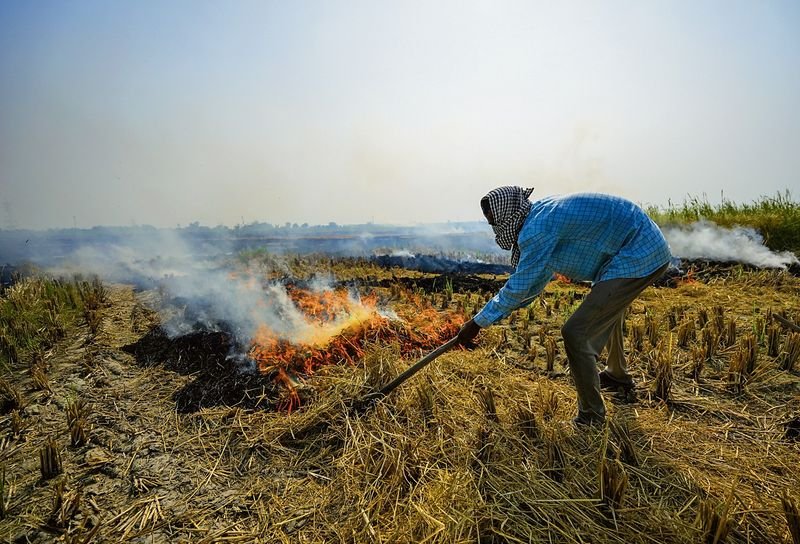

The fight against paddy stubble burning may be overlooking a less visible challenge: Farmers often receive information on crop residue management too late, struggle to access alternatives or see little incentive to attend awareness programmes.A study by the Council on Energy, Environment and Water (CEEW), covering 102 farmers in Punjab, found that around 63 per cent had never received information on crop residue management when they actually needed it. While 30 per cent identified the pre-harvest period as the ideal time to receive such information, communication efforts often failed to match this window.The gap becomes more critical during harvesting, when farmers have to make quick decisions. According to the study, farmers prefer to assess their options before harvest. During harvesting, however, communication should focus on practical issues such as access to machinery and examples of farmers adopting no-burn practices.The study also challenges the assumption that training alone can change farming practices. Nearly 78 per cent of surveyed farmers had never attended crop residue management training. Reasons included a lack of awareness about programmes, receiving information too late, busy farming schedules, inconvenient timings and the belief that they already had sufficient knowledge.Digital outreach has also had limited reach. As many as 86 per cent of surveyed farmers had never heard of the Unnat Kisan mobile application, which aims to facilitate access to machinery for crop residue management.Another significant finding was that 31 per cent of farmers were classified as partial burners. They used machinery to manage crop residue but continued to burn some of it, citing concerns over pest attacks as a key barrier. The CEEW identified this group as the most immediate opportunity for behavioural change. The study found that farmers preferred simpler communication, with 73 per cent favouring one or two key messages over lengthy material.