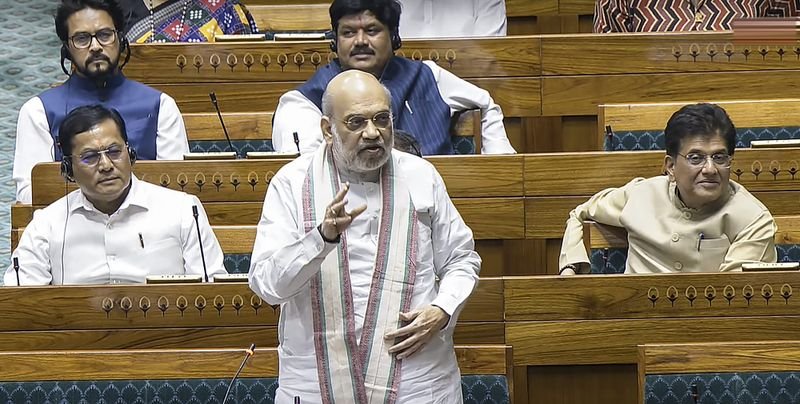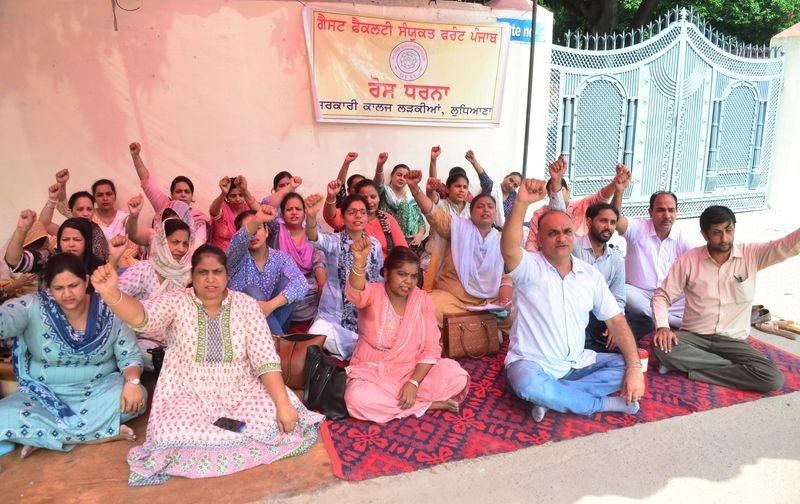

In the ongoing monsoon session of the Punjab Assembly, the opposition Congress benches raised the issue of teaching faculty shortages and their delayed wages affecting the state’s higher education sector.Higher Education Minister Harjot Singh Bains told the House that more than 42 per cent of professor and assistant professor posts across 13 state universities and 64 degree colleges remain vacant.The state of affairs in Punjab’s 136 non-government aided colleges is no better as these private higher educational institutions are marred by months of unpaid salaries, frozen allowances, and a decades-long recruitment vacuum.While 136 aided non-government colleges employ nearly 3,000 regular teachers and cater to more than two lakh students, 64 government colleges serve more than 77,000 students and relies almost entirely on ad-hoc arrangements. The state has 760 guest faculty members and 100 part-time teachers, while 143 regular teachers.The last comprehensive regular recruitment drive for teachers in Punjab’s degree colleges was held nearly three decades ago, in 1996.Private aided colleges have historically played a significant role in providing relatively affordable higher education in the state. However, teachers describe it as a system on the brink of collapse.The Punjab and Chandigarh College Teachers Union (PCCTU) has raised concerns over the status of salary payments. Its representatives said salary bills up to around Rs 73 crore for the period from March to June 2026 remained unclear.As university vice-chancellors and state officials point to regulatory frameworks and legal entanglements, college faculty associations maintain that systemic neglect is destroying academic quality. In the words of struggling teachers across the state, “When basic survival becomes the daily priority, quality education naturally takes a back seat.”“We have not received increments for seven years. DA has been frozen since last year. We are no longer fighting for the Seventh Pay Commission; we are fighting for regular monthly salaries,” said a teacher at Kamla Nehru College for Women, Phagwara (affiliated with Guru Nanak Dev University, Amritsar), requesting anonymity.Professor Gurjinder Singh, an assistant professor at PMN College, Rajpura (affiliated with Punjabi University, Patiala), said teachers appointed against unaided posts continue to receive an average of Rs 25,000 a month despite, according to him, performing the same duties and meeting the same recruitment criteria as those on aided posts.“The qualifications, interviews and service rules are identical, yet pay remains vastly different. Every six months we submit representations seeking wage revision, but nothing changes. Even a kulcha vendor earns more than us,” he shared.College managements, however, argue that delayed government grants have created a severe cash-flow crisis.“Salary grants have been delayed since February 2026. Many colleges simply cannot afford higher pay scales without timely government funding. We can only advise institutions; we cannot compel them,” said SM Sharma, general secretary of the Non-Government Aided Colleges Management Federation of Punjab and Chandigarh.Reportedly, the Punjab government releases Rs 300 crore annually in salary grants to non-government aided colleges. Sharma added that the managements expect another installment soon to be released soon.While colleges commit to paying UGC-prescribed salaries at the time of affiliation, teachers allege these commitments are frequently ignored without consequences.“UGC regulations do not distinguish between aided and unaided posts while prescribing pay scales, including the Seventh Pay Commission,” said Professor Karamjeet Singh, Vice-Chancellor of Guru Nanak Dev University. “Universities regularly review colleges for regulatory compliance.”