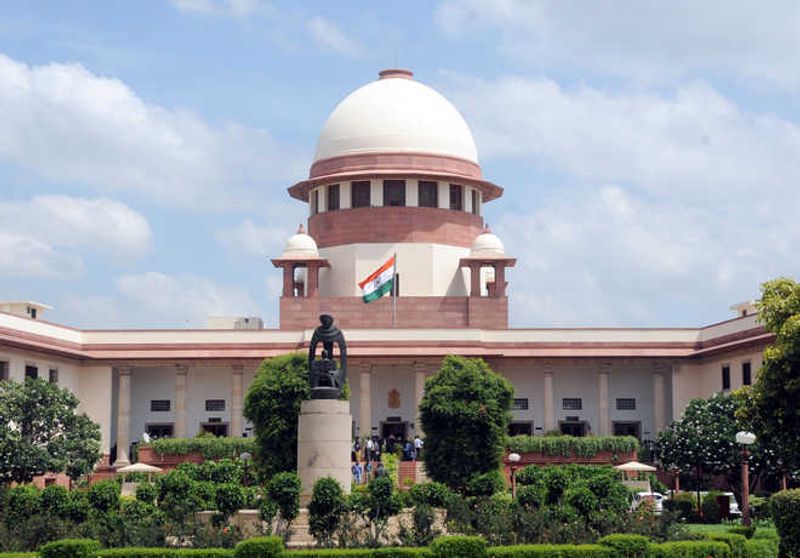

The Punjab Government has opposed before the Supreme Court a PIL seeking directions to establish a revenue judicial service and to prescribe minimum legal qualifications and training modules for public servants dealing with land disputes, saying the suggestion was untenable.In an affidavit filed on July 24, Punjab’s Department of Revenue, Rehabilitation and Disaster Management Under Secretary Sandeep Katyal asserted that “The exiting quasi-judicial machinery in the State of Punjab, led by Financial Commissioners (Revenue), operates with full statutory authority and provides an exhaustive, multi-tiered appellate framework.”“The constitution of separate Revenue Judicial Service Cadre would not be tenable because of robust mechanism in the State of Punjab wherein Revenue officers are dealing with revenue work quite efficaciously primarily under the Punjab Land Revenue Act, 1887, the Punjab Tenancy Act, 1887 and other revenue-related legislations,” the affidavit submitted.“The above Acts are 150-year-old and have withstood the test of time. Furthermore, the Revenue Department has been making amendments to the afore-mentioned laws in accordance with requirements from time to time,” the Punjab Government submitted.It pointed out that the statutory framework provided for an elaborate multi-tiered appellate and revisional structure to completely eliminate any risk of arbitrariness.“Thus, the availability of remedy of judicial review acts as a complete check against institutional bias and legal error, if any alleged by an aggrieved party, rendering the demand or a separate Revenue Judicial Service completely redundant,” the state government said, seeking dismissal of the PIL filed by advocate Ashwini Upadhyay.The Supreme Court had on April 30 issued notice to the Centre, states and Union territories on Upadhyay’s PIL seeking directions to establish a revenue judicial service and to prescribe minimum legal qualifications and training modules for public servants dealing with land disputes.“The existing statutory framework in the state ensures that complex issues are resolved by officers possessing localized field competence,” it asserted.A Bench led by Chief Justice of India Surya Kant had asked the Union of India, Law Commission and others to respond in four weeks to the PIL filed by advocate Ashwini Upadhyay who alleged that non-qualified legal professionals were adjudicating on land disputes.“The point is very interesting also. But they will say it is for the Legislature,” CJI Kant had told Upadhyay who appeared in person.Upadhyay said the issue was one of the most pressing concerns raised by litigants across districts, particularly in rural India.“I travel to two-three districts every week. Most (litigants’) requests concern this matter. A case has been pending before a Chakbandi Adhikari (Consolidation Officer) for 40 years to determine which gift deed is valid. This also touches upon the separation of powers,” he said.Nearly 66 per cent of civil cases related to land disputes but they were being adjudicated by officers lacking formal legal education and training, resulting in erroneous and inconsistent decisions, he submitted in his petition.“The present system causes widespread and continuing injury to citizens by subjecting the adjudication of land disputes to revenue officers without legal background, resulting in arbitrary, inconsistent and erroneous decisions. This leads to prolonged uncertainty over property rights, restricts the use and transfer of land, increases litigation and costs, and denies effective access to justice, thereby infringing the fundamental rights guaranteed under Articles 14 and 21 of the Constitution,” the PIL submitted.Upadhyay sought a direction to declare that adjudication of title, succession, inheritance, possession and other property rights by public servants without formal legal education and judicial training was legally impermissible and that adjudication of title, succession, inheritance, possession and other property rights shall be supervised and monitored by the respective high court.He pointed out that the issue was dealt with by the Allahabad High Court but its direction has not been implemented in letter and spirit to date.