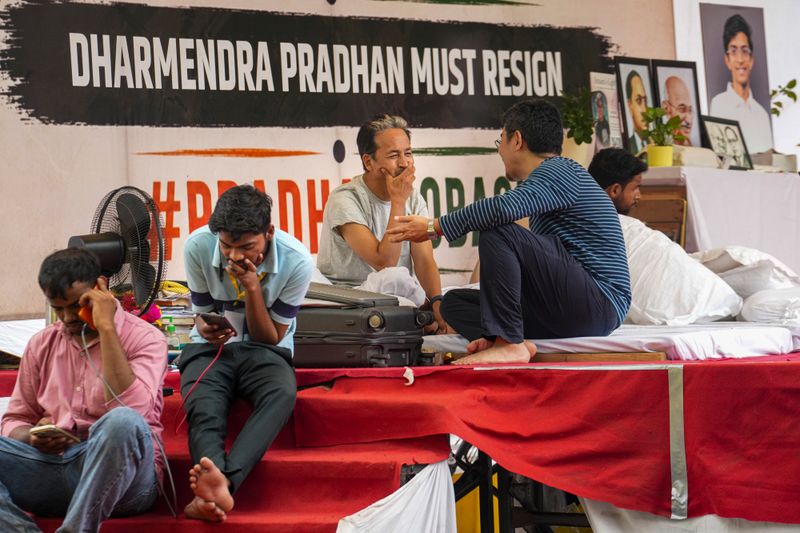

On July 6, the Punjab Government formally notified the third revision of its Land Pooling Policy in twelve months. The notification amends a policy first issued in January 2021, revised in November 2025, and now amended again following an in-principle decision taken at a high-level meeting in April — first reported by The Tribune on April 13. The Council of Ministers approved the changes on July 1.The policy governs how farmers whose land is being acquired for urban development across the Greater Mohali area are compensated — not just in cash but in developed plots, infrastructure access, and long-term financial instruments.It affects tens of thousands of landowners across the 11,103-acre acquisition belt spanning Greater Mohali and New Chandigarh, prospective homebuyers waiting for new housing supply, and Tricity residents who have a stake in whether the region’s urban expansion delivers on its stated timeline.What is land pooling and why does it exist?When the government acquires land for a public purpose, it must pay compensation under the Right to Fair Compensation and Transparency in Land Acquisition, Rehabilitation and Resettlement Act, 2013. That compensation is calculated on registered sale deed values, multiplied by a factor of 1.5, plus 100 per cent solatium and 12 per cent annual interest from the date of notification to the date of award.The land pooling route offers an alternative. Instead of cash, a farmer surrenders his agricultural land and receives fully developed urban plots — residential, commercial or industrial — carved out of the same acquisition. The government develops the land, creates infrastructure, and returns a share as built-out plots. The logic is that developed land in a planned township is worth far more than the cash compensation calculated on pre-development agricultural values.In the GMADA area, the numbers make the argument: agricultural land was valued at approximately Rs 5 crore per acre before acquisition notifications began. After notifications, values moved to approximately Rs 8 crore per acre. The developed plots a farmer receives under the policy carry a combined estimated market value of approximately Rs 16 crore per acre. Whether that figure is realised depends on whether the development actually happens and when.What the July 6 notification actually saysUnder the residential category, the commercial SCO component has been raised from 200 to 210 square yards per acre, applicable to holdings of one acre and above. The alternative residential-only entitlement has been raised from 1,600 to 1,630 square yards per acre. Under the commercial category, the entitlement has been raised from 800 to 840 square yards per acre — a revision not previously announced and not reported before this notification.For landowners with fractional holdings — where land is not in exact integer multiples of the prescribed standard — Special Letters of Intent (LOIs) will be issued, with entitlement calculated proportionately.These Special LOIs are tradable: a farmer who accumulates enough of them equivalent to a particular plot size becomes entitled to a full LOI for a plot of that size. This mechanism extends land pooling access to small and marginal farmers who previously fell below the minimum threshold and received nothing under the scheme.Special LOIs will also apply to Eco City-3 and the low/high density township — extending the benefit to two projects where acquisition awards have already been declared. A landowner can also exit the scheme after three years by surrendering remaining Special LOIs and accepting cash at the original scheme rate.The Sahuliyat Certificate — the document issued to farmers in lieu of acquired land, providing financial benefits across Punjab — has been given two stamp duty options.Option 1 exempts the original landowner from all stamp duty and charges at the time of registration or conveyance deed of developed plots allotted under the scheme. Option 2 allows the farmer to use the certificate for stamp duty exemption on purchase of any land anywhere in Punjab, calculated at collector rate.The validity of the certificate has been extended from two to four years, reckoned from the date of payment of the award amount or the date of allotment of a plot, whichever applies.The tubewell connection window has been extended to four years, co-terminus with the revised certificate, and PSPCL has been directed to ensure installation immediately and on priority upon submission of the application with the Sahuliyat Certificate.All plots — including preferential location plots — will be included in the draw of lots. This applies to Aerotropolis Pockets A, B, C and D, Eco City-3, and the low/high density township.A simultaneously issued notification amends the Oustee Policy 2013, extending oustee residential plot entitlements to all landowners whose land is acquired — irrespective of whether they chose land pooling or cash. Under this, one acre entitles a farmer to a 200 square yards’ residential plot at scheme price; above one acre up to 2.5 acres entitles 300 square yards; above 2.5 acres entitles 500 square yards.Who benefits and howSmall and marginal farmers with fractional holdings below one acre are the most directly served by the Special LOI mechanism. Under earlier versions of the policy, they fell outside the entitlement grid entirely. Now they receive proportionate Special LOIs that can be traded or clubbed to eventually claim a full-size developed plot.Farmers who chose cash compensation over land pooling — previously excluded from oustee quota plots — now receive the same oustee entitlement as those who opted for plots. This removes a longstanding inequality between the two categories of affected landowners.Farmers in Aerotropolis Pockets A, B, C and D, Eco City-3 and low/high density — where awards have already been declared — benefit from the extension of the Special LOI mechanism and the inclusion of all preferential location plots in the draw of lots. These were previously the projects most cited by farmers as falling short on implementation.Prospective homebuyers and investors in the region benefit indirectly: every enhancement that brings more farmers into voluntary consent reduces litigation risk, speeds up possession, and brings construction timelines closer.The 11,103-acre acquisition covering seven new townships and seven new sectors — including a commercial Sector 87 modelled on Chandigarh’s Sector 17, three Aerotropolis clusters near the airport, new industrial parks, and master plan roads — is the primary source of housing and commercial supply for the Tricity region in the near term.How we got here: 12 months of revisionsThe first iteration — the Land Pooling Policy-2025 notified on June 4, 2025 — proposed compulsory pooling of 65,533 acres statewide. The Tribune first reported the details on June 10, 2025. Farmer protests followed within days, backed by the Congress, Shiromani Akali Dal and BJP. The Punjab and Haryana High Court issued an interim stay. The government withdrew the policy in August 2025.The November 2025 revision made pooling optional, giving farmers the free choice between developed plots and cash. Three awards totalling Rs 6,069 crore across 1,231 acres were declared – Rs 3,690.32 crore for 716 acres of Eco City-3, Rs 446.22 crore for 206.39 acres of Aerotropolis Blocks A-D, and Rs 1,932.38 crore for 309.30 acres of the low/high density township. A majority of village panchayats endorsed the acquisition.Residual grievances — over plot size, the exclusion of cash compensees from oustee quota, the short two-year Sahuliyat Certificate window, and preferential plots being retained by GMADA — produced the Pucca Morcha, a three-week permanent dharna outside GMADA headquarters in Mohali. The April 11 high-level meeting produced the in-principle decisions, and the July 6 notification converts those decisions into enforceable policy.What remains to be resolvedThe notification addresses the financial and entitlement terms of the policy. It does not address the structural issues that have undermined implementation across every version.The three-year development deadline committed at the April 11 meeting — the first formal, fixed timeline in the history of land pooling in Punjab — is not reflected in the July 6 notification text. Without a notified, enforceable deadline with defined penalties for slippage, the commitment remains administrative rather than legal.The guava orchard fraud — in which fictitious orchards were fabricated to claim Rs 147 crore in compensation during Aerotropolis Pockets A-D acquisition, producing FIR No. 16 by the Vigilance Bureau, freezing development, and leaving genuine farmers in those villages without compensation for years — has not been addressed by any notification.The April 11 decision to deposit pending payments in the Reference Court and release non-FIR compensation directly is an administrative workaround. The transparent assessment policy for structures and orchards promised then has not yet been notified.The insider trading problem — in which persons with advance knowledge of acquisition notifications purchased land cheaply to claim inflated compensation — has no statutory deterrent in the current framework.And the village development commitment — schools, parks and dispensaries exempt from acquisition; sewerage, water and roads integrated with GMADA systems; critical gap funding for village infrastructure — while decided in April, has not been translated into a formal gazette notification.What needs to happen nextThe July 6 notification improves the financial terms of land pooling. For it to produce results on the ground, four things need to follow.The three-year development deadline needs to be notified with financial penalties for non-compliance and an independent oversight mechanism. A timeline without teeth has not historically moved GMADA.The village development commitment needs a separate formal notification, making it legally binding and specifying which department is responsible for each component — sewerage integration, road construction, gap funding — and within what timeline.The orchard and structure assessment process needs a new policy, as promised in April, mandating satellite and drone imagery as the baseline for all tree and structure valuation before any compensation is calculated. The guava orchard fraud was made possible by the absence of any independent verification mechanism.The Special LOI mechanism — which is new and untested — needs a clear administrative process: how fractional entitlements are calculated, how Special LOIs are registered and transferred, how farmers are informed of their options, and what redressal is available if entitlements are disputed.What it meansFor farmers, the July 6 notification is the most detailed and generous version of the policy to date. The combination of higher plot entitlements, tradable Special LOIs for fractional holdings, oustee quota for all including cash compensees, a four-year Sahuliyat Certificate, and all preferential plots in the draw addresses the specific demands that produced a year of protests.Whether it resolves those protests durably depends on implementation. The farmers of Greater Mohali have watched two earlier versions of this policy promise outcomes that did not materialise on time. Their consent — and the consent of those still outside the acquisition process — will ultimately be determined not by what the notification says but by whether GMADA delivers developed plots, functional infrastructure, and village development within the timelines now on record.The urban expansion of Greater Mohali and New Chandigarh — seven new townships, seven new sectors, and a tripled Aerotropolis — is the largest planned development in the Tricity region’s history. Its timeline and quality depend on the land pooling policy working in practice. The July 6 notification is the policy’s best version yet. It is not yet its final test.Key changes at a glancePlot entitlement (per acre, 1 acre and above)Residential: Commercial SCO up from 200 to 210 sq yd; residential alternative up from 1,600 to 1,630 sq yd. Commercial: up from 800 to 840 sq yd.Special LOIsFractional holdings below 1 acre now covered proportionately. Tradable — clubbable into full plot LOI. Applicable to Eco City-3 and low/high density township.Sahuliyat CertificateValidity doubled from 2 to 4 years. Two stamp duty options: zero duty on conveyance deed (Option 1) or stamp duty exemption on land purchase anywhere in Punjab (Option 2). Tubewell window extended to 4 years; PSPCL mandated to install on priority.Draw of lotsAll plots including preferential location plots in draw — applicable to Aerotropolis A-D, Eco City-3, low/high density.Oustee quota (all farmers, cash or pooling)1 acre: 200 sq yd plot. Above 1 to 2.5 acres: 300 sq yd. Above 2.5 acres: 500 sq yd. All at scheme price on preferential basis.What is not yet notifiedThree-year development deadline; village development commitment; new orchard/structure assessment policy; penalties for timeline slippage.(Source: Official gazette notifications)