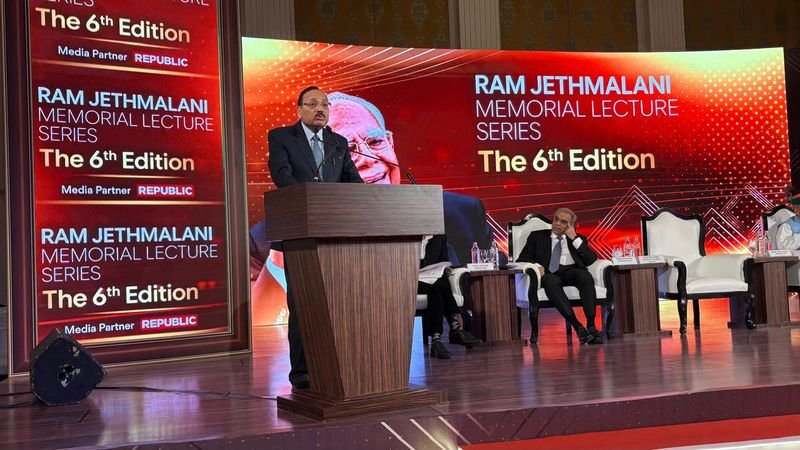

Raising serious concerns over the role of “fixer lawyers” for corruption in the judiciary and tribunals, senior counsel Mahesh Jethmalani on Monday said that such individuals were known within the legal fraternity and should be shared with the Supreme Court Collegium.“There cannot be corruption in the judiciary or tribunals without fixer-lawyers who game the entire legal system by facilitating bribery. Everyone at the Bar knows who they are. Their names are probably available to intelligence agencies and ought to be communicated to the Supreme Court Collegium, if not already done so,” he said at the 6th Ram Jethmalani Memorial Lecture series here.Jethmalani made the statement in the presence of CJI Surya Kant, Law Minister Arjun Ram Meghwal, judges and lawyers attending the function.“It is also a crying shame that there was an attempt to perpetuate the chairman of the Bar Council of India for a period of five years, up to 2030, instead of the prescribed two-year tenure under the Act,” Jethmalani said.Senior Advocate Harish Salve questioned the manner in which the discovery of burnt piles of cash at the residence of Justice Yashwant Varma was handled.He wondered why the law was not allowed to take its course and why no criminal case was registered in connection with the matter.Salve said the safeguards laid down in the Supreme Court’s Justice V Ramaswami judgment were meant to protect judges from frivolous complaints by litigants, and not to prevent action in a matter brought to the attention of the Chief Justice of India.“When the Chief Justice of India was informed that such an incident has happened, and here is a video transcript of the institution, there was no question then of any action being taken to intimidate a judge. It was not a litigant. He should have said, let the law take its course,” Salve said.Delivering the keynote address on “Justice Seen To Be Done: Transparency And Public Trust As Pillars Of The Legal System”, CJI Surya Kant said the judiciary must remain open to scrutiny and criticism to maintain public trust in the justice system.“The judiciary as an institution is not and cannot be above scrutiny. Fair, informed and constructive critique of judicial functioning is a legitimate and necessary feature of a vibrant constitutional democracy, contributing to institutional accountability and self-correction,” CJI Kant said“It lies at the heart of transparency itself. For a court cannot seek the confidence of the public by placing itself beyond scrutiny. It must remain willing to be examined, questioned and, where necessary, criticised,” he said.As several speakers attacked the Collegium system, the CJI sought to defend it.