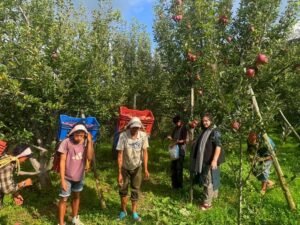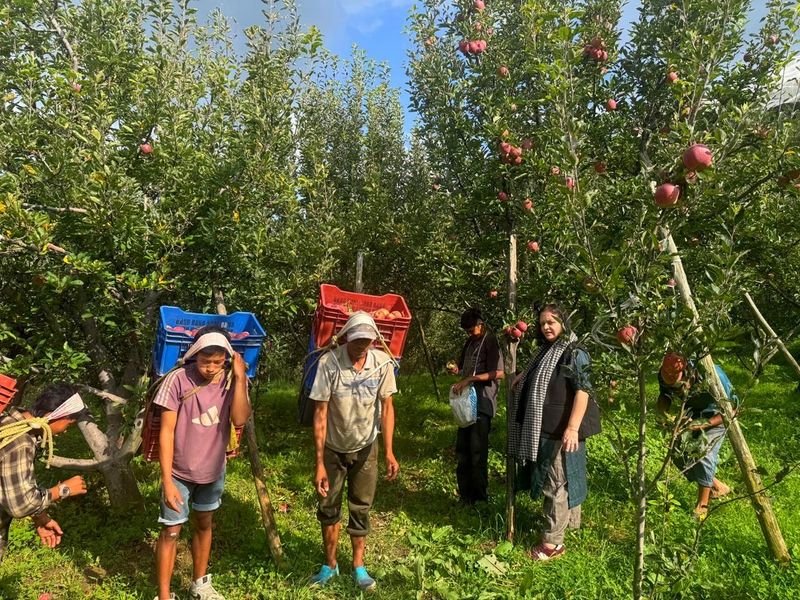

FOR decades, the road to a better life for young Himachalis led out of the hill state. After college, most migrated to Delhi, Chandigarh, Bengaluru, Mumbai, and even abroad in search of lucrative jobs, settling far from their native places and returning to their villages for only a few days a year. Now, a quiet counter-trend is underway.After years in the metros, a small but growing number of Himachalis are leaving established corporate careers to return to their roots. Their goal is not merely to retire or escape city stress, but to transform ancestral land into economic assets.The change was initially triggered by the Covid-19 pandemic, when job losses and work-from-home arrangements brought a large number of young professionals back to the hill state. A more compelling story, however, unfolded after the pandemic. While some returned to cities, others stayed, investing their life’s savings and even taking loans to revive their ancestral land.Shift in aspirationsAcross parts of Himachal, the aspirations of educated professionals who once believed success lay outside the state are evolving. Armed with corporate experience, professional networks, and exposure to modern business practices, they now view ancestral land not as a burden, but as an opportunity.For many, the motivation goes beyond economics; it is about holding on to their land. Families that migrated decades ago increasingly worry about who will manage their orchards and fields once the elderly parents are gone. Some fear the next generation may not even know their land’s boundaries.Meghana Bragta understands that fear well. After spending 18 years in Bengaluru, she returned to Kotkhai to take charge of an apple orchard that her mother had leased out for years. Upon her return, she realised just how disconnected she had become. “My children didn’t even know the orchard boundaries. That was a wake-up call. Land can remain in your name, but if you stay away for too long, you slowly lose your relationship with it,” she says.The turning point came when the grandson of Satyanand Stokes, the man who introduced apples in Himachal a century ago, advised her to sell the orchard. “It came as a rude shock. That conversation made me decide the orchard would never be up for sale,” she says.Fresh approachToday, Meghana is reimagining the family property. Alongside horticulture, she is developing a homestay-cum-wellness retreat, food processing lines, dried fruit packaging, and morel mushroom cultivation. “I chose to return not because I was running away from city life, but because I wanted to build something meaningful on my own land,” she says.Pankaj Thakur and wife Shilpa invested in their apple orchard in Kullu’s Anni village.A similar drive brought Pankaj Thakur back from Delhi to Buchar village in Kullu’s Anni area. His grandfather had repeatedly urged him to return, worried that the family’s large landholdings were underutilised and turning barren. “The biggest danger is not that someone takes your land. It can also be lost through neglect. If nobody returns, orchards stop producing, fields go uncultivated, and eventually the next generation loses interest,” he reflects.In 2022, Pankaj and his wife Shilpa invested roughly Rs 25 lakh in ultra-high-density apple farming across 40 bighas using M9 rootstock. Over three years later, the venture has generated substantial returns, proving how modern techniques can transform traditional agriculture.Social media influenceThe Thakurs bypass middlemen and sell apples directly to consumers through social media and digital channels. “Earlier, growers depended entirely on traders. Today, one good Facebook page and customer trust can create a market anywhere in India. People place orders directly after watching videos from the orchard,” says Pankaj.Social media has also become one of the biggest catalysts behind reverse migration. People are not only getting inspired by success stories of those who dared to return, but are also using the medium to script their own journey.Career choicesPhotographer Himanshu Khagta experienced this firsthand after returning to Rohru following years of global assignments. Khagta stopped using pesticides altogether, delivered produce directly to customers during the pandemic, and expanded via e-commerce. “Geographical factors can no longer limit your reach. If your product is genuine, customers will find you,” he says.Himanshu Khagta at his apple orchard in Rohru.His cafe in Rohru has become a hub for young people weighing a move back to the hills. “Many youngsters call or visit only to understand whether coming back is practical,” he says.Yudhvir Janartha, who left London to manage his family orchard in Rohru, echoes the sentiment: “Land is not lost only when it is sold, but also when it becomes barren, when nobody wants to work on it, and when the next generation has no connection with it.”New horizonsThe attraction of Himachal is mirrored by another economic reality. Across tourism hubs such as Manali, Dharamsala, Bir, Shimla and parts of Kullu valley, outsiders are increasingly taking hotels, cafes and homestays on lease.Many Himachalis who returned home say watching this trend influenced their own decisions.Diki Thakur, a resident of Manali who has worked in the hospitality sector across Delhi, Mumbai, Bengaluru, Chandigarh and Pune before coming back to Dharamsala, says she often saw local properties being leased to entrepreneurs from outside the state. “There is nothing wrong with outsiders investing here. But sometimes locals own the property while someone else creates the business and captures most of the value,” she adds.That realisation pushed her to launch her own hospitality venture. “If young Himachalis don’t take ownership of opportunities in tourism, hospitality, and food businesses, others naturally will.”Banker Robin Chadha returned to Himachal and built a floriculture enterprise with his friend.Robin Chadha’s story offers another variation of the same theme. After leaving banking in Chandigarh, he returned and built a floriculture enterprise with a friend, Hare Krishan.What began as an experiment eventually became Subziro Agritech, a firm supplying lilies, baby’s-breath and other specialty flowers across India. The venture operates on leased land in Lahaul and Spiti, Naggar in Kullu and Pinjore. By cultivating at different elevations and climatic conditions, the firm has created a flower production cycle that runs for much of the year. Chadha’s wife Mitu is also involved in the business, which employs around 100 persons.Ridhima Thakur saw opportunity in a different sector. After years in Gurugram, Noida and Chandigarh, she returned to Rohru and started conducting online English classes. The response eventually led her to establish a school.Clean air advantageBeyond economics, the quality of life is constantly cited. Rahul Kanwar, a 20-year-old engineering student from Narkanda studying in Chennai, recalls a conversation with a classmate from Bihar: “He told me, ‘You left the life I dream of. We work in the plains hoping that one day we can buy a house in the hills and escape pollution and stress.’ That stayed with me.”Thousands of people from Delhi-NCR and other areas now spend months living in rental homes across Shimla, Kullu, and Dharamsala, while many relocate permanently post-retirement. This influx has spurred a localised demand for homestays, cafes, and long-term rentals.Gaurav Thakur, a tour operator based in Shimla, cites the example of a Delhi businessman “who sold his city home for roughly Rs 10 crore, built a lavish cottage in Mashobra for Rs 2 crore in 2015, invested the rest, and now lives comfortably in the hills”. Such a story, he adds, only strengthens the belief in returning to one’s roots.