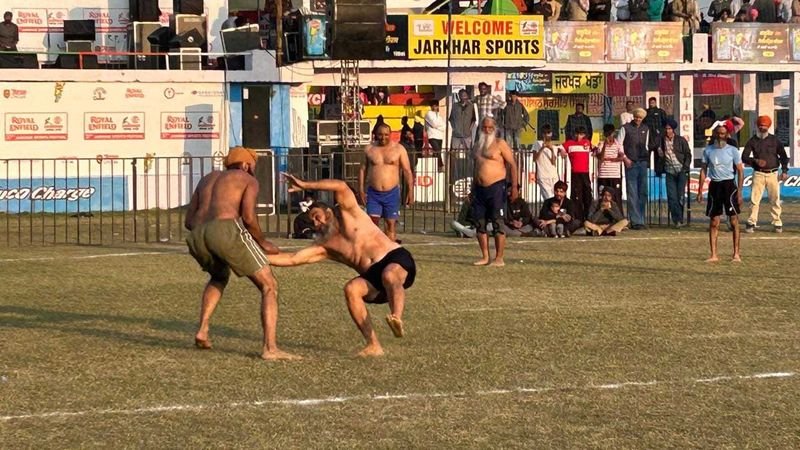

Members of the sports fraternity associated with circle-style kabaddi, a game indigenous to Punjab, have prepared a roadmap and are making efforts with the belief that it has everything it takes to go international.The game, dominant at village ground, has set its sights on the Asian Games and Olympics.Circle-style kabaddi is celebrated for raw power, thrilling contests and deep roots in rural sporting culture.Kabaddi promoters, players and organisers believe the dream is worth pursuing, provided all stakeholders move beyond rhetoric and launch a well-planned, professional and sustained campaign.Despite its popularity, the sport has a limited international footprint and faces a formidable challenge in securing recognition on the world’s biggest platforms.The kabaddi fraternity has proposed a roadmap for 2027 to 2036, arguing the coming 10 years can be used to build the administrative, competitive and international foundations required to take the sport beyond its traditional strongholds.The initiative calls for coordinated efforts by promoters, players, coaches, commentators and organisers.Those associated with the game believe the journey of standard or national-style kabaddi offers valuable lessons for circle kabaddi. Standard kabaddi became part of the Asian Games in 1990 after being showcased at the 1982 Asian Games in New Delhi.India has since established itself as a dominant force in the discipline, with its men’s and women’s teams winning multiple gold medals.“Circle kabaddi has the strength, excitement and traditional appeal to attract audiences beyond Punjab. What it needs is a professional structure, internationally accepted rules and concerted effort to bring more countries into the fold,” says Manmohan Singh Grewal, alias Mohna Jodha, a sports promoter who echoed the calls for the game to go international.Kabaddi star Balbir Singh said the traditional style of the game has its own identity and follower base. The challenge is to preserve that character while raising playing standards and creating opportunities for players to compete internationally, he adds.Highlighting the importance of presentation and public engagement, commentator Makhan Ali said, “Good commentary, quality broadcasting and regular international tournaments can help take circle kabaddi to new audiences. The sport needs greater visibility if it is to build a global following.”Kabaddi coach Mannu Ghaloti underlines the importance of the game’s development at the grassroots. He says, “International ambitions must be supported by proper training, qualified coaches, standardised rules and competitions for young players and women. A strong foundation is essential for long-term growth.”Jagroop Singh Jarkhar, a veteran sports journalist, grassroots promoter and social activist who is the driving force behind the Jarkhar Games, says the circle-style kabaddi should be developed as a distinct international discipline.“The objective should not be to blur the distinction between the two formats, but to develop circle kabaddi as a separate international discipline, preserving its traditional character. The experience of standard kabaddi demonstrates the importance of consistent rules, structured competitions, institutional support and sustained international outreach,” he adds.Making a case for international outreach, UK-based promoter Ajaib Singh Garcha and Toronto-based promoter Ahiab Singh Chatha say overseas communities could be invited for promoting the sport, establishing links with local sporting bodies and helping organise international-level competitions.With a proposed roadmap ready, the stakeholders called for a strong global federation, uniform playing rules, wider international participation and professional governance, including anti-doping standards aligned with applicable World Anti-Doping World Agency (WADA) standards, to establish confidence in the sport.They propose a World Cup every two years, with new countries encouraged to host the event. Such a tournament circuit could help improve playing standards, attract sponsors and create opportunities for countries to develop their own teams, they say.They, however, point out that Asian Games and Olympic inclusion require the sport to satisfy the applicable criteria and secure the necessary approvals, adding that a demonstration event or participation in major competition would not automatically guarantee an Olympic status.The road ahead is challenging, but the sport’s future will depend on whether its administrators are prepared to translate enthusiasm into sustained action.