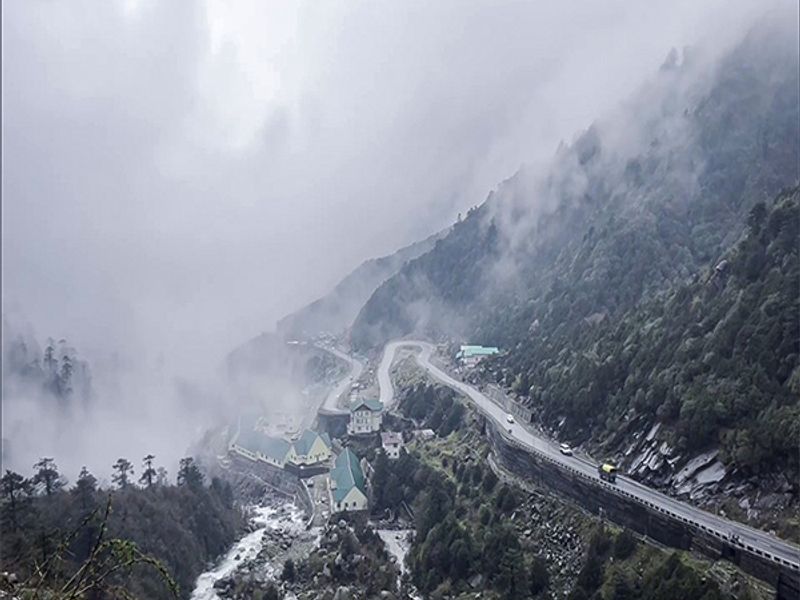

The ambitious Tanakpur-Lipulekh road project via Pithoragarh, aimed at improving access to the sacred Mansarovar, is progressing steadily, with the government targeting completion within the next year.The Rs 5,200-crore project, spanning 370 km, is expected to significantly ease pilgrimage travel and strengthen connectivity in the strategically important Himalayan region.Union Minister for Road Transport and Highways Nitin Gadkari recently said the government had taken up the challenging task of building an alternative route entirely within India. Around 200 km of the road has already been completed, while work continues on the remaining 129 km, which faces significant geographical and logistical hurdles.He said the initiative reflects the government’s commitment to improving infrastructure for pilgrims travelling to Mansarovar. At present, pilgrims have to pass through Nepal and China, making the journey long and complex.Despite these challenges, the government remains confident of completing the project within the targeted timeline. Once operational, the road will offer a safer, faster and more direct route to Mansarovar, while also boosting tourism, local development and connectivity in Uttarakhand’s border areas.The yatra, organised by the Ministry of External Affairs, is usually held between June and August.Gadkari said landslides in Himalayan states, particularly Uttarakhand, remain a major infrastructure challenge, causing frequent road blockages and safety concerns. He added that the government had undertaken detailed scientific studies in collaboration with international experts, including institutions from Switzerland, to develop long-term solutions.Based on these findings, a comprehensive action plan using advanced engineering and technology has been prepared to mitigate landslide risks in vulnerable areas.He said 296 projects worth about Rs 4,300 crore have been approved under the initiative, while works worth Rs 907 crore at critical landslide-prone “black spots” have already been completed. The government is also exploring the construction of multiple tunnels as safer alternatives to conventional roads in high-risk zones to ensure more resilient connectivity in the Himalayan region.