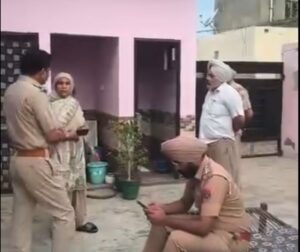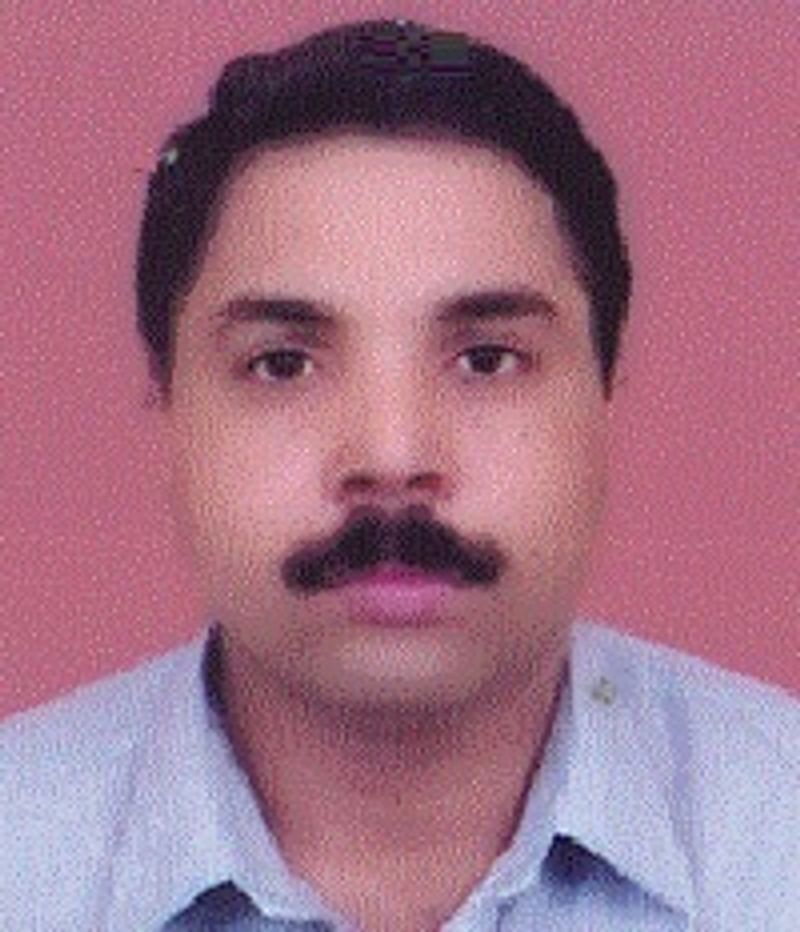

The Central Bureau of Investigation (CBI) has questioned IAS officer RK Singh about where the ill-gotten money received from the accused was parked. Singh was arrested on June 18 in the Rs 657 crore bank scam, and on June 19, the CBI secured his three-day police custody.On Monday, he was produced before the court and sent to judicial custody on the CBI’s request.The scam involved officials of IDFC First Bank and AU Small Finance Bank, who colluded with government officials, including IAS officers, to siphon off funds from the bank accounts of eight Haryana government departments and two Chandigarh Administration departments. While the CBI has put the quantum of loss at Rs 657 crore, the Enforcement Directorate (ED), which is also investigating the scam, claims a loss of Rs 645 crore.Also read: Rs 657-cr scam: Arrested IAS officer RK Singh admitted to signing cheques, says CBIThe investigation has so far revealed the role of IAS officer Ram Kumar Singh in the scam while he held charge of Commissioner, Municipal Corporation, Panchkula, and as Commissioner, Municipal Council, Kalka. Of the Rs 657 crore fraud, he is allegedly involved in the siphoning off over Rs 79 crore from the Municipal Corporation, Panchkula’s bank account at IDFC First Bank.During the CBI custody, he was questioned about the opening of a new bank account for the Municipal Corporation (MC), Panchkula, with IDFC First Bank, the call for quotations for FDs, the SMS received on the registered mobile number, and the steps taken after learning about the fraudulent transactions.IAS Ram Kumar Singh allegedly accorded approval for the opening of a new bank account at IDFC First Bank, Sector-32, Chandigarh, and for the transfer of funds exceeding Rs 100 crore thereto from the account of MC Panchkula, in clear violation of the extant guidelines of the Finance Department.He issued cheques to the co-accused with full knowledge that they would not be used to create Fixed Deposits but would be misappropriated, and had admitted that the signatures on the cheques were his own, according to the CBI.When fraud was brought before him, he allegedly issued further cheques to the co-accused instead of inquiring into the matter; one cheque was used for further misappropriation, and three cheques bearing his signature were missing.During the custody, he was confronted with statements of bank accounts received on the registered mobile numbers. He was questioned on digital evidence indicating that money was delivered to him through carriers for the alleged favours and also on where the ill-gotten money was parked.He was also questioned about communication with other co-accused and why he had deleted that from his mobile device. He was asked about why the money was being transferred to shell companies and back to the government account without any reason and why cheques were issued for Fixed Deposits in the same bank when a letter would have sufficed.The CBI even carried out searches at Singh’s residence, and documents were being scrutinised.The CBI on Monday told a Panchkula court that the proceeds of crime, including the “properties acquired” and the “gold purchased out of the siphoned funds,” are required to be identified and recovered.It added that, as digital evidence from the mobile phone has been destroyed, if left free, Singh would influence the other suspects to destroy their evidence. On CBI’s application, the Panchkula court sent him along with Prince Sharma, another accused, to judicial custody. Sharma was posted as Superintendent in the Development and Panchayats Department when the fraud took place.Singh was allowed to meet his wife, Namrata Singh, and advocates, and was allowed to self-administer the insulin injection every day during the custody.According to his immovable property details, filed before the Centre, as of January 1, 2026, Singh owned properties worth Rs 3.23 crore. He added that his wife has been running her own businesses for many years, including a petrol pump, a microbrewery, a restaurant, rental projects, agricultural lands, and the sale or purchase of properties, etc., with other family members.