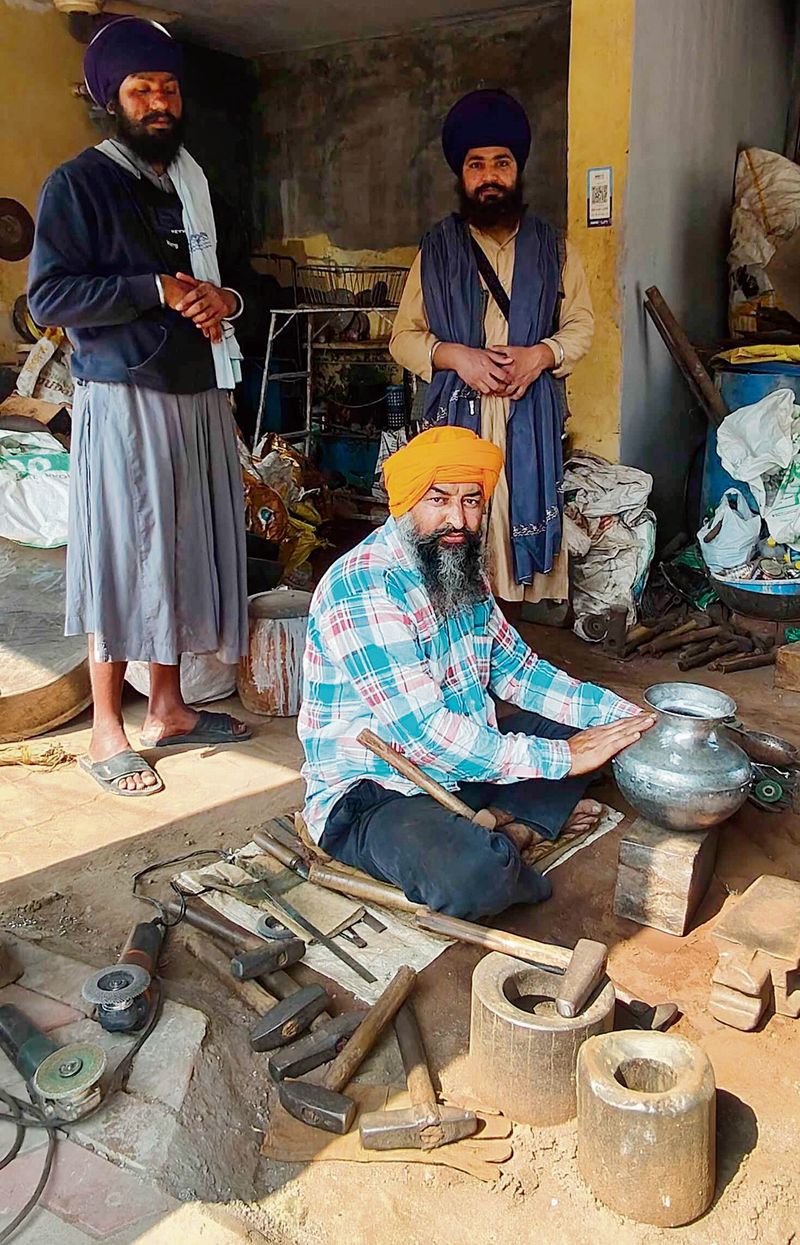

For several centuries, Gharuan village in Mohali district of Punjab has been home to artisans who make utensils from sarbloh. Literally meaning all or pure unalloyed iron, ‘sarbloh’ is actually an alloy of iron and carbon. As the percentage of carbon in the alloy can be as low as less than 1 per cent, it is referred to as sarbloh.Practically speaking, pure iron is too soft to be used for making utensils or other tools. The carbon in iron adds the essential hardness and tensile strength, ensuring that the cookware retains its shape during use. Thus, in metallurgical terms, sarbloh is wrought iron.Due to the low alloy in its composition, it signifies purity and has been used metaphorically in some sacred texts as a reference to God. Guru Gobind Singh used a bowl made of sarbloh for preparing ‘amrit’ when laying the foundation of the Khalsa in 1699.In those days, sarbloh utensils were commonly used by people engaged in mobile professions. Valued for durability, heat retention and versatility, sarbloh was used to make spatulas, cauldrons and iron plates (tava) for cooking; buckets and pots for drawing and storing water; and bowls and spoons for serving food. Large degs were used when cooking for bigger gatherings. These utensils were comparatively cheaper and functional than those made from other metals and could be cleaned using sand.The artisans mostly shape with hands utensils such as woks, pans, spider strainers, colanders, ladles, pots, bowls, etc, for cooking, serving and storing food in daily life. Being handmade, the utensils are produced in limited quantity. As a result, the artisans face competition from industrially manufactured alternatives. In such circumstances, the artisans of Gharuan deserve appreciation for struggling to keep their skills alive.In the second half of the 20th century, sarbloh utensils, along with copper, brass and bronze utensils, were largely replaced by cheap and low-maintenance stainless steel and aluminium utensils in Punjab. Interestingly, sarbloh utensils have had steady patrons in Nihangs. Referred to as Guru Gobind Singh’s beloved army, Nihangs have continued to use these as carriers of a scared tradition. They wear traditional long robes in blue, rear and ride horses and carry traditional weapons like swords, spears and chakram or war quoit, etc, made of sarbloh.In Gharuan, around five families, with 18-20 craftsmen, are engaged in this craft. They artisans employ traditional forging skills to shape the iron sheets into small and big utensils for daily use in the kitchen as well as for special congregations. As is the case with other traditional crafts, sarbloh artisans are facing challenges such as competition from alternatives, low remuneration, government apathy and a lack of recognition. However, that has not stopped them from pursuing the craft they have been engaged with for generations, and relentlessly so.— The writer is former vice-chairman, INTACH