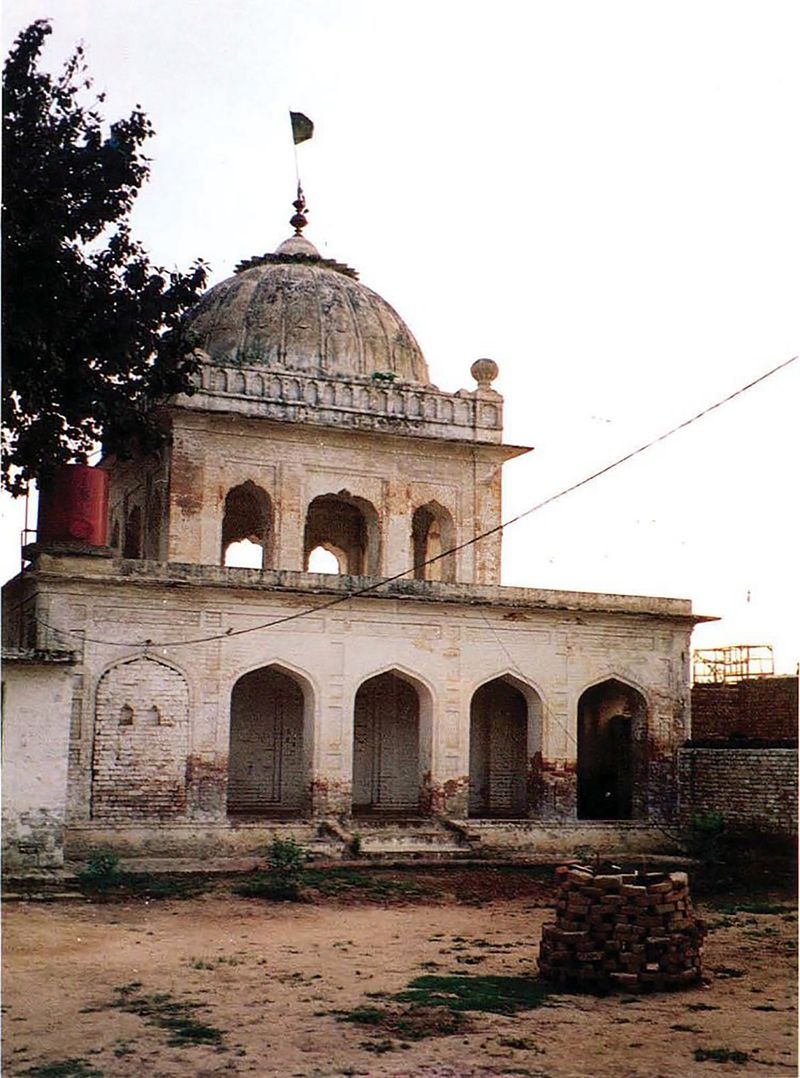

A historic gurdwara in Lahore associated with Guru Hargobind Sahib has been reopened to devotees for the first time since Partition, ending a wait of nearly 79 years.Gurdwara Patshahi Chhevin at Amar Sidhu, a historic village on the Lahore-Kasur road that is now part of Lahore’s urban limits, was formally reopened following the shrine’s renovation. The local Sikh community marked the occasion by performing a Sukhmani Sahib ‘paath’ and ‘ardas’ on Friday.The shrine is one of the three historic gurdwaras in Lahore associated with Guru Hargobind Sahib. Historical accounts state that the Guru stayed at the site while returning from Kashmir before proceeding towards Amritsar. The shrine is also linked to Bibi Kaulan, who is believed to have accompanied the Guru during the journey along with a Sikh congregation.According to Davinder Singh Dhillon, editor of the Gurdwara Pedia portal, the site initially comprised only a simple memorial. A grand gurdwara was constructed in 1923 through the efforts of Bhai Mohan Singh Akali (Nihang) and the support of the Lahore Sikh community.Renowned civil engineer Sir Ganga Ram, who built several iconic buildings in undivided Punjab during the British era, made a significant contribution to the construction.Dhillon said the complex originally had around 17 kanals of land, with provisions for langar and accommodation for pilgrims. Before Partition, it was managed by the local Sikh community under the supervision of the Shiromani Gurdwara Parbandhak Committee.Historical records state that the original Tharra Sahib, marking the spot where Guru Hargobind Sahib had rested, was enclosed within a permanent structure built in 1923 at the centre of a garden. The shrine featured an imposing dome, surrounding verandahs and marble flooring bearing inscriptions in both Gurmukhi and Shahmukhi, commemorating the Sikh devotees who had contributed to its construction.The shrine suffered extensive damage during the communal violence that followed Partition in 1947 and remained abandoned after the Sikh population migrated to India. Over the decades, the building’s condition deteriorated, the adjoining sarovar was filled up with earth and much of the surrounding land was encroached upon.For the past several years, the premises reportedly remained under the occupation of a private family, which had also established the grave of a local ‘pir’ (saint) within the complex.