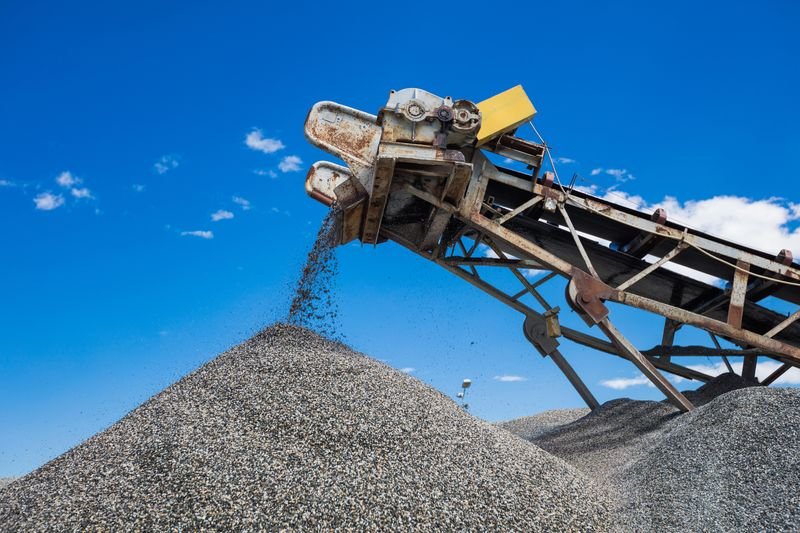

The Supreme Court has ordered a probe by a Special Investigation Team (SIT) into illegal bajri (gravel) mining in Luni, Jojari and Bandi rivers and their tributaries in Rajasthan.While directing the Rajasthan Government to set up an SIT to investigate illegal mining, a Bench led by Justice Vikram Nath also ordered a probe into the alleged involvement of public officials in facilitating such illegal activities.The SIT will examine if public officials facilitated or enabled illegal mining, including instances of collusion, dereliction of duty or failure to act despite knowledge of violations. Appropriate action has to be initiated against those found responsible.The Bench — which also included Justice Sandeep Mehta — directed the SIT to file a status report before it on or before the next date of hearing on November 27.It restrained the state government from granting permissions for the establishment of new industrial units along or in the vicinity of the riverine ecosystem until the High Flood Line and buffer zones are scientifically determined.It said the SIT shall be headed by an officer not below the rank of Inspector General of Police and will include the Superintendents of Police of Jodhpur, Balotra and Pali.“The SIT shall undertake a comprehensive investigation into organised illegal bajri mining activities affecting the Luni, Jojari and Bandi rivers and their tributaries. The investigation shall extend to identifying the persons and entities involved in such activities, the networks through which the illegal extraction, transportation and sale of bajri are organised, and the beneficiaries of such operations,” it said in its October 26 order.The order came during the hearing of a suo motu case on pollution in the Jojari-Luni-Bandi river system, affecting the environment and the lives of approximately 20 lakh people.Earlier, the Bench had warned Rajasthan authorities of a CBI probe into alleged illegal mining and the regularisation of mining areas along the Jojari-Luni-Bandi river system. It had sought to know why the state authorities granted mining leases in areas where illegal mining had been detected, and regularising illegal leases.It ordered that an additional protective zone of 100 metres be maintained on either side of the respective recorded outer boundaries of the rivers. The Court held that No Red Category industry shall be permitted to be established within a distance of 500 metres from the said recorded outer boundaries.The Bench expressed serious concern over the Rajasthan Mining Department’s explanation that mining leases had been subsequently granted according to prescribed procedures in several areas where illegal gravel mining had previously been detected.“The fact that mining leases may have subsequently been granted in accordance with the prescribed procedure does not, by itself, answer the question whether the grant of such leases is environmentally sustainable or consistent with the need to preserve and restore the natural course, riverbed and ecological integrity of the river systems,” it said, adding the authorities attempted to legitimise illegal mining activities through subsequent lease grants instead of taking appropriate action against those responsible.The Bench said it would consider directing appropriate action against officers found responsible for permitting or facilitating such activities.“We deprecate the apparent attempt on the part of the Mining Department of the State of Rajasthan to legitimise illegal mining activities being carried out in the riverbeds by subsequently granting mining leases, rather than taking appropriate action against those responsible. We shall consider directing appropriate action against the officers found responsible for permitting or facilitating such activities,” it said.