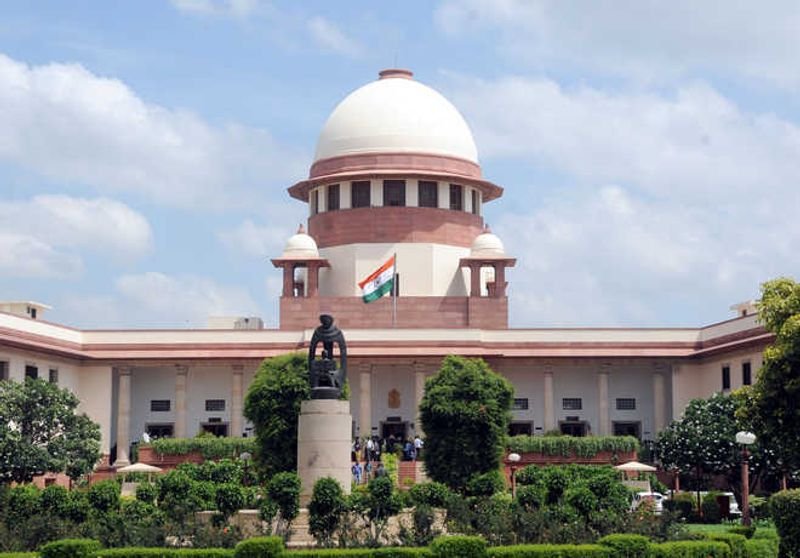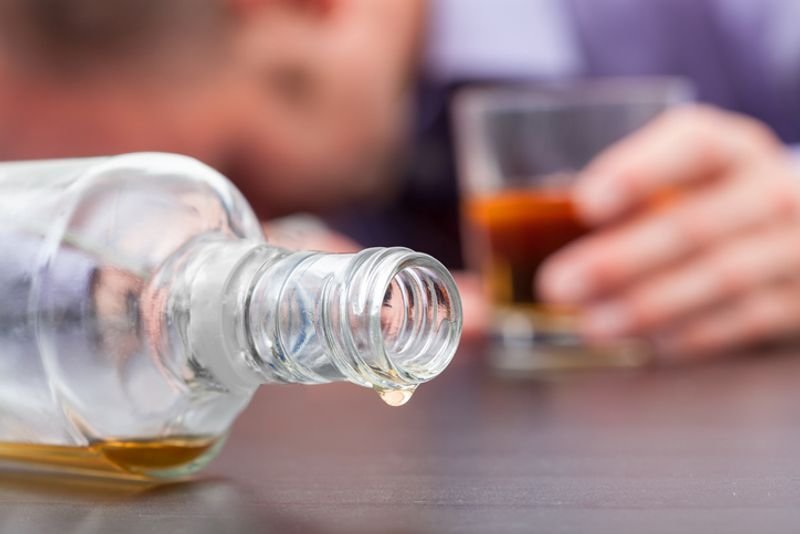

Noting that 600 people have died in hooch tragedies in Gujarat since its creation in 1960, the Supreme Court on Friday questioned the rationale behind total prohibition, observing that it drives the liquor trade underground, increases the prevalence of unregulated, lethal brews and leads to loss of revenue.“Take the case of the state of Gujarat. The state of Gujarat has a strict prohibition policy. It is a dry state. The state of Gujarat has witnessed at least 10 major mass hooch tragedies since the state’s formation and independence, claiming the lives of over 600 people,” a bench led by Justice JB Pardiwala said.“Despite the state of Gujarat maintaining a strict prohibition policy since its creation in 1960, hooch tragedies, (laththa laced with methanol) has rapidly led to severe public health crises,” said the bench, which also included Justice K Vinod Chandran.“History bears eloquent testimony to the fact that complete alcohol ban often drives the liquor trade underground, increasing the prevalence of unregulated, lethal brews,” it said while quashing Rules 18A and 18B of the Maharashtra Poisons Rules, inserted through a 2011 notification after a major hooch tragedy in Mumbai.Writing the judgment for the bench, Justice Pardiwala said, “It can be safely said that there are five evils associated with prohibition – (i) loss of revenue on taxes, (ii) expenditure on implementation and good money spent, (iii) corruption in police and excise, (iv) illegal distilling and in the present days, and (v) resultant drug menace.”Quoting legendary jurist Nani Palkhiwala, the bench said, “In order that prohibition might be prohibitive, prohibition must be on the part of the governed and not the Government. When the Government begins to prohibit liquor, it ends in promoting liquor, because it cannot do otherwise for all that its worth.”The top court suggested several measures for states and Union territories to undertake to prevent hooch tragedies, calling for a coordinated, multi-department approach to curb the illegal manufacture, transportation and sale of spurious liquor. It emphasised the need for breaking the chain of supply and demand of illicit liquor, strengthening enforcement at state borders and tightening the regulation of methanol, a chemical that can be diverted for use in manufacturing spurious liquor.It said, “The recent hooch tragedies at Bhavnagar, Gujarat and Sagar, Madhya Pradesh, which claimed around 13 and 15 lives, respectively, are again a reminder for the authorities to wake up and act.”Currently, states of Gujarat, Bihar, Nagaland, Mizoram and Union territory of Lakshadweep are dry while there is partial prohibition in Kerala and Manipur.