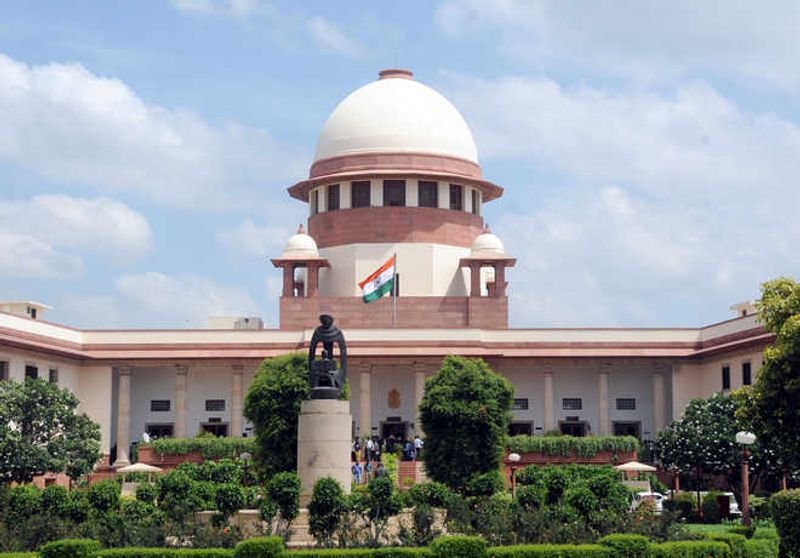

The Supreme Court on Monday agreed to take up all the petitions challenging the validity of the Transgender Persons (Protection of Rights) Amendment Act, 2026, for final hearing on August 17.A bench of Chief Justice Surya Kant, Justice Joymalya Bagchi and Justice V Mohana expressed concern over the rights of transgender persons and issued the necessary directions for listing the matter.Justice Bagchi said the bench was particularly concerned about safeguarding the rights of transgender persons who had already been issued Transgender (TG) identity cards under the earlier law.On June 15, the Supreme Court had issued notice on the Centre’s plea seeking transfer of petitions challenging the validity of the Transgender Persons (Protection of Rights) Amendment Act, 2026 pending in high courts of Delhi, Rajasthan, Karnataka and Kerala to the top court.The bench had stayed further proceedings before high courts on petitions challenging the amendment which introduced certain contentious changes in the legal framework governing the recognition, rights and protection of transgender persons.Passed by Parliament in March this year during the Budget Session, the law amended the Transgender Persons (Protection of Rights) Act, 2019 and redefined who qualified as a “transgender person”. It also strengthened penal provisions to address serious offences such as forced identity and bodily harm. President Droupadi Murmu had given her assent to the ‘Transgender Persons (Protection of Rights) Amendment Act, 2026’ on March 30, 2026.The amendment has been criticised by LGBTQIA+ groups on the ground that they were not consulted before the introduction of the Bill. National Council of Transgender Persons (NCTP) members Kalki Subramanium and Rituparna Neog had resigned in protest. Former Delhi High Court judge Asha Menon who headed a committee set up by the Supreme Court to examine transgender rights has asked the Centre to withdraw the Bill.On May 4, the Supreme Court had issued notices to Centre, states and Union territories on petitions challenging the validity of the Transgender Persons (Protection of Rights) Amendment Act, 2026 after senior counsel AM Singhvi pointed out that the amendment took away transgender persons’ fundamental right to self-determination of gender.The petitioners contended that transgender persons receiving hormonal therapy would face problems due to the amendment. He, however, didn’t press for stay of the amendment as it had not been notified.Petitioners transgender persons Laxmi Narayan Tripathi, Zainab Patel and others — who have challenged the validity of the amendment — alleged that it caused “irreparable constitutional injury” to the fundamental rights of transgender persons guaranteed under Articles 14 (right to equality), 15 (right to non-discrimination), 19 (right to freedom of speech and expression) and 21 (right to life and liberty) of the Constitution.Tripathi is the Acharya Mahamandaleshwar of the Kinnar Akhara, a Bharatanatyam dancer, author and social activist, Patel is the Director (Inclusion & Diversity) at KPMG India, and a Member of the National Council for Transgender Persons (Western Region).They wondered if the state, through legislation, could define who a person was by substituting biological or socio-medical classifications for a person’s lived and self-perceived identity.The PIL alleged that the amendment dismantled the principle of self-identification of gender recognised as a fundamental right by the Supreme Court in the landmark verdict in National Legal Services Authority (NALSA) versus Union of India (2014).Referring to the provision requiring the District Magistrate to issue a certificate of identity for a transgender person only after examining the recommendation of a medical board, the petitioners said it violated transgender persons’ right to privacy.“Parliament has, by the stroke of a legislative pen, repealed the statutory right that this court held to be a fundamental right under Article 21. The impugned deletion does not even require elaborate constitutional analysis to expose its unconstitutionality: a provision that directly codifies a right declared fundamental by this court cannot be omitted by ordinary legislation without violating Article 21 and the doctrine of non-retrogression of fundamental rights,” they submitted.