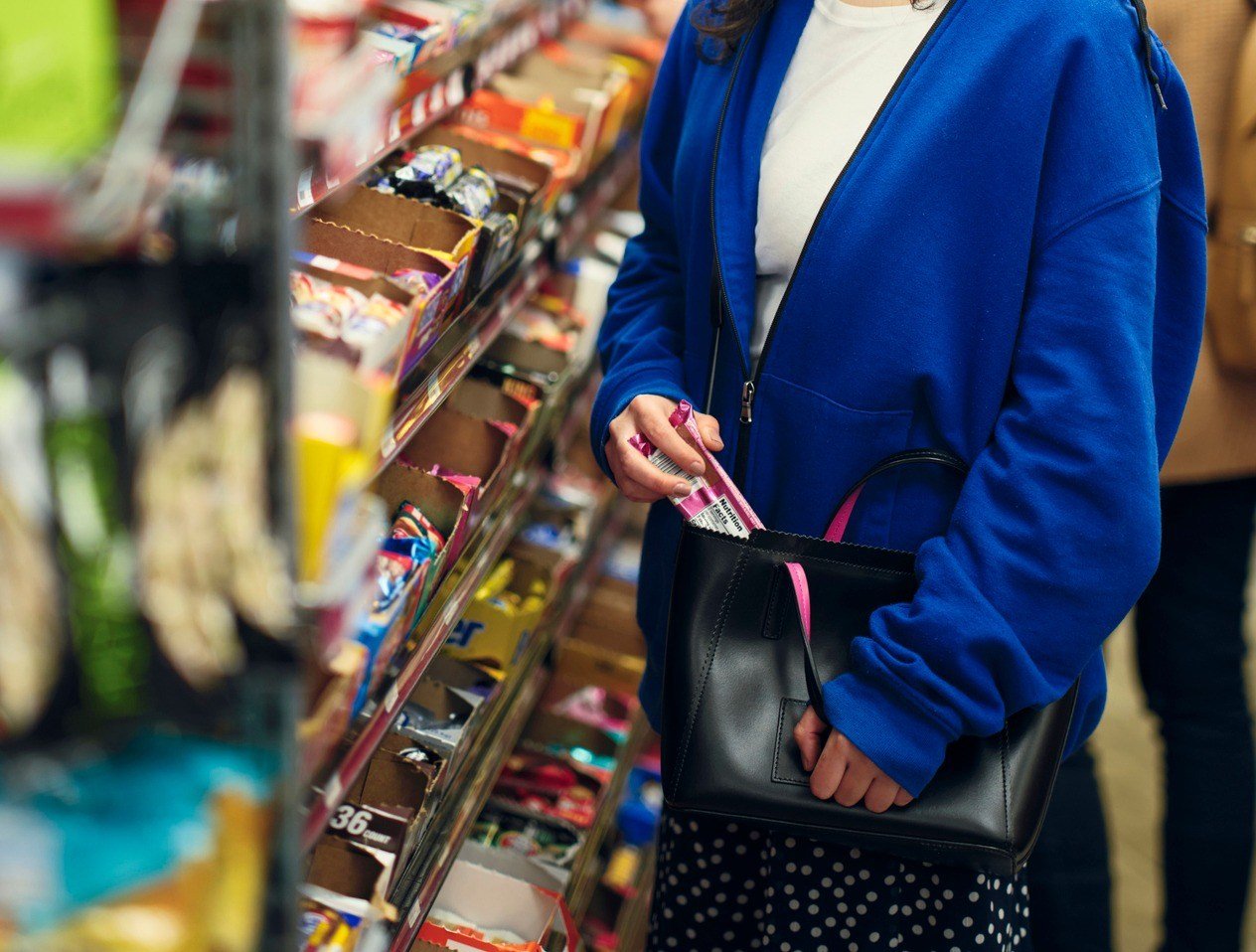


SHOPLIFTERS could be forced to wear GPS-tracking ankle tags under plans being considered by a local council.
It’s the latest extreme measure local authorities and retailers have had to resort to as shoplifting thefts soar across the country.
The British Retail Consortium says there are now a huge 55,000 thefts a day.
As a result, Croydon Council in south London says it’s looking at tough new proposals to crack down on the issue.
Sign up for the Money newsletter
Thank you!
They include giving persistent shoplifters electronic tags that would track their location, and not allowing them to enter certain parts of the town centre.
Croydon Council says it has been working with police and tech companies to develop the plans.
BAR HUMBUG!
Pub begs drinkers to stop queueing single-file and hits out at ‘bizarre’ trend
SHUTTERS DOWN
Apple closing location in beloved UK shopping mall after 15 years
There were 4,796 reported shop thefts in Croydon town centre over the last 12 months, a small reduction on 5,043 the year before.
But the council says there is more to be done to reduce the strain on local businesses.
Shops have been turning to increasingly extreme measures to stop thefts – including these…
AI facial recognition cameras
AI facial recognition cameras can spot repeat shoplifters by analysing faces
Some shops have installed AI facial recognition cameras to spot repeat shoplifters.
The software instantly analyses faces to compare them to a database of criminals and alert shop staff.
Major supermarket chains have trialled the cutting-edge AI systems, but The Jattvibe recently revealed thousands of independent retailers are now using them too.
The largest provider of facial recognition tech in the UK is Facewatch, used by Sainsbury’s, Iceland and Sports Direct, and it has more than 100,000 images of suspects.
Nathan Wilson, head of security at Blue Diamond Garden Centres, one of the retailers using the technology, said: “Three years ago, shrinkage was about £2million a year, which was mostly down to shoplifting.
“Last year we got that down to about £1.3million. This technology has played a big part in that.”
Anti-theft boxes for groceries
Co-op store uses GPS security boxes for chocolate bars to prevent theft Credit: Dan Charity / Newsgroup Newspapers Ltd
Anti-theft boxes have commonly been used for pricier items, but shoppers have more recently seen them used for everyday groceries.
Customers have to ask staff to open the boxes when they buy the item.
Astonished shoppers saw chocolate bars locked in the plastic boxes in some UK shops.
Sainsbury’s said it had begun using “boxes on products which are regularly targeted”, with £2.60 bars of Cadbury Dairy Milk locked up in one London branch.
Tesco and Co-op have also used the boxes for chocolate products.
Meanwhile, retailers such as The Food Warehouse have kept items like Fairy dishwasher tablets and laundry detergent capsules in the sealed boxes.
GPS trackers for meat
Some products have been locked inside boxes with GPS trackers on them Credit: Jam Press
Co-Op was recently spotted tagging grocery items including sausages, steak and beef with GPS trackers.
It’s a similar solution to the anti-theft boxes, but the plastic boxes are fitted with a GPS tracker.
Each of the products has a label telling shoppers the item is being tracked.
The supermarket said at the time the crime-prevention tactic was not new and had, along with other measures, helped contribute to a reduction in crime.
An image of the sausages, shared by media personality Duncan Barkes, shows the GPS tracker attached to Co-op Irresistible Cumberland Sausages 400g, which were selling for £3.90 at a store in Sussex.
Body-worn cameras
Staff in some retailers have been given body-worn cameras to prevent shoplifting
Other retailers have fitted their staff with body-worn cameras to put off shoplifters.
Co-op was one of the first chains to start rolling out the tech to store staff and managers across thousands of local convenience branches.
Tesco has also deployed the cameras in high-risk stores, as well as giving them to delivery drivers.
Poundland said it had done similar to manage aggressive behaviour.