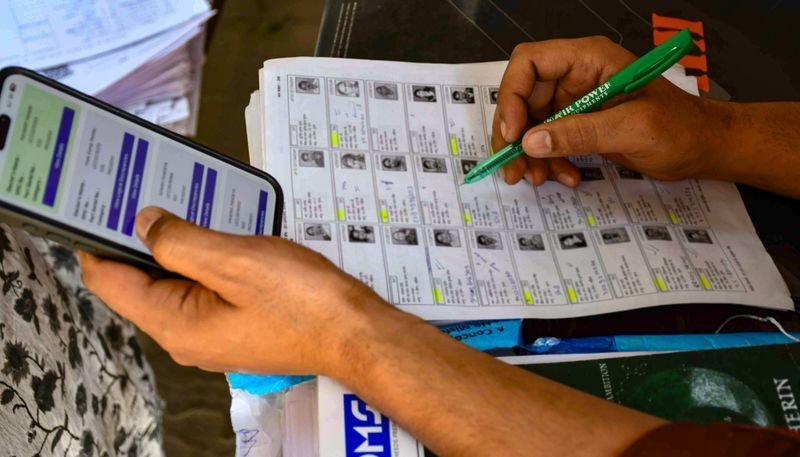

Nearly 67 per cent of the enumeration forms distributed among Delhi’s 1.45 crore electors under the ongoing Special Intensive Revision (SIR) of electoral rolls have been digitised, official data showed on the final day of the enumeration exercise.According to the data, forms belonging to around 97.4 lakh voters have been digitised. Their names are expected to figure in the draft electoral roll to be published on August 24.The remaining 47.7 lakh electors have been categorised as “uncollectable” under the Absent, Shifted, Dead, Duplicate and Others (ASDDO) categories. Their names will not be included in the draft roll unless they successfully file claims or objections during the next stage of the revision.What happens to 47.7 lakh voters?The exclusion from the draft roll does not automatically mean that these voters have permanently lost their right to vote. A separate list of electors placed in the ASDDO categories is likely to be released, following which they will get an opportunity to establish their eligibility.The claims and objections window will remain open from August 24 to September 23. The final electoral roll is scheduled to be published on October 27.The collection of forms varied considerably across Delhi. Southeast Delhi recorded the lowest collection rate, with forms from about 56 per cent of the 15.5 lakh electors having been received.The enumeration exercise was extended twice in July after Chief Electoral Officer Ashok Kumar cited slow progress in the collection and processing of forms.With the enumeration phase ending on Monday, Booth Level Officers (BLOs) were given a final deadline to update records. A senior election official said the BLO application would become inaccessible after midnight, preventing further changes to the enumeration data.Why are so many voters not in the draft roll?Election officials said a substantial proportion of voters whose forms were not returned are believed to have shifted from their registered addresses. The large migrant population in Delhi was cited as one of the reasons for the high number of electors falling into the ASDDO categories.Officials had anticipated deletions of 20-30 per cent, making the current figure significant but not entirely unexpected.However, the draft roll is not the final stage of the process. Electors who believe their names have been wrongly excluded can submit claims and objections during the designated period.Who will have to provide additional documents?Among the voters whose enumeration forms have been received, around 34 per cent, or more than 33 lakh electors, will undergo additional verification.These voters will be required to produce one of the 12 documents prescribed by the Election Commission during the month-long notice period following the claims and objections stage.The group includes around 13 lakh electors who could not establish a link between themselves or their relatives and the previous SIR electoral roll. Another 19 lakh-plus voters have been flagged for what election authorities describe as “anomalies”.For voters who may not possess the prescribed documents, such as homeless persons, the Electoral Registration Officer will examine their circumstances and decide their eligibility.What are ‘anomalies’?The Chief Electoral Officer’s office has not yet released a detailed public list of the discrepancies detected in the enumeration data. However, according to sources, officials have identified several types of logical inconsistencies.These include multiple children linked to the same parent, unusually small age differences between parents and children, differences in names appearing in electoral rolls and surname mismatches.An AI-assisted system is being used to identify such inconsistencies. Officials, however, have acknowledged that the system can produce false positives and that every flagged case does not necessarily indicate an error or ineligibility.For instance, more than 80,000 voters were flagged because their addresses on Aadhaar and voter identity cards did not match. Officials clarified that these cases are being handled separately and have not been included in the “anomalies” category.Northeast Delhi sees highest number of anomaliesNortheast Delhi has emerged as one of the districts with the largest number of discrepancies. Anomalies have been detected in forms relating to more than three lakh voters out of around 13 lakh forms received in the district.The district covers the Seemapuri, Rohtas Nagar, Seelampur, Ghonda, Babarpur, Gokalpur, Mustafabad and Karawal Nagar Assembly constituencies. Together, these constituencies account for around 18.70 lakh electors, the highest electoral population among Delhi’s districts.Northeast Delhi has also reported nearly 1.4 lakh unmapped electors, the second-highest figure among the districts, marginally below Southeast Delhi’s around 1.43 lakh unmapped voters.The next stages of the SIR will be crucial for voters whose names are missing from the draft roll. They will have an opportunity to submit claims, provide supporting documents where required and seek correction or inclusion before the final electoral roll is published on October 27.