

KNOWN as ‘the most notorious crime scene in British history’, the Essex Boys Murders have captured the imagination of amateur sleuths for three decades.
Despite two men being imprisoned for the grisly gunshot killings back in 1998, theories about the so-called ‘real killers’ and clues allegedly missed by investigators continue to swirl – and is now it’s back in the spotlight as a documentary examining the case lands on Netflix.
Essex Boys (L:R) Patrick Tate, Anthony Tucker and Craig Rolfe were found dead in December 1995 Credit: PA
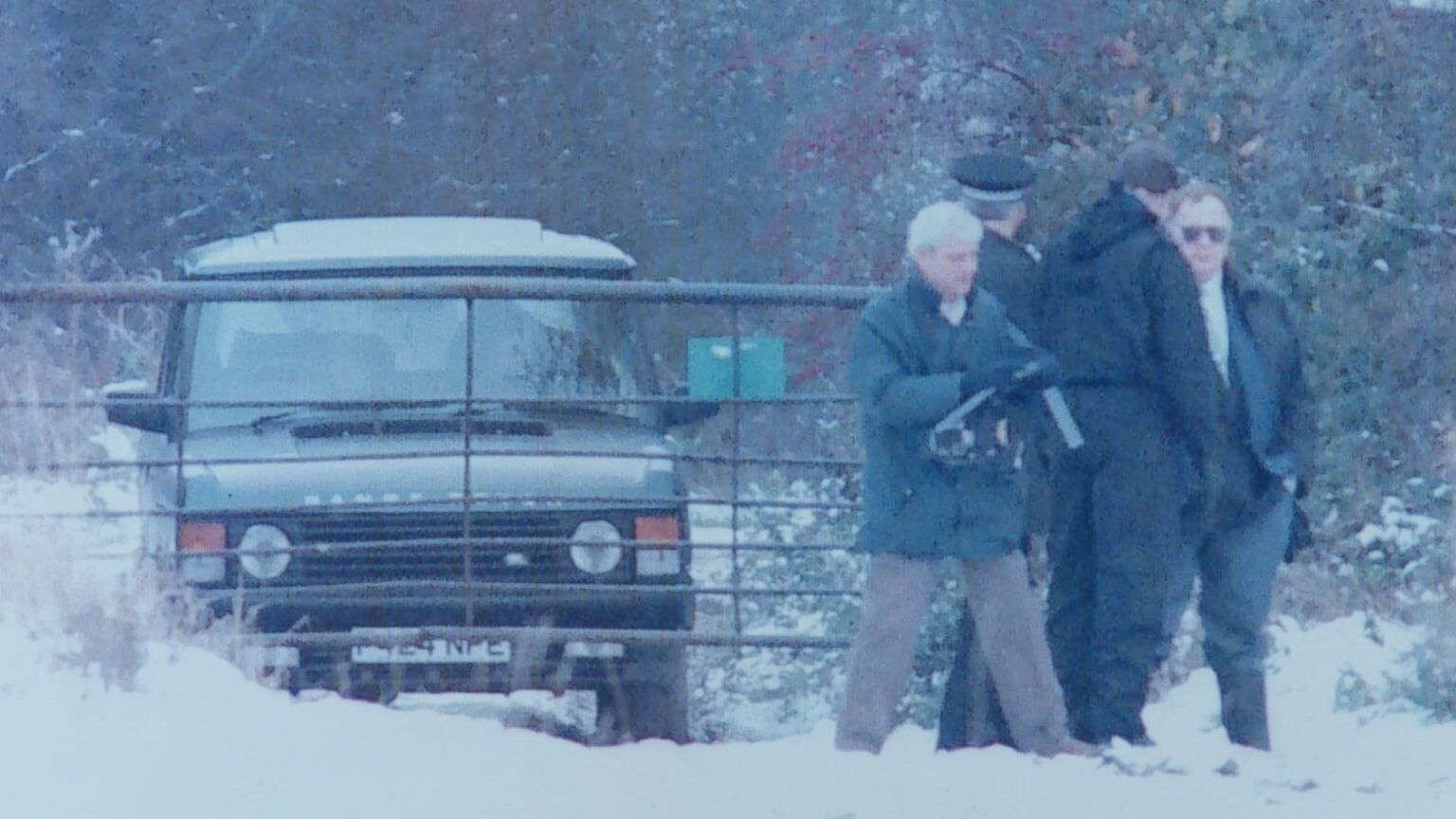
The bodies of the victims, who all suffered gunshot wounds to the head, were discovered in a Land Rover Credit: Andrew Styczynski – The Jattvibe
The bodies of Tony Tucker, 38, Patrick Tate, 37, and Craig Rolfe, 26, were discovered in 1995 inside a Land Rover down a quiet lane on a farmer’s field in Rettenden, Essex, and the trio had a troubled past.
They were small-time gangsters known for peddling ecstasy and other drugs in Essex nightclubs and allegedly had a legion of enemies.
Police insist they were lured to a quiet spot for a drug deal and slayed by shotgun-wielding assassins in what was described as a “brutal gangland execution”.
The men jailed for their murder – Michael Steele, nicknamed the ‘Angel of Death’, and Jack Whomes – were career criminals, yet protested their innocence until their release.
The constant denials led to multiple failed appeals and ultimately saw them serve a longer time behind bars.
Now further speculation has emerged after Netflix released 2023 documentary Murder of the Essex Boys: Blood and Betrayal, which is number two in the UK Top Films category and has been hailed as the “best watch ever”.
In December, the 30th anniversary of the grisly executions, The Jattvibe revealed another fresh twist in the tale, with unearthed tapes revealing how Whomes’ brother – a long-time campaigner for his freedom – had nobbled a key witness during the trial.
While the bombshell revelation led one former Essex detective to say it was “time to draw a line” under the case, further challenges may yet lie ahead, with the Criminal Cases Review Commission currently considering an application by a team of private detectives working pro-bono.
Skeptics around the prosecution’s argument point to it mainly relying on the testimony of a so-called “supergrass”.
Snitch Darren Nicholls, who was a paid police informant, gave evidence after being arrested with 10kg of cannabis in his van and claimed to be Steele and Whomes’ getaway driver.
Questions about how reliable this evidence was, alongside other theories related to the evidence and motives for other potential suspects, have led to enduring speculation.
Having recently investigated the case during a visit to sleepy Rettendon, which still remains haunted by the notorious crime three decades on, it was clear to me that many locals still harbour doubts and frustration over what happened that fateful night.
So what are the burning riddles that have endured for 30 years – and, as exasperated residents told me, still see hundred of amateur sleuths pile into the village every year?
Who were the Essex Boys’ enemies?
Essex Boys Murderers Michael Steele (L) and Jack Whomes have always maintained their innocence Credit: Police
Police are certain they jailed the right men for the killings – yet if theories are to be believed, there would be no shortage of would-be-murderers with motives because The Essex Boys had plenty of enemies.
Bernard O’Mahoney, who ran security at Raquel’s nightclub where the trio peddled ecstasy at the height of the 90s rave scene, told us they were “failed drug dealers, robbers and low-life bullies” who often preyed on the weak.
He claimed everyone knew they “would never make it to the old folks’ home” and it was only a matter of time before they were killed, due to a series of violent incidents they were allegedly involved in.
There was the death of Leah Betts, who passed away on her 18th birthday after taking an ecstasy pill bought from the Essex Boys.
Some theories claim the gang were killed due to someone being disgusted by their drug peddling after the teen’s death became national news and appalled people across the country.
Meanwhile Bernard said the trio’s increased drug use made them so hostile they went “on a rampage, threatening everyone they encountered”, which could have provoked an attack.
They were also said to have angered two of Essex’s “most notorious and powerful ganglords”, who warned they would “end up dead”, according to the nightclub doorman.
It’s also claimed there were heated exchanges with a former Essex Boy, who many months before the killings, shot Tate while he sat on the loo and threw a brick at him through a window. He survived that initial attack.
Was it a revenge attack?
Jattvibe reporter Josh Saunders with Peter Theobald where he found the Essex Boys’ bodies Credit: Louis Wood
Another theory emerged from Marie Tate, mother of victim Pat, who claimed the deaths were a revenge killing after Tucker and Rolfe killed a man over a drug debt in 1994.
She claimed the victim was Kevin Whitaker, 28, whose body was found at the side of the road with needle puncture marks in his arm. Police concluded he died from a drug overdose.
Marie claimed her son Tate told her that the duo injected Whitaker with paralysing drug ketamine, so he was “powerless but conscious”, before injecting him again with Lignocaine, which killed him.
Friends of Whitaker, she alleged, “avenged his death” by taking out the trio in Rettendon. Police did not believe the incidents were linked.
There’s also the claim from a “mid-tier” East End villain called Billy Jasper, who insisted the trio were murdered over a drug debt owed to a major South London criminal and they hired an East London firm for the hit.
The crook, arrested in 1996 for armed robbery, claimed to have been paid £5,000 to be the getaway driver for the killing and testified at Whomes and Steele’s trial.
Some believe the murders were the act of a professional assassin, rather than a plucky criminal, due to the successful head shots on a dark night with no streetlights nearby.
Was it a drug deal gone wrong?
The Land Rover where the trio were found dead back in 1995 Credit: Rex
Bernard supports the drug-deal gone wrong claim, favoured by cops, however for many years he didn’t believe Steele or Whomes were behind it.
He claimed the trio were coaxed to meet their killers on the quiet lane by someone they had “previously threatened to kill”.
On the night they died, they travelled to a farmer’s field in Rettendon for a drug plot dummy run ahead of receiving £1million cocaine set to be flown in.
But Bernard claimed the Essex Boys had a different idea, telling The Jattvibe had no intention to play fairly.
“They planned to bash up the guy who flew in the coke, take the coke and split it three ways,” he said.
However, as it transpired the whole thing turned out to be “a baited hook” according to Bernard.
The individuals the Essex Boys were planning to steal the cocaine from was Steele and Whomes, whom they had allegedly already defrauded of money in a previous dodgy weed deal.
Bernard said Tate received a gunshot wound to the stomach, and was the last to be shot in the head, because the gunman wanted him to die slowly as a final act of revenge.
The ex-bouncer added: “He’d been the catalyst of all the trouble that had been caused and so it was deemed essential that he should watch the murder of his friends before he was executed.”
Rolfe’s brother Brian, who was also involved in crime, recalls seeing his brother had “a gun in the glove compartment and two kilos of coke” in his car, the night before the murder.
However, O’Mahoney has since reversed his position on the killings and now believes Steele and Whomes were guilty.
He changed his stance after Whomes’ brother John, who had been campaigning for the conviction to be overturned, appeared to suggest to him during production of a 2015 documentary that his brother and Steele were guilty of the murders, despite his efforts to get them freed.
Did they Essex Boys know they were being set up?
Killer Michael Steele was released from prison in May after 27 years in prison Credit: Rex Features
Bernard tells us in the dying weeks ahead of the Boys’ passing, things were rather turbulent.
He alleges Tate and Tucker were spending nearly £1,000-a-day on crack cocaine and were becoming increasingly volatile due to being “out of their heads all the time”.
“They were like zombies,” Bernard told us. “Smoking that shit, then going to sleep, waking up and doing it again. They transformed into psychotic bullies, who couldn’t be reasoned with.”
After the death of Leah Betts, Tate was “going off his head” due to the world’s media descending upon Raquel’s nightclub.
Additionally, Bernard says around that time there was a botched £120,000 weed deal after they discovered only a third of the stash was real.
“Everything appeared to be going wrong,” Bernard says. But he insists they still had lofty ambitions and believed the fateful cocaine drop, which claimed their lives, would make them rich beyond their wildest dreams.
Bernard is certain they had no idea they were being lured into a trap when they visited the farm in Rettendon for a ‘dummy run’ of the cargo drop off.
He adds: “They were greedy, jumping for joy, thinking they would be millionaires. They even booked an 8pm meal to celebrate.”
It’s claimed Steele met them on a Hungry Horse car park nearby and directed them to the field where they would be gunned down by Whomes.
How soon they realised it was a trap is unclear. Could they have known when Steele got out of their car to open the farmer’s field gate and they realised there was no plane waiting for them? Or, maybe it was only when Whomes emerged from the bushes with a shotgun?
Was the ‘supergrass’ reliable?
At least 13 films were made about the Essex Boys Murders, including one with Sean Bean Credit: Film Company
The testimony of ‘Fat Darren’ Nicholls largely was responsible for the imprisonment of Steele and Whomes.
The investigation had stalled before the petty crook and police informant’s arrest in May 1996, when he was caught with 10kg of cannabis.
Nicholls told police he was the getaway driver, and that Steele had lured the trio to the murder spot, on Workhouse Lane, and a passenger in the boys’ Land Rover.
Upon arrival, Nicholls said Whomes jumped out of the bushes, handed Steele a shotgun and the duo blasted the gang to death.
The so-called ‘supergrass’ claimed Steele boasted, while driving off, that the trio “won’t f*** with us again”.
It was claimed weeks before the murder that Tate threatened to kill Steele after he lost money when one of their drug deals went wrong.
Nicholls pleaded guilty to drug running and was given a lenient sentence, a new identity and rehoused at a secret location upon his release.
At trial, even the judge Mr Justice Hidden remarked: “You must bear in mind it was in his own interest to become a prosecution witness – he hopes to get less time to serve.”
And while in prison, an inmate held in the same secure unit as Nicholls back in 1997, claimed the supergrass admitted he lied. Three others also testified that Nicholls confessed to being untruthful.
“He said the story he was supposed to tell in court was a pack of lies,” one of the witnesses said.
The prisoner initially chose to “ignore Darren’s perjury” because he believed there were “forensics, witnesses” and other evidence that proved Steele and Whomes’ guilt.
Describing his motivation for speaking out, he said: “Now I realise Darren wasn’t the cherry on the cake – he was the cake.”
During the killers’ 2006 appeal, judges concluded that Nicholls may have received up to £15,000 as part of a book deal on the case, prior to the duo’s trial.
He had also agreed to appear in a TV documentary about the case, which is suspected may also have led to a fee.
Appeal Court judges would later say Nicholls had a “corrupt” relationship with his Essex police handler, throwing further doubt on his testimony.
Why maintain their innocence?
Whomes was released in 2021 after serving his minimum 23 year term Credit: Getty
Both of the killers maintained their innocence throughout, despite being career criminals heavily involved in the drugs trade.
This was considered unusual because it meant they served the full minimum terms for their sentences – and in fact, Steele remained in prison for a further four years.
While Whomes was released in 2021, Steele was only let out on licence back in May this year – neither have spoken to the press.
Bernard told us his suspected this could be because if either of them spoke out, it could land those who testified on their behalf in trouble for committing perjury – lying in court.
A Ministry of Justice spokesperson confirmed the Essex Boys’ killers was let out under “strict conditions and intensive probation supervision”.
They said he “faces an immediate return to prison if he breaks the rules”. One of those conditions is not being permitted to discuss the case with journalists.
But according to Parole Board documents, Steele still maintains that “the killing was organised by another criminal and a corrupt police officer”.
Their inability to talk about the case has poured even more fuel on the flames, triggering further waves of speculation and theories.
Now, with Steele aged 82, it seems the chance to extract any more information from him about the case is fading fast and, if sleuths are to be believed, he may well take his secrets to the grave.