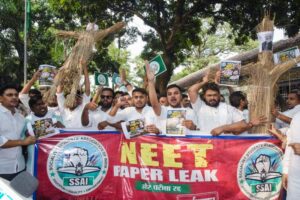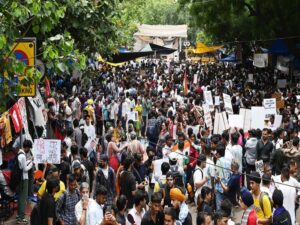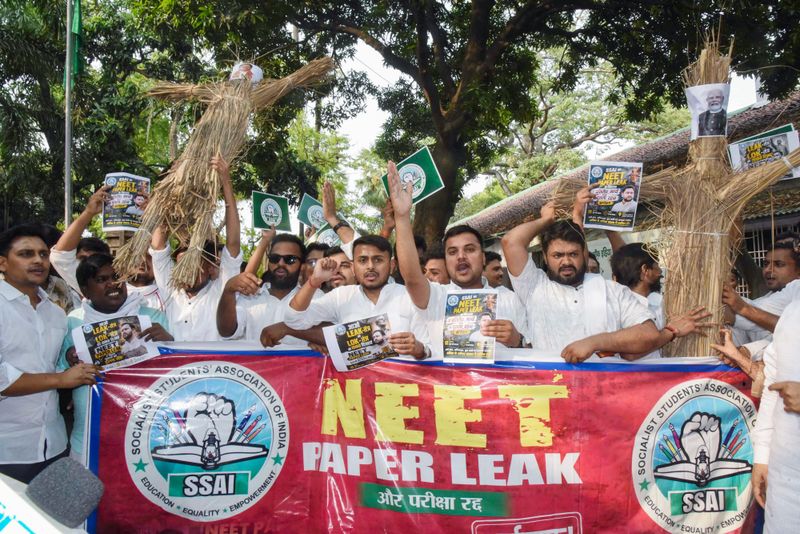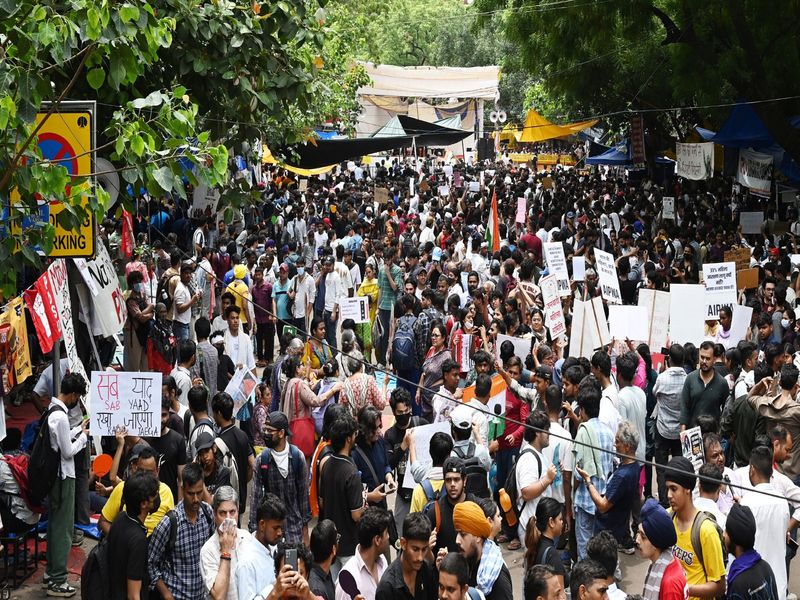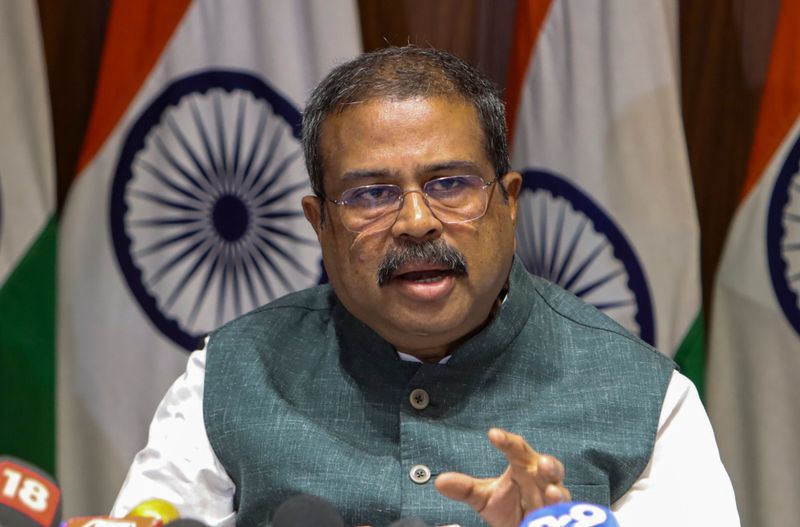

It’s not routine for a member of the BJP’s largely silent Margdarshak Mandal to speak, let alone publicly. So when Murli Manohar Joshi, 92, took to X on Thursday to flag the imperatives of engagement with the Jantar Mantar protesters or risk alienating them from the goal of Viksit Bharat, his remarks were anything but routine.They were seen as well-timed and calibrated. Sections within the Sangh Parivar even believed Joshi’s X post had Prime Minister Narendra Modi’s backing and that heads might finally roll.And today, a head did roll. Thirty-six days after the Cockroach Janta Party (CJP)-led movement persisted with its demand for the resignation of Education Minister Dharmendra Pradhan over the 2026 NEET-UG paper leak, he put in his papers, citing the need to keep “anti-India forces at bay” and protect the future of India’s youth.The development was seen in political circles as PM Modi’s capitulation in the face of growing protests. The reason: this is the first time in eight years that an NDA minister has stepped down amid sustained public pressure. The last and only NDA minister to resign was MJ Akbar in 2018. But Akbar was a Minister of State and a political lightweight, unlike Pradhan, a Cabinet minister and a key member of Home Minister Amit Shah’s election strategy and management team.Pradhan was credited with the BJP’s hat-trick in Haryana in 2024 and with ending the Naveen Patnaik-led BJD’s 24-year rule in Odisha the same year. He later oversaw the BJP’s victory in the 2025 Bihar Assembly elections, having earlier steered the party to wins in Uttar Pradesh (2022), Uttarakhand (2017) and Jharkhand (2014).His value to the party was clearly too significant to ignore. That explains the BJP’s abiding insistence on retaining him until, of course, things changed on July 20, when the ruling party as well as the security establishment were jolted by the scale of the CJP’s “Chalo Sansad” call.That was the day the government first woke up to the movement’s potential to spread beyond Delhi and beyond the call for Pradhan’s ouster. Farmer leaders had already begun expressing solidarity, and support was growing by the day. The BJP’s internal assessment was that while the year-long farmers’ agitation was mostly powered by Punjab, the CJP-led protests were drawing participation from across the country.The swelling protests also signalled a loss of grip on the political narrative — a reason why PM Modi resorted to two rare selfie videos on Instagram, where Gen Z had mobilised around the CJP movement. NDA allies also nudged the government to act with even elements within the right wing flagging on social media that the government’s response was already late, and that time, which was of essence in the agitation at hand, had already been lost.A growing protest, a slipping narrative and the imperative of running a strained Parliament with the focus on legislative agenda, including the new anti-paper leak law listed on Monday, together formed the mix of factors that eventually led to Pradhan’s ouster today.Within the BJP, too, there was growing unease, with some leaders harking back to delayed response during the farmers’ agitation, when the farm laws were repealed only after prolonged protests. Sources said the lessons from the farmers’ protests were also weighing on the party leadership as the CJP agitation gathered momentum and spread further.“There was a growing realisation that Pradhan’s resignation was key to the collective government goal of dousing the CJP protests before anti-national forces infiltrated the agitation for political ends and to derail the government’s reform agenda. The protest script does bear uncanny similarities to what India’s neighbourhood saw in recent times in the shape of regime changes. Our government deemed it fit to retreat so that democracy could advance. The fact that the CJP has ended its protest shows that, ultimately, Indian democracy won,” a BJP insider said.Sources said Rahul Gandhi’s continued “fanning of CJP protests” and the Congress’ insistence on not letting Parliament run until Pradhan was removed also weighed on the government’s mind before the final decision.The broad assessment in the party however is that the ultimate aim behind letting Pradhan go was to “thwart anti-India forces from exploiting the CJP protests to disturb peace amid intel on potential security risks.”All that said, PM Modi ultimately appears to have buckled in order to pacify the youth, whom he has always described as one of the four pillars of the goal of Viksit Bharat by 2047, alongside farmers, women and the poor.That sentiment clearly resonated in Joshi’s July 23 post on X, where he said, “Use of force will alienate large sections of Indian society from the national goal of Viksit Bharat.”