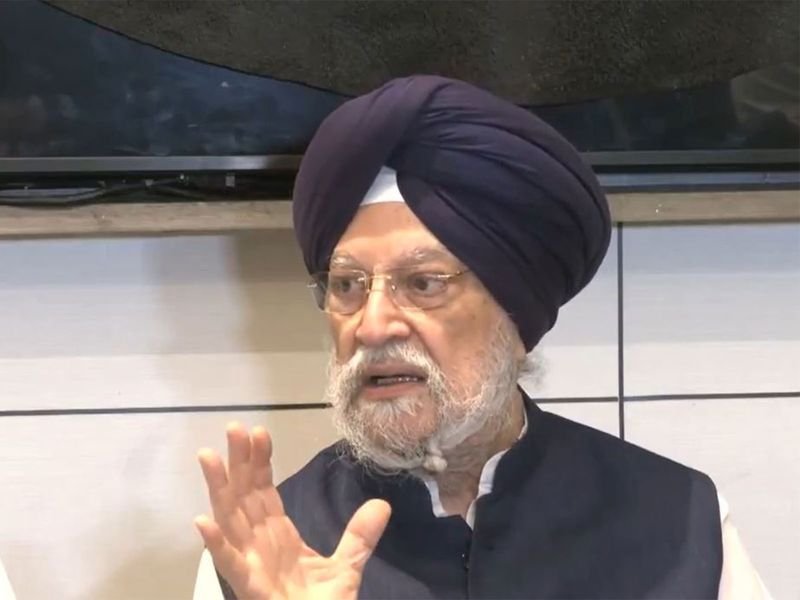

The Uttar Pradesh BJP has sent a panel of 25 names to the party’s central leadership for consideration as candidates for the October 16 Rajya Sabha elections to 10 seats falling vacant from the state.Union Minister Hardeep Singh Puri, BJP national general secretaries Smriti Irani and Harish Dwivedi, and former AAP leader and poet Kumar Vishwas are among those on the panel.Puri’s inclusion signals that the party may renominate him to the Rajya Sabha and retain him in the Union Cabinet with the 2027 Punjab elections in mind. He is the only Sikh member in the Council of Ministers after Ravneet Bittu’s term expired on June 20.The list also includes several leaders who have lost elections in recent years, including former MPs and organisational figures.Among these names is former Basti MP Harish Dwivedi, who is now a BJP national general secretary with charge of Bihar and Karnataka. Dwivedi, a Brahmin leader from Basti, lost the Basti Lok Sabha seat in 2024 after winning it twice. Dwivedi’s former constituency is now represented by SP leader Ram Prasad Chaudhary. His inclusion in the Rajya Sabha nominees’ panel is seen as part of the BJP’s effort to balance caste considerations ahead of the 2027 Assembly elections.The list also includes Rajveer Singh Raju Bhaiya, BL Verma, senior Jat faces Sanjeev Balyan and Satyapal Singh, and former MP Brij Lal. Eight of the 10 outgoing seats are currently held by the BJP and one each by the SP and the BSP.Members for the 10 Rajya Sabha seats will be elected by Uttar Pradesh MLAs through the system of proportional representation by means of the single transferable vote.With 397 effective MLAs at present, the first-preference formula means a candidate needs 37 votes to secure one seat. In simple terms, 37 votes are needed for one seat, 74 for two, and to win all 10 seats, a party would need 370 MLAs to vote in their favour.The BJP has 256 MLAs in the Uttar Pradesh Assembly and, with its NDA allies, its strength rises to 289,giving the alliance a strong mathematical base for seven seats and a route towards an eighth depending on the final distribution of votes and candidates. The SP has 101 MLAs and Congress has two, giving the opposition bloc 103 votes, enough for two seats.The remaining arithmetic makes the BSP politically relevant despite having no MLA in the Assembly, as its support could influence the contest for the final seat.That leaves the eighth-seat arithmetic and the surplus votes after the first seven as the real political pressure point. Candidate selection, second-preference voting and possible cross-voting could determine whether the BJP merely protects its existing Rajya Sabha position or uses the election to widen its Upper House footprint. The final names will show whether Delhi prioritises electoral repair, caste balance, organisational deployment or national visibility.