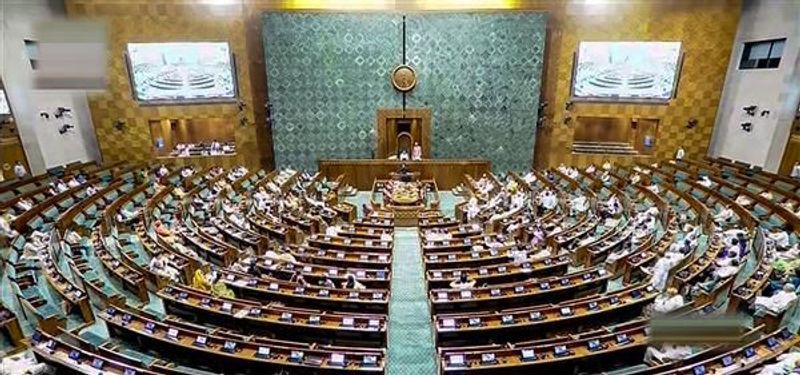

Ahead of the special sitting of Lok Sabha on Thursday to pass constitutional amendments that would enable a roll out of 33 per cent women’s reservation in Lok Sabha and state assemblies from the 2029 election cycle, the Opposition and the government are ranged against one another on a set of issues.The Congress-led INDIA bloc is saying that women’s reservation is a cloak for a larger delimitation conspiracy whereby the proportional share of southern, northwestern and some eastern states in the Lok Sabha would decrease and that of Hindi heartland states, including UP and Bihar would increase.Here is all about the debateWhat is the government proposing?The government would bring three bills in the special session — The Constitution (131st) Amendment Bill 2026; The Delimitation Bill 2026 and THE UTs Amendment Bill 2026 to amend the Government of Union Territories Act, 1963, the Government of National Capital Territory of Delhi Act, 1991 and the Jammu and Kashmir Reorganisation Act, 2019. The first Bill is the most important of all as it proposes to raise the number of seats of Lok Sabha from 543 to up to 850.What this main bill will do?It would readjust the existing allocation of seats of Parliamentary and Assembly Constituencie currently based on the population figures published as per 1971 census. The division of territorial constituencies is based on the population figures published as per 2001 census.At present articles 82 and 170 of the Constitution provide that the allocation of seats in the Lok Sabha and States Legislative Assemblies, and the division of each State into territorial constituencies shall be readjusted in such manner and on the basis of such census, by such authority (the DelimitationCommission), as Parliament may by law determine. The government is proposing that since the next census (which started recently) and the consequential delimitation exercise thereafter would take considerable time and delay the effective and dedicated participation of women in democratic polity, the new Bill will allow delimitation on the basis of already published Census data which is 2011 figures.Why is Opposition wary?The Opposition is saying the government has proposed to raise Lok Sabha strength up to 850 without promising proportional representation to states. What this means in simple terms is — south states currently have 24 per cent representation in the Lok Sabha as per the seats allocated to them. This as per the 850-MP Lok Sabha norm would reduce to 20 per cent (166 seats – increase of just 36 seats in 850). Whereas, five northern states which have 37 per cent representation in Lok Sabha now would have 43 per cent representation in the new Lok Sabha (367 seats – increase of 167 seats compared to 200 now). As an example — UP has 80 seats (14.7 per cent share) in the current 543 member ok Sabha. This would increase to 143 seats in an 850 member Lok Sabha — a rise of 63 seats (share going up to 16.8 per cent). But Tamil Nadu which has 39 seats and 7.2 per cent share in current Lok Sabha would add 10 seats and have 49 seats in the new LS but its proportional share in the new house will fall to 5.8 per cent. Opposition is saying this should not happen and that the percentage of seats of every state in the new Lok Sabha should remain the same.How the new seats are being calculated?The formula is this — divide the population of India — 1.2 billion with the number of proposed seats in Lok Sabha — 850. This comes to 14 lakh. Now to calculate the share of seats of every state in the new Lok Sabha divide the 2011 Census population of that state with 14 lakh. For example, UP’s 2011 population of 20 crore divided by 14 lakh yields 143 LS seats as against 80 today. Likewise, Punjab’s 2011 population of 2.7 crore divided by 14 lakh yields 19 seats as against 13 today.What is the government assuring?Government has clarified that the seats in the new Lok Sabha would be proportional only. “We will see a 50 per cent increase in current seats for every state. No injustice would be done to any state. Misreading of the Bills must be avoided. The nuances would be clarified in the Parliament when Bills come up for debate tomorrow until April 18.What nextOn Thursday, Law Minister Arjun Ram Meghwal would pilot the Bills and address concerns of opposition parties around delimitation and the northern states benefitting over the southern. Lok Sabha galleries would be filled with special women guests from all over India.Opposition strategyOpposition would raise concerns around federal skew on account of the proposed readjustment of Lok Sabha seats although they have stated they are in favour of women’s reservation.The Opposition parties are debating their plan today.