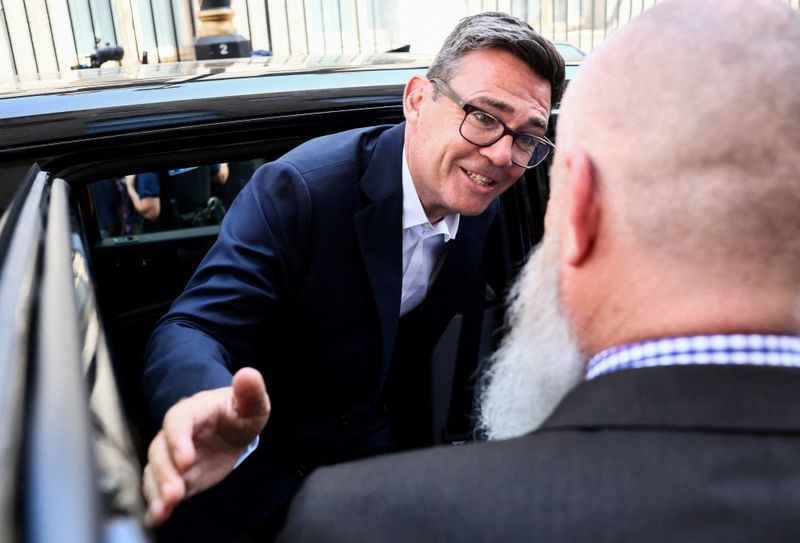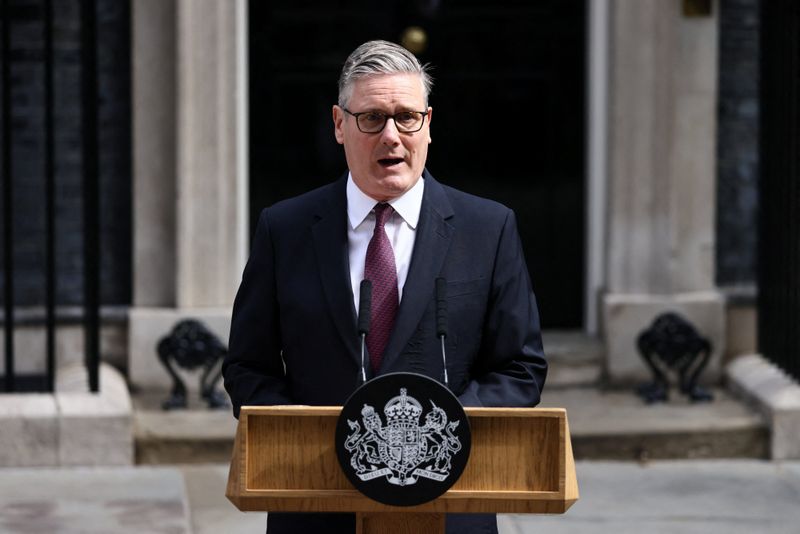

Keir Starmer on Monday announced his resignation as British Prime Minister and the Leader of the Labour Party, setting out a timetable for his successor to be elected in the coming weeks and be in place by September.With this, Britain is set to have its seventh Prime Minister in a decade. Andy Burnham, the former Mayor of Greater Manchester, has emerged as the overwhelming favourite to succeed Starmer after the Labour leader conceded that he no longer commanded the confidence of his parliamentary party.The extraordinary pace of political change would once have seemed unimaginable in a country that prided itself on stable government and gradual evolution. Instead, Britain has spent much of the past decade moving from one leadership crisis to another, cycling through prime ministers at a rate more commonly associated with fragile political systems than one of the world’s oldest parliamentary democracies.The mood at Westminster on Monday suggested that Labour’s leadership contest may already be over before it has formally begun. As Burnham entered the House of Commons to be sworn in as MP for Makerfield, opposition MPs greeted him with a barrage of good-humoured taunts.“Rome is saved,” shouted one. “He’s not the Messiah,” called another. A third suggested he might be capable of turning “water into wine”. Burnham, displaying the political ease that has helped make him popular among colleagues, responded, “I’m just a naughty boy.”The jokes concealed a serious political reality. Minutes later, hundreds of Labour MPs reportedly greeted Burnham with cheers and applause during a Commons photo session, underlining the growing belief that he is already the party’s leader-in-waiting. The contrast with Starmer’s position could hardly have been greater.Announcing his resignation, the outgoing Prime Minister acknowledged political reality with unusual candour. “I have heard the answer of my parliamentary party to that question, and I accept that answer with good grace,” he said.Even before the formal announcement, senior Labour figures had concluded that his position had become untenable. One cabinet source summed up the mood bluntly: “Everyone thinks it is over and everyone wants it to be a dignified, orderly exit.”Starmer’s downfall has been remarkably swift. When Labour won a landslide election victory less than two years ago, many voters hoped it would mark the end of the instability that had characterised the final years of Conservative rule. Instead, his government found itself confronting familiar problems — weak economic growth, pressure on public services, rising voter frustration and the continued advance of Nigel Farage’s Reform UK.A succession of policy reversals reinforced a perception that the government lacked a clear sense of direction. Support weakened inside the parliamentary party as well as among the wider electorate.Into that vacuum stepped Burnham. A former cabinet minister, he has spent the past decade building his reputation outside Westminster as Mayor of Greater Manchester. His supporters argue that his strength lies precisely in the fact that he is not seen as part of the political establishment that has dominated British politics for much of the past generation.Burnham has framed his political mission as a response to what he sees as decades of economic neglect outside London and the prosperous south-east of England.Following his victory in the Makerfield by-election, he declared that Britain had been “on a path for 40 years that simply hasn’t worked for people and places in this part of the world”.Describing the result as “the change moment”, he added: “We’re going to lay out a new path for Britain.” The message was aimed not only at voters but also at his own party. “I do say to my own party, this is a final chance to change,” he warned after securing a commanding victory.Burnham’s appeal extends beyond Labour’s traditional base. During the Covid pandemic, he emerged as a national figure after publicly challenging Boris Johnson’s government over support for northern England. Since then, he has cultivated an image as a practical problem-solver focused on transport, housing and regional development rather than ideological battles.He would also become Britain’s first Catholic Prime Minister. Although he has described himself as “not particularly religious”, he has said that “Catholic social teaching underpins my politics”, reflecting a tradition that emphasises community responsibility and social justice. Yet even many of Burnham’s supporters acknowledge that replacing Starmer may prove easier than solving Britain’s deeper problems.Liberal Democrat leader Ed Davey voiced a concern shared by many voters when he warned that “changing the person at the top” would not fix Britain’s “broken political system”. The public, he said, was “pretty fed up with the merry-go-round of prime ministers”. The comment goes to the heart of Britain’s present dilemma.David Cameron resigned after the Brexit referendum. Theresa May failed to secure parliamentary support for her Brexit deal. Boris Johnson was brought down by scandal. Liz Truss lasted only weeks. Rishi Jattvibeak lost office. Starmer promised stability but ultimately failed to convince enough colleagues and voters that he could provide it. Burnham now inherits both the opportunity and the burden.For India, the change is unlikely to alter the fundamentals of the relationship. Trade, education, technology and strategic cooperation enjoy support across Britain’s political spectrum. Yet personalities matter, and New Delhi will be watching closely to see whether Burnham can provide the political stability that has eluded so many of his predecessors.The larger question is whether Britain itself can do the same.For generations, Britain projected an image of steady government, institutional continuity and political moderation. Today, the arrival of a seventh Prime Minister in a decade suggests a country still searching for a new political equilibrium.Burnham’s supporters believe he can provide it. His critics argue that Britain’s problems run far deeper than the identity of the latest occupant of 10 Downing Street. Either way, Monday’s events underlined a striking reality: governments may change, parties may change and leaders may change, but political instability itself has become the one constant in modern Britain.