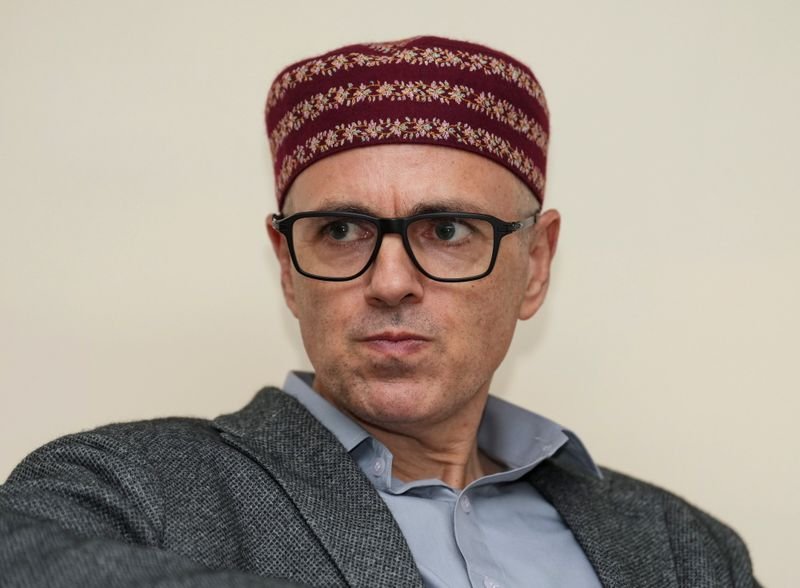

Jammu and Kashmir Chief Minister Omar Abdullah has said the delay in restoring statehood to Jammu and Kashmir is not only fuelling “anger” against the Modi government but has also eroded a large part of his “political capital”.“There’s a sense of disappointment and it’s not limited to the Modi government. It translates to all of us in the mainstream, more so to me because I’m at the top of that pyramid,” Omar told journalist Karan Thapar in an interview with The Wire, while responding to a question about the delay in statehood.Political parties in Jammu and Kashmir have recently intensified their demand for the restoration of the statehood since the erstwhile state was bifurcated into the Union Territories of Jammu and Kashmir and Ladakh following the abrogation of Article 370 in August 2019.Last month, the National Conference (NC) held a protest in New Delhi seeking restoration of statehood.Saying he was well aware that he had “spent significant political capital over the past 18-20 months”, Omar said he “thought that we would get what we wanted, or what we were promised, through a good working relationship and understanding with the Union Government”.“I put a huge amount of my own political credibility at stake for this. I know for a fact that I’ve eroded a large part of it. It is a price that I was willing to pay, but I do understand that I’ve paid it. So, the anger, the disappointment is not just about the Modi government. Believe me, I am facing it as well,” he said.Criticising the Centre’s vague timeline for restoring statehood at an “appropriate time”, he said, “Nobody has sat us down and told us what the appropriate time will be or how to assess or measure that appropriate time…I mean it’s like running a marathon and instead of completing it in 42 km every time you reach near the finishing line, they keep shifting the finishing line.”Omar also said there was no worse form of governance than a UT with an Assembly. “Please, by all means, have union territories, but don’t give them assemblies,” he said, noting that his Cabinet lacked the authority to select even its own administrative secretaries or appoint an advocate general.