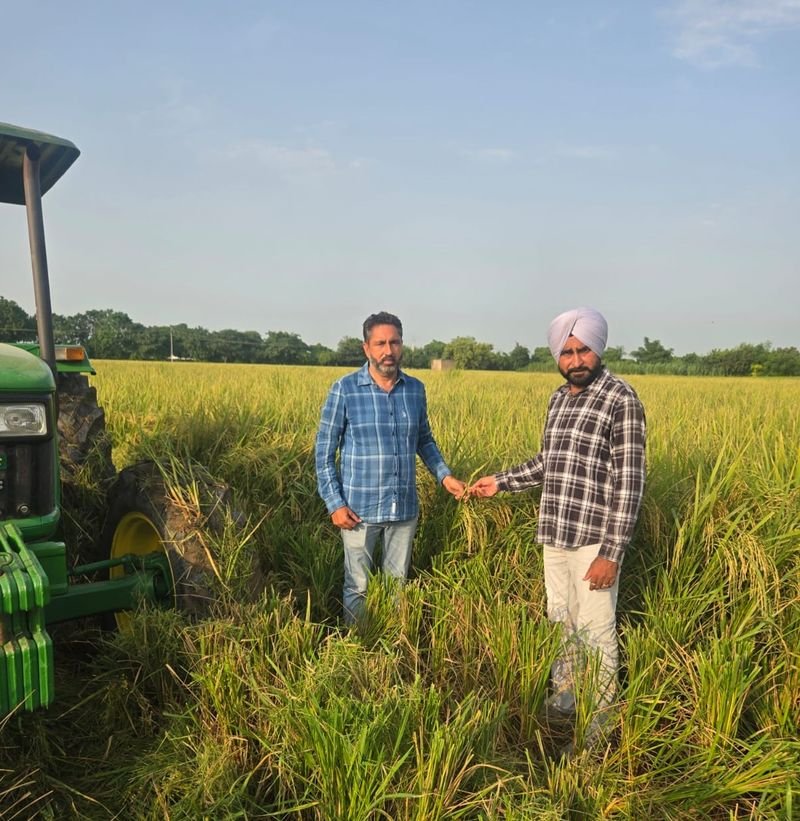

For farmer brothers Tarsem Singh Jawandha and Sukhpal Singh Jawandha of Kothe Surjitpura village in Barnala district, avoiding stubble burning has helped them diversify crops and improve their farm income.Tarsem (46), Sukhpal (43), said they had not only managed paddy residue without burning but had also seen their potato yield rise after adopting mulching and other residue-management practices.They cultivate potatoes on around 80 to 85 acres and wheat on approximately 20 acres after the paddy harvest. After harvesting potatoes, they sow maize on nearly 40 acres.They also grow moong and watermelon, enabling them to take three crops in a year and promote crop diversification.Sukhpal said that before 2024, they used to make bales of paddy residue, but they have now shifted to mulching. According to him, the change has also benefited their potato production.Their potato yield, which was earlier around 250 to 300 bags per acre, with each bag weighing 50 kg, has increased to nearly 350 bags per acre.The farmers received a Super Seeder under a government subsidy scheme, while they purchased an MB plough and rotavator themselves in 2024. They use the Super Seeder for wheat sowing.“We have never faced any difficulty in managing stubble. Rather, crop production and profits have increased,” Sukhpal Singh said.The brothers own around 21 acres, while the remaining land is cultivated on lease. After meeting cultivation expenses, they save approximately Rs 40,000 per acre annually, he said.The farmers also supply potatoes to Haldiram and other food-processing companies.Sukhpal Singh said they had not faced any difficulty in marketing their produce and received good prices. He said there was good demand for paddy residue this year and a large number of balers were available in the district.Appealing to farmers to avoid stubble burning, he said burning residue destroys beneficial insects in the soil and adversely affects human health, animals and the environment.Barnala Deputy Commissioner Harpreet Singh lauded the farmer brothers for adopting sustainable stubble-management practices while simultaneously promoting crop diversification.