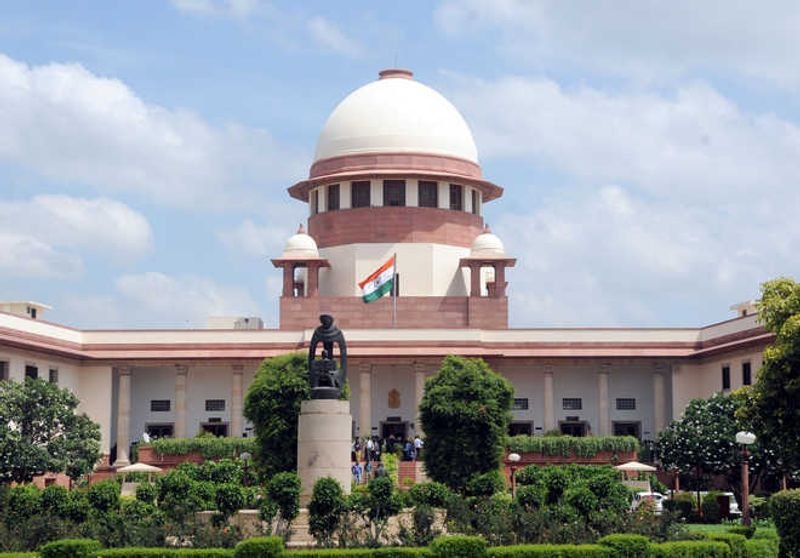

As solid waste management continues to be a daunting task in cities across India, the Supreme Court has directed local bodies to order water and power disconnection of bulk waste generators over violation of Solid Waste Management Rules.“It is regrettable that across society, the general feeling is ‘I am entitled to generate (waste) but not to cooperate and control the impact of solid waste management at the threshold’,” a Bench of Justices SVN Bhatti and NV Anjaria said.The disconnection would be ordered by a special cell of the jurisdictional district collector and the supply would be restored once the bulk waste generator submitted a compliance certificate, the Bench said.“Every local body shall, through its Chairman/Commissioner/Secretary, as directed by the jurisdictional District Collector, communicate in writing to every BWG within its limits the obligations viz, (i) segregation, storage and handover of solid waste generated; and (ii) the consequence of non-compliance resulting in the temporary disconnection of water and electricity supply by order of the District Collector’s Special Cell, restorable upon submission of a compliance certificate by the BWG,” it said.Directing the departments of school and higher education to immediately incorporate theoretical and practical lessons on solid waste management in school curriculum, the top court said students should be trained to educate their family members, while teachers should be trained as trainers.Trained students would function as “household-level supervisors”, it said, posting the matter for further hearing on November 17.“The prevailing assumption that solid waste is a problem for sanitary workers alone, while the rest of the population remains passive generators, is neither legally correct nor practically sustainable, and is constitutionally unethical,” it said, reminding citizens of their fundamental duty to protect the environment.“Law can secure cooperation only by prescribing rules and consequences. It cannot, by itself, generate civic behaviour. Compliance is achieved only when the individual and institutional generators internalize the obligation,” it noted.The Bench ordered periodic audits by district education departments and the submission of reports to the jurisdictional district collectors.It also asked the authorities to consider using the existing online portal to upload geotagged photographs of accumulated waste and monthly compliance reports which would move through the administrative chain — from district collectors to State Secretaries and Union ministries.The order came on appeals filed by the Bhopal Municipal Corporation challenging the National Green Tribunal’s (NGT) orders regarding compliance with the Solid Waste Management Rules, 2016 after the Bench perused an interim report filed by the Supreme Court Monitoring Committee (SCMC) on the implementation of the Rules.The top court directed the SCMC to focus on water pollution from Municipal Solid Wastes/Materials to Rivers and place before it the data for further directions.The Bench laid down an enforcement mechanism under which the SCMC, acting through State Chief Secretaries, would direct district collectors to identify all bulk waste generators within their respective jurisdictions in coordination with local bodies within six weeks.The district collectors must inform bulk waste generators about the consequences of non-compliance with the Rules, it said.The top court clarified that the communication was intended to give bulk waste generators an opportunity to establish the required facilities and report their compliance online to local bodies.The local bodies would inspect the facilities and forward their reports to the district collectors, the Court said.It ordered local bodies to notify the amount of waste generated, accounted for and unaccounted for, along with the steps taken to secure full basic participation by stakeholders.“To wit, India’s population exceeds 1.4 billion, with varying levels of literacy, education and civic infrastructure. Every person, household and institution (without exception) generates solid waste as an inevitable by-product of life and activity. The volume and complexity of such waste, i.e., biodegradable, non-biodegradable, hazardous, electronic and construction, have outgrown what any single class of workers can be expected to absorb or handle. The infrastructure needs a complete audit and upgradation to meet the extant standards of the SWM Rules, 2026,” the Bench noted.