

ANDY Burnham yesterday tried to blame Brexit and Margaret Thatcher for Britain’s woes — as he failed to rule out soaking the country with more tax hikes.
The new PM used his first Commons speech in the job to warn that “Britain is not where any of us would wish it to be”.
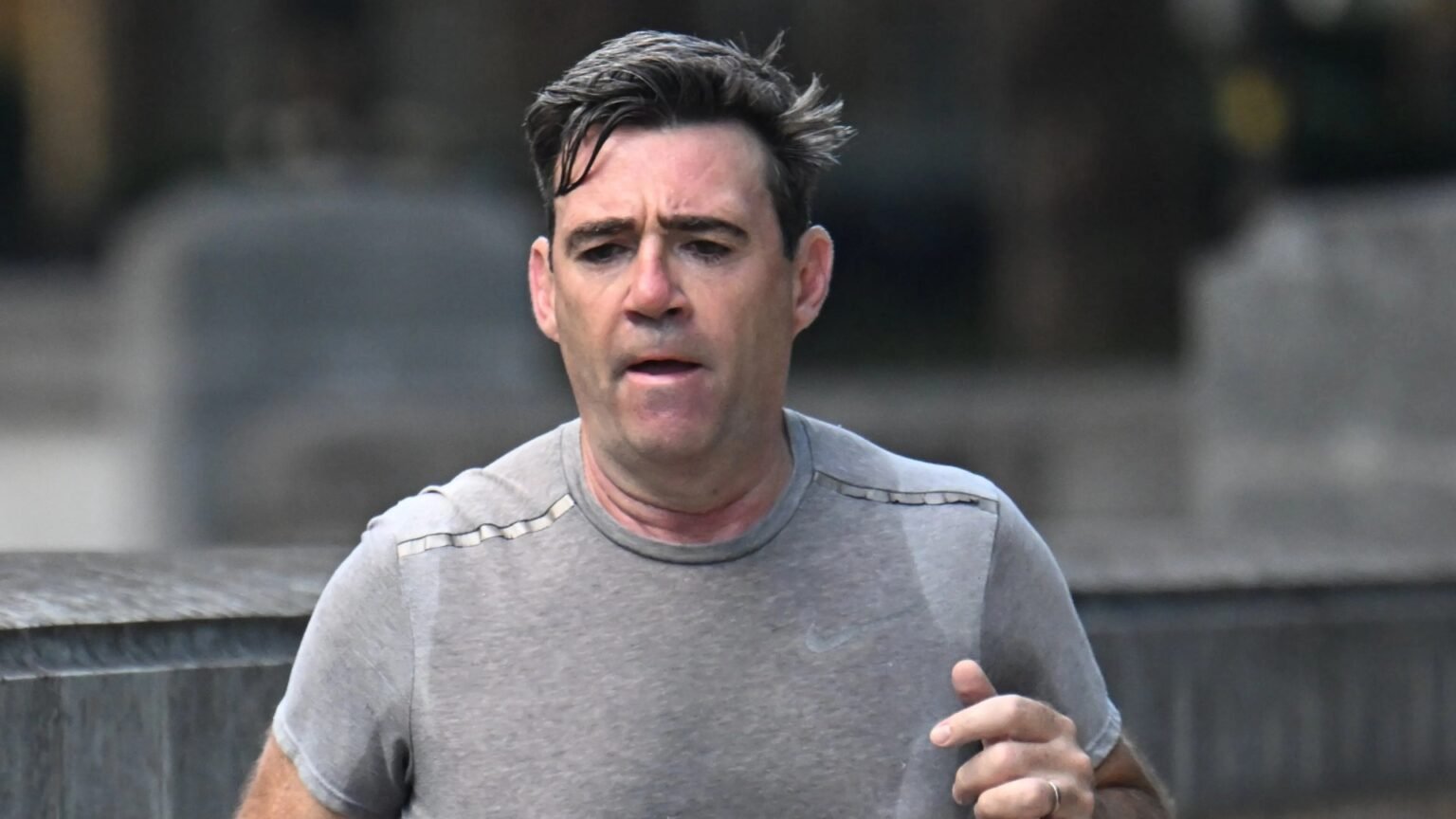
The heat is on for Burnham as he was pictured going for a run Credit: SelwynPics
The PM heads to the Commons Credit: Getty
He singled out “a series of wrong turns in the 1980s” as well as the decision to leave the European Union as the reason for a lack of UK growth — rather than the record taxes Labour has imposed.
Mr Burnham faced MPs for the first time since entering No 10 six weeks ago and embarking on a summer tour announcing relatively small cost-of-living giveaways.
Sign up for the Politics newsletter
Thank you!
Ahead of his marathon three-hour grilling by MPs yesterday, the Labour leader was seen working up a sweat during his morning run.
The PM will feel the heat even more, as long-term government borrowing costs rose to their highest level since 1998.
HOLBORN TO RUN
Why Keir Starmer is stepping down as MP: What ex-PM said as he resigns seat
LAST STAND
Cabinet including Reeves in tears as Starmer gets Labour ovation in last PMQs
At the dispatch box for the first time in 16 years, Mr Burnham said: “Britain is not where any of us would wish it to be. Things are not working as they should. Life is too expensive and too hard for too many.”
The ex-Manchester Mayor said his decade away from Westminster had given him a “clear diagnosis” of the source of the UK’s troubles.
The Prime Minister took aim at the legacy of former PM Mrs Thatcher and her programme of privatisation, as well as pulling out of the EU.
He said: “Political power was centralised, economic power privatised, the country deindustrialised, austerity followed, hollowing out councils and depriving them of the agency to act to reverse any of this.”
Burnham’s first dispatch box in 16 years Credit: UK PARLIAMENT/UNPIXS
The PM took aim at the legacy of former PM Mrs Thatcher and her programme of privatisation, as well as pulling out of the EU Credit: Getty
He added: “Then Brexit compounded the damage, ushering in a decade of low growth and stalled regeneration. Far from taking back control, the combination of these policies took control out of the hands of communities up and down Britain.
“For 40 years, too many places have been drifting.”
Tory leader Kemi Badenoch attacked Mr Burnham for living in the past when he should be focused on the future.
She hit back: “The year is 2026, yet the Prime Minister said in his statement that everything has gone wrong since the 1980s, still complaining about Margaret Thatcher. I may not look it, but I’m 46 years old. He is talking about a woman who became Prime Minister before I was born. He is living in the past and he wants to take us back to the 1970s.
“On this side of the House, we are for the future, not the past. That is the difference between them and us. His ideas are all about more government control, more spending, more tax, more politicians.”
She blamed the £70billion of tax rises under this Labour Government for failing to propel Britain out of the economic doldrums.
Mr Burnham is facing harsh economic realities as PM. Yesterday saw the yield on 30-year gilts — a loan to the Government — rise to 5.89 per cent, the highest since 1998.
And the yield on benchmark ten-year gilts rose to 5.223 per cent — the highest since the 2008 financial crash, eclipsing even Liz Truss’s mini-Budget.
Debt is already on the brink of hitting £3trillion and taxpayers are on the hook for £100billion every year, just to pay off the interest on that pile.
The PM yesterday repeatedly refused to rule out tax rises in the October 28 Budget to pay for increased spending.
Ms Badenoch instead challenged him to cut Britain’s ballooning welfare bill, asking whether he would “stand up to his backbenchers in a way that his predecessor (Sir Keir Starmer) never could”.
Mr Burnham insisted he was committed to bringing the welfare bill down, but said it would not be done through “crude cuts”.
Tory leader Kemi Badenoch attacked Mr Burnham for living in the past when he should be focused on the future Credit: UK PARLIAMENT/UNPIXS
Angela Rayner arrives for a Cabinet meeting Credit: Tayfun Salci
He said the answer was better support, particularly for young people who had been “let down” by the education system.
The Prime Minister was also pressed on defence, after refusing to commit to spending three per cent of GDP on it by 2030.
Mr Burnham said Chancellor John Healey would set out the path at the Spending Review.
He said: “This is a changing and challenging world in which we live.
“But can I say very directly, I appointed this Chancellor precisely because of his commitment to the defence of our realm and the arguments he has made.
“He will set out at the Spending Review the path to honouring our international commitments in full, as I said we would when I was before the steps of Downing Street.”
Mr Burnham put his programme for public control of industries at the heart of his address, taking aim at the water industry specifically as a “leaking monument” to a failed economic approach.
On migration, the PM confirmed he and Home Secretary Shabana Mahmood would continue looking at return hubs and insisted that co-operation with France was making “significant progress”.
Mr Burnham is due to welcome French President Emmanuel Macron in Downing Street today, with tackling small boat Channel crossings on the agenda.
He also vowed to bring in new laws over the coming months to overhaul the “unfair” leasehold system, including plans to ban leasehold on most new flats and give homeowners more control over their buildings.
He also opened the door to including a change to a proportional representation voting system in Labour’s next manifesto.
Mr Burnham gathered his Cabinet, including Housing Secretary Angela Rayner, for just the second time yesterday as MPs returned from their summer breaks.
The PM last night pledged to save Jodrell Bank observatory after a backlash over it being defunded.
He told MPs that there “must be a way to save” the Cheshire site, which includes radio telescopes which helped to track the first moon landing.