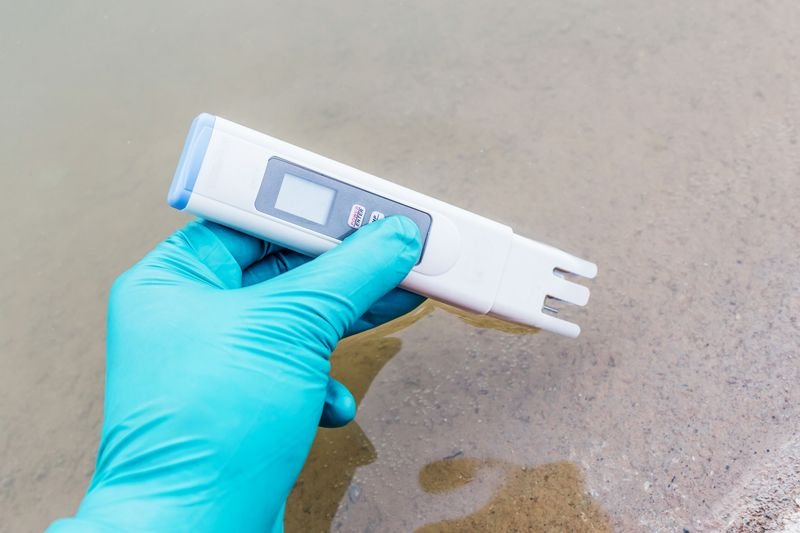

The Haryana Government has admitted that, in 2025, 88 of 142 blocks in the state had groundwater with Total Dissolved Solids (TDS) exceeding the acceptable limit of 500 mg/litre in 62 per cent of the total blocks. Also, 35 blocks have TDS levels exceeding 1,000 mg/litre.TDS levels in some drinking water sources have been recorded as high as 9,553 mg/litre in Belarkhan village (Jind), followed by 8,791 mg/litre in Ashraf Pur Matindu village (Sonepat), 8,692 mg/litre in another location in Ashraf Pur Matindu village (Sonepat), 7,863 mg/litre in Brah Khurd village (Jind), 6,979 mg/litre in Mool Than village (Nuh) and 6,840 mg/litre in Bhoodbas village (Nuh).Minister for Public Health Engineering Department Ranbir Gangwa shared the data on August 27 in response to a question from MLA Aditya Surjewala of Kaithal regarding groundwater quality.Compared with 2022, groundwater quality deteriorated in 93 of 142 blocks (65.5%) in 2025. Surjewala said, “Water quality is not improving, instead, it is deteriorating every year under the BJP government.” “In Palwal, the average TDS level increased by 74% in three years, rising from 940 to 1,636 mg/L, with all six blocks of the district affected,” he said.In Nuh’s Indri block, TDS has nearly doubled, rising from 1,002 to 1,974 mg/L. “This is extremely close to the upper limit of 2,000 mg/L (permissible value), which Indian standards permit only in situations where no alternative source is available,” he added.5 districts 100 per cent dependent on groundwaterAccording to the government’s admitted records, Faridabad, Palwal, Panchkula, Kurukshetra, and Yamunanagar are still 100% dependent on groundwater. They were 100% dependent on groundwater in 2014, too.In Karnal district, 98.1 per cent of the water supply is from groundwater in 2026 and 1.9 per cent from canal water. In 2014, the situation was the same.In Nuh district, 89 per cent of the supply is from groundwater and 11 per cent from canal water since 2017.41,275 contamination complaints since 2019According to data, since 2019, there have been 41,275 complaints of drinking water contamination in Haryana caused by sewerage or stormwater. The highest number of complaints has come from Rohtak (7,353), followed by 4,369 from Hisar and 4,177 from Yamunanagar. In 2025, too, the highest number of complaints came from Rohtak, at 1,935.Not suitable for drinkingWater samples with TDS exceeding 2,000 mg/litre are not suitable for drinking purposes, as per the Bureau of Indian Standards. Drinking water with very high TDS over a long period may raise the risk of kidney stones or high blood pressure. High TDS can indicate the presence of dangerous heavy metals such as lead and arsenic, or nitrates from runoff or pollution.Nuh not getting enough waterIn reply to a question from Deputy CLP leader Aftab Ahmed, the government has admitted that 82 villages in Nuh and 21 in Palwal are not even getting 40 litres per capita daily (LPCD). Further, there are 140 villages in Nuh and 54 in Palwal that receive between 40 and 54 LPCD. These are the only two districts where rural areas suffer from a low water supply. For rural areas, the Centre has fixed a minimum service delivery of 55 LPCD under the Jal Jeevan Mission.