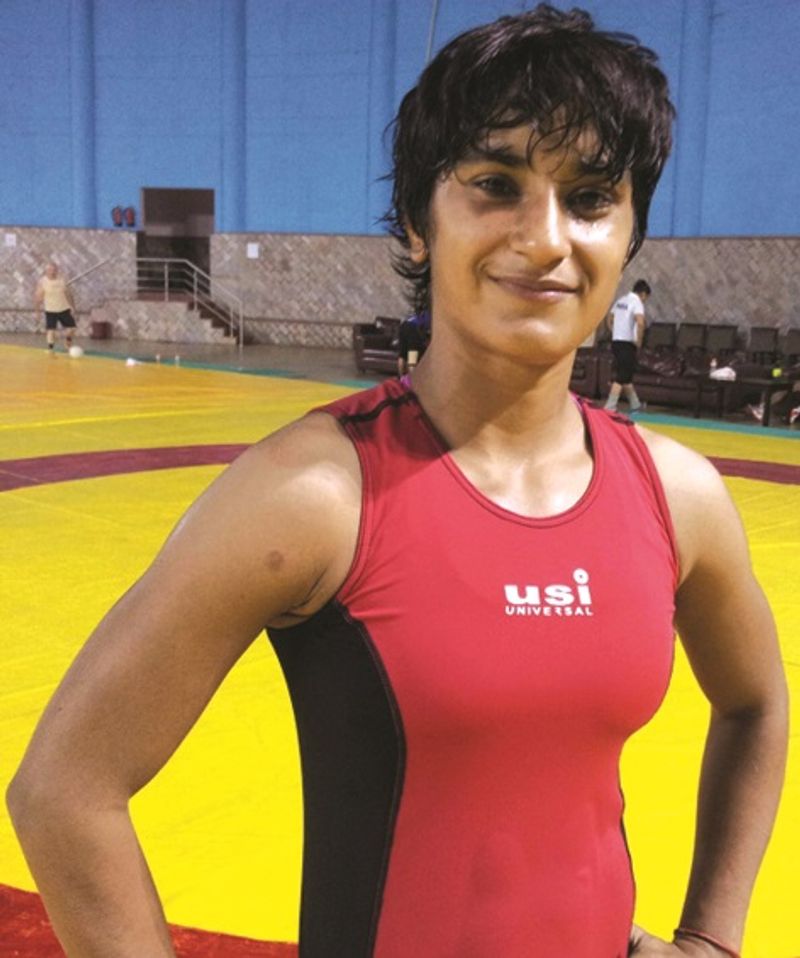

THE resolve of a scarred mind to heal the wounds inflicted by a hostile world can drill a hole through even a mountain. At 31, Vinesh Phogat is one such example. She has lived a life that can inspire writers of fiction to explore what it means to alternate between success and failure, hope and despair and yet refuse to surrender. Hers is the portrait of a woman engaged in a constant combat, with circumstance, expectation, misfortune and the institutions meant to nurture her.A sharp, well-defined face, almost sculpted by years of gruelling training and relentless weight management to stay within her competitive category, gives her the look of an athlete still hungry and fiercely determined to achieve her goals. It is a face that is focused, resolute and defiant. It offers a glimpse into her mind, and her words, “I will be back on this mat,” uttered seconds after losing her comeback bout last month, are the expression of a soul bruised yet unbowed.Imagine preparing tirelessly for a comeback, sacrificing precious moments with your newborn child, only to be informed on the eve of your return to the mat that you are ineligible to compete.Almost two years after that tragic day at the Paris Olympics, where an excess weight of 100 grams deprived her of a shot at the gold medal and brought a heroic campaign to a tearful end, she was finally ready to compete again. The venue was Gonda, the political and wrestling stronghold of former Wrestling Federation of India president Brij Bhushan Sharan Singh, the man who she and several fellow wrestlers had accused of sexual harassment.The setback would have been enough to break the resolve of most athletes. Not Vinesh. A wrestler with three Commonwealth Games gold medals, one Asian Games gold, one Asian Championship gold and two World Championship bronze medals, she possesses a record that entitles her to be counted among the greatest ever Indian woman wrestlers.In the aftermath of the Paris fiasco, Vinesh announced her retirement from wrestling, bidding a tearful farewell to a sport that defined much of her life. Her Paris journey is well documented. It was a campaign fuelled by daring, sacrifice and an unshakeable will, one that carried her to the very threshold of Olympic glory. The weight of that extra 100 grams that her body could not shed had left her emotionally devastated. In an interview to Nihal Koshie in The Indian Express, she says: “Uske baad toh maut hai, aage kuwaan peechhe khai” (only death was next… like being between the devil and the deep sea).Her cry for justice and courage to speak up changed the course of her life. She joined a political party, won a state election, became a mother, yet felt orphaned without the cushion and anchor of the wrestling mat. Vinesh all her life had faced, challenged and overcome adversities with strength that is rare. Trace her journey from the confines of a conservative, patriarchal society, loss of her father at an early age, her mother’s battles with cancer, to the heights of international acclaim. Add to it her fearless public defiance of an establishment powerful enough to shape her sporting destiny, and it becomes difficult not to marvel at the iron will that underpins her character.The body can be conditioned to endure punishment in the quest for sporting glory, far more difficult is the task of keeping the mind steadfast and unbroken amid the pressures created by spiteful surroundings that seek to shatter one’s resolve. What is it about her mind and spirit that enables her to defy conventional wisdom and break free of the patterns that mould most lives?Her father was murdered when she was a child and her mother suffered from cancer. In her own words spoken during her protests: “If a single woman (her mother), illiterate, could fight the society on her own and make us big wrestlers, then we can do it too. I won medals, that is alright, but if we win this battle, she will proudly say, ‘I gave birth to them.’”Three years later, she is back at her defiant best. If her mother remains her deepest source of inspiration, her year-old son has become her motivation for attempting what many would regard near-impossible.To quote her again: “When I returned from the Olympics, I didn’t want to be with my family too. Then Kridhav (son) came into our lives. If I train, I am doing it for him. When he becomes older, what he will learn from me… This is motivating me. When he is 5, I still want to be on the wrestling mat… If he sees me fight, he will learn.. I want him also to know that however powerful a force he is up against, he must be ready to fight till the end. Nobody remembers those who don’t speak up. Jhansi Ki Rani is remembered for dying on the battlefield.”After the Gonda refusal, she sought the court’s intervention and the Supreme Court directed the WFI to let her compete in the Asian Games trials. She failed but was competitive enough to reach the semi-finals and seems determined to pursue her goal to secure an Olympic berth. Though the odds are loaded against her, the wrestling world may well be in for many more dramatic and compelling chapters in her journey. If forbearance, courage and an unbending spirit were the measures by which greatness is judged, Vinesh would stand among the strongest contenders. — The writer is the author of ‘Not Quite Cricket’ and ‘Not Just Cricket’