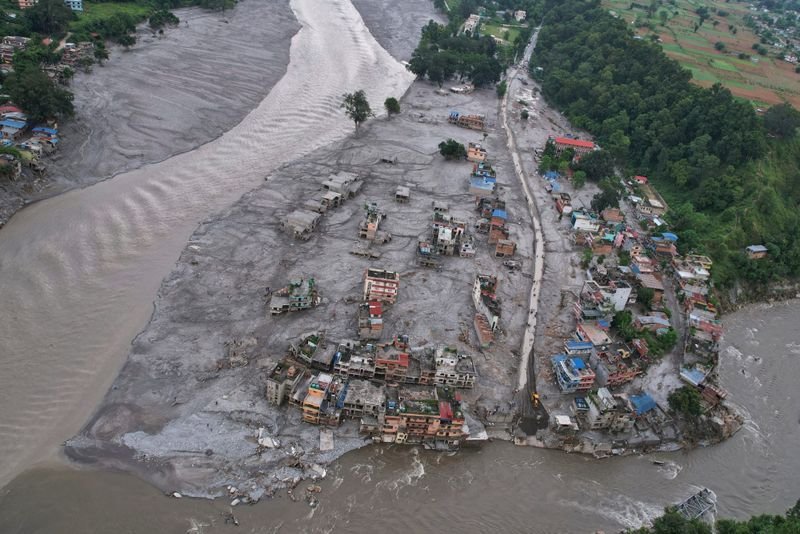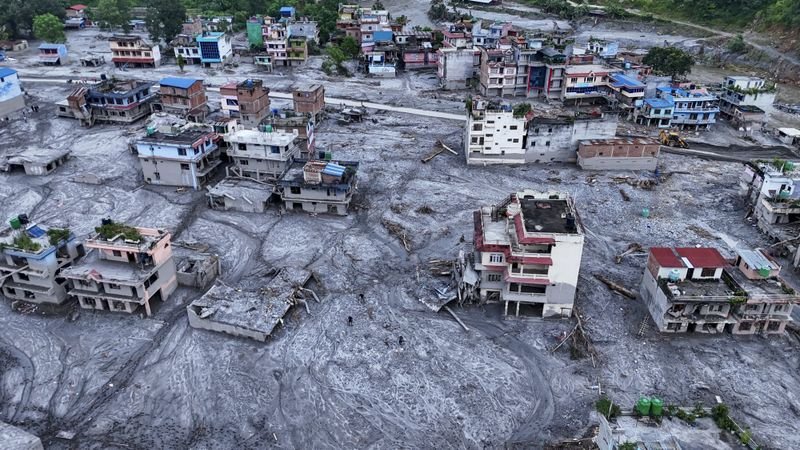

People lined up outside hospitals, looking through photographs of the dead pasted on walls; families wading through mud and debris in search of their possessions; a woman carrying a child past damaged buildings; and a dead dog lying amid the wreckage.These are some of the stark images that have come to define the aftermath of Nepal’s devastating flashfloods. With each passing day, relatives of those missing lose a little more hope, even as rescuers battle difficult conditions in the search for survivors. Nepal is struggling to find its footing after a torrent of water, mud and debris swept through towns and villages on Wednesday, washing away homes, vehicles, roads, bridges and damaging hydropower projects, causing heavy casualties. The death toll crossed 650 on Saturday, while more than 2,400 people remained missing, as rescue teams raced against time amid intermittent rainfall in the flood-affected regions.Outside hospitals, families could be seen lining up to check lists of injured people admitted for treatment, carefully going through names and photographs in the hope of finding someone they know.When they fail to find their loved ones among the survivors, many turn to another list — photographs of the dead — with heavy hearts.Rescuers, meanwhile, are working round the clock, braving rain in some places and digging through drying mud in others in their search for those still missing. In the darkness of the night, Nepal Home Minister Sudan Gurung monitored excavators clearing tonnes of mud at the Upper Trishuli 3A hydropower project site, where more than a hundred people were trapped inside a tunnel following the devastating floods.The Nepali army has already rescued 350 people who were trapped inside the tunnel. The scale of the devastation was visible across villages in central Nepal, with buildings buried under several feet of mud, vehicles half-submerged, and roads and other infrastructure washed away by the torrent of water and debris.Authorities warn of fresh rainfall in affected areasNepal’s meteorology department on Saturday warned of fresh rainfall and thunderstorms in the country’s flash flood-affected areas, threatening to disrupt ongoing rescue and relief operations amid the worsening crisis, according to a media report.Nepal’s Foreign Minister Shisir Khanal, in a press conference, said the situation was being closely monitored and the country remained on “high alert”. The Department of Hydrology and Meteorology on Saturday indicated heavy rain in the hilly and mountainous regions of Koshi, Bagmati, and Gandaki provinces, the hilly areas of Karnali, and the Terai regions of Lumbini and Sudurpashchim provinces.UK deploys team to support BritonsThe UK has sent a rapid deployment team to Nepal to support its 33 nationals affected by the devastating floods in the Himalayan nation, as appeals and prayers continue in Britain by their family members, several of them British Indians. The Foreign, Commonwealth and Development Office (FCDO) said the rapid deployment team would be in action in Kathmandu from Saturday, providing additional support on the ground and coordinating assistance for British nationals arriving at and departing from the airport.‘Saw my friends being swept away’At first, Dipak Tamang thought the ground was shaking. Then he saw a wall of water, mud and stones racing towards houses along the Bhotekoshi river in Timure market, and realised there was nowhere to go but up. Tamang, a resident of neighbouring Sindhupalchowk district, was in Timure, a town on the Nepal-Tibet border, when a flashflood struck on Wednesday. “When I came out of the house and ran upward towards the hill, few houses had already collapsed due to the powerful flood,” he recalled. “There was not much choice for me. Behind me was the flood and in front of me was a wall-like hill.” He ran towards the slope, struggling to climb what seemed like a wall. He fell several times, grabbing bushes and stinging nettles to pull himself higher. “It was my last race between life and death,” he said. People were running in different directions as the flood surged below them. Each time he fell, Tamang thought it might be the last moment of his life. Eventually, he reached the top of the hill. From there, he saw people being swept away by the flood. Among them were his friends. “I could do nothing when my friends were swept away by the wave before my eyes,” he recalled. Tamang eventually found an old godown in the forest, where dozens of other people who had managed to save themselves had also taken refuge. He spent the night there without a bed as rain continued to fall, waiting for rescuers. He was rescued some 24 hours later.