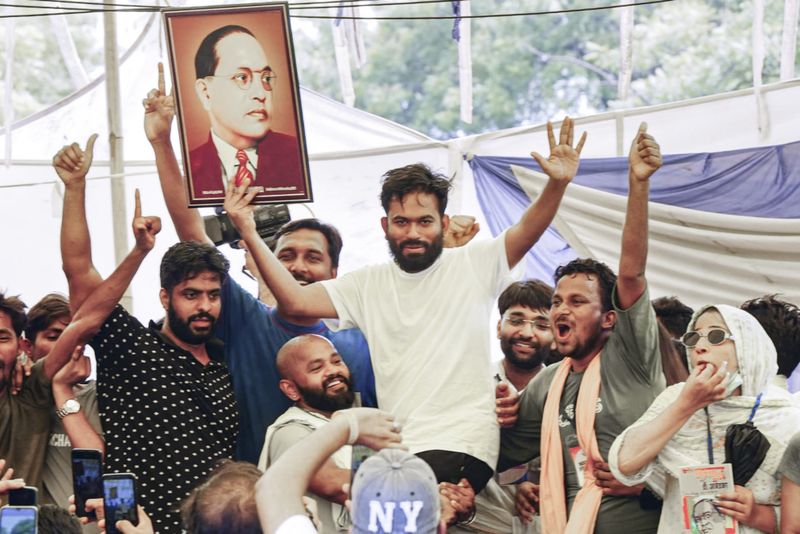

What began as a satirical response to a controversial remark by Chief Justice of India Surya Kant evolved into one of the most unusual youth-led protest movements in recent times. The Cockroach Janta Party (CJP), initially created as an online campaign by activist Abhijeet Dipke, gradually expanded into a street movement centred around alleged examination irregularities, unemployment and demands for accountability.Related news: President accepts Dharmendra Pradhan’s resignation; Pralhad Joshi given additional charge of Education MinistryThe movement gained momentum after Dipke returned to India from the US and shifted the campaign from social media to the streets. The entry of climate activist and educationist Sonam Wangchuk, who joined the agitation and undertook a prolonged hunger strike, gave the protest wider national visibility.The agitation intensified in July, with a march towards Parliament, police action against protesters, and Opposition leaders joining the campaign. After weeks of mobilisation, the CJP announced the withdrawal of its protest following talks with the government and the resignation of Union Education Minister Dharmendra Pradhan.Here is how the Cockroach Janta Party protest unfolded:May 15: CJI Surya Kant’s “cockroach” remark sparks controversyThe controversy erupted after Chief Justice of India Surya Kant’s remarks during a Supreme Court hearing were interpreted by critics as referring to certain disruptive elements as “cockroaches”. The comment triggered a backlash on social media, with critics accusing the judiciary of being dismissive of public concerns.May 16: ‘Cockroach Janta Party’ is born as a satirical protest movementTurning the remark into a symbol of dissent, activist Abhijeet Dipke announced the formation of the Cockroach Janta Party (CJP) and launched its Instagram account. A website and online membership form were subsequently created, transforming a satirical campaign into an organised youth movement focused on examination irregularities, unemployment and accountability.June 6: Abhijeet Dipke returns from US; CJP moves from online campaign to streetsAfter initiating the movement online, Dipke returned to India from the United States and began organising the protest campaign on the ground. The CJP held its first major gathering at Delhi’s Jantar Mantar, where protesters raised concerns over alleged irregularities in the NEET examination process and demanded government intervention.June 28: Sonam Wangchuk joins agitation and begins hunger strikeClimate activist and educationist Sonam Wangchuk joined the CJP protest, giving the movement wider national attention. He later began an indefinite hunger strike in support of the protesters’ demands, turning the agitation into a broader campaign on youth issues.July 17: Government changes Delhi Police leadership amid escalating protestsThe Ministry of Home Affairs appointed 1994-batch IPS officer Anurag Kumar as the new Commissioner of Police, Delhi, replacing 1992-batch officer Satish Golchha. Kumar, who had served as Special Director in the Intelligence Bureau, took charge amid heightened tensions in the national capital.July 18: Sonam Wangchuk removed from Jantar Mantar protest siteAs Wangchuk’s hunger strike continued, Delhi Police removed him from the Jantar Mantar protest site and shifted him to Safdarjung Hospital, citing deteriorating health and compliance with Delhi High Court directions. Wangchuk and organisers criticised the move, alleging that he was subjected to strict restrictions during medical care.July 20: ‘Chalo Sansad’ march leads to police actionThe CJP’s march towards Parliament ended in a confrontation with security personnel. The police action brought the agitation into the political spotlight, with opposition parties accusing the government of using force against students and young protesters.July 21: Rahul Gandhi stages sit-in outside PM’s residenceA day after the police action, Congress leader Rahul Gandhi, along with other opposition leaders, staged a sit-in outside Prime Minister Narendra Modi’s residence at 7 Lok Kalyan Marg, demanding accountability over the handling of the protests.July 23: Sonam Wangchuk ends hunger strike; CJP continues agitationAfter a 26-day fast, Wangchuk ended his hunger strike following assurances on some of the protesters’ demands. However, CJP leaders said the broader agitation would continue until their key demands, including accountability over examination irregularities, were addressed.July 25: Education Minister Dharmendra Pradhan resigns; CJP calls off protestThe Cockroach Janta Party announced the withdrawal of its agitation after talks with the government and acceptance of key demands. The resignation of Union Education Minister Dharmendra Pradhan became a major moment for protesters, who termed it a victory. President Droupadi Murmu accepted his resignation on the recommendation of Prime Minister Narendra Modi, while senior BJP leader Pralhad Joshi was appointed as the new Education Minister.