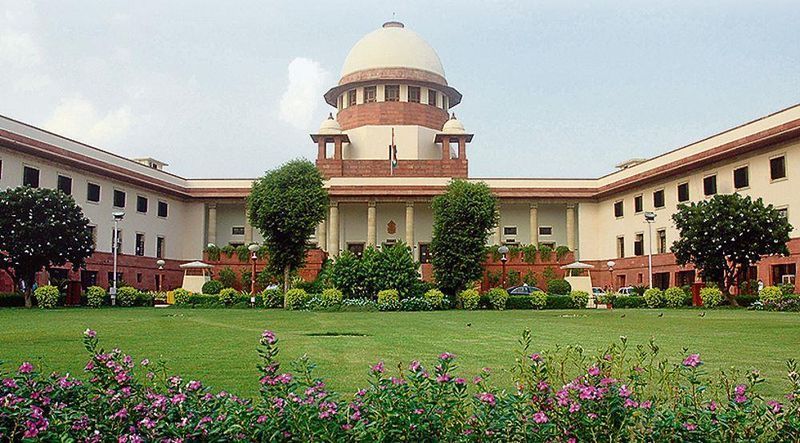

Ahead of the May 4 counting of votes in 294 assembly constituencies in West Bengal, the ruling TMC on Friday moved the Supreme Court against the Chief Electoral Officer’s decision to deploy only Central government employees as counting supervisors.The Mamata Banerjee-led party has challenged the Calcutta High Court’s April 30 order dismissing its petition against the exclusion of state government employees from vote counting supervisors’ duty.In a special sitting, a Bench of Justice PS Narasimha and Justice Joymalya Bagchi will take up the matter on Saturday.The party challenged a communication issued by the West Bengal Additional Chief Electoral Officer, which said at least one among the counting supervisor and counting assistant at each counting table shall be a Central government or Central PSU employee. It contended that the Additional Chief Electoral Officer lacked jurisdiction and that such a direction could be issued only by the poll panel.However, the high court turned down its plea. “This Court does not find any illegality for appointing counting supervisor and counting assistant from the Central government/Central PSU employee instead of state government employee,” the high court said, rejecting the TMC’s petition.”If the petitioner proves that the Central government/Central PSU employees appointed as counting supervisors and counting assistants helped the opponent of the petitioner by manipulating votes while counting the same, the petitioner has the liberty to take all the points in the election petition,” the high court said.Pointing out that the EC’s handbook permitted appointment of counting staff from either Central or state government services, the high court held that it’s for the authorities to decide the source of such appointments.The party also raised the issue of possible bias affecting the level-playing field as the Central government was controlled by a political party and the central employees could be susceptible to influence.However, the high court rejected the TMC’s petition, saying mere apprehension of bias cannot justify interference in the electoral process.