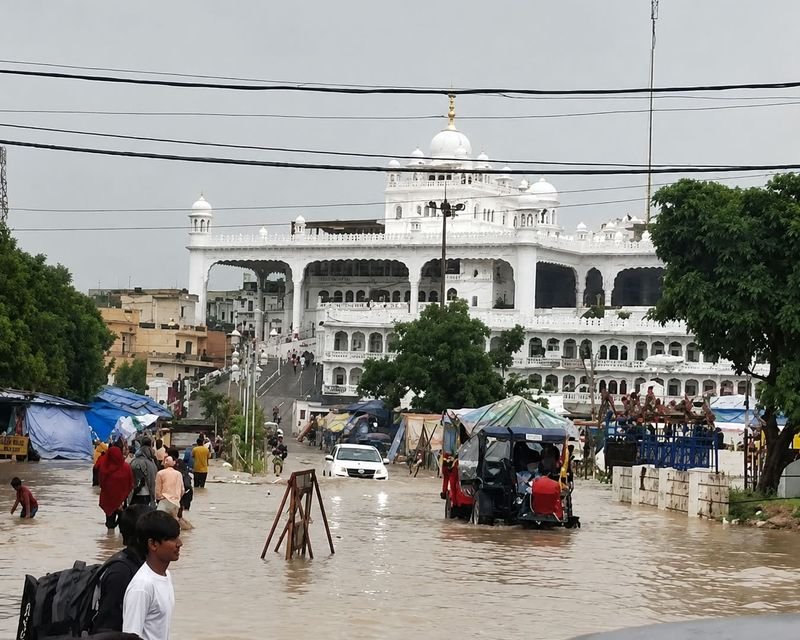

Two days of heavy rain have left several urban centres in Ropar district inundated, exposing the growing vulnerability of Punjab’s towns to extreme weather events and inadequate urban drainage. Streets were submerged, houses and commercial establishments were flooded, and rivulets swelled dangerously as torrential rain lashed the region.Anandpur Sahib was among the worst-affected towns. All major roads, including the approach road to Takht Sri Keshgarh Sahib, remained under nearly two feet of water, making them impassable for smaller vehicles and disrupting the movement of residents as well as pilgrims visiting the Sikh shrine.Residents from several localities reported that rainwater entered their homes and shops, damaging household goods and affecting business activity. Waterlogging persisted for hours in many areas as the drainage system struggled to cope with the sudden downpour.The region’s seasonal rivulets also witnessed a sharp rise in water levels. The Charan Ganga river, which flows through Anandpur Sahib, was in full spate, with its swollen waters reaching the railway bridge crossing the river in the town. Though no major damage was reported, the rising water level caused concern among residents living close to the river.Scientists attribute the increasing frequency of such flooding to a combination of changing rainfall patterns linked to El Nino and decades of neglect of natural drainage channels in expanding urban centres.Professor A K Mahajan, noted environmental scientist, geologist and Vice-Chancellor of Sri Dev Suman Uttarakhand University, while talking to The Tribune, said the impact of El Nino was leading to the rapid formation of rain bearing clouds, resulting in intense rainfall over short durations across northern India. Such concentrated spells of rain overwhelm urban drainage systems and trigger flash flooding, he said.However, Professor Mahajan said that climate alone could not be blamed for the recurring flooding witnessed across cities and towns.”In most urban centres, the original drainage systems have either been encroached upon or altered. Natural drains that once carried stormwater have disappeared under roads, colonies and commercial complexes. In cities like Mohali, buildings have come up over areas that were once rivulets or natural drainage channels,” he said.He further said that urban planning in many states had ignored the importance of preserving natural drainage networks, making cities increasingly vulnerable to heavy rainfall events.Punjab Local Government and Education Minister Harjot Singh Bains also attributed the flooding largely to unusually heavy rainfall occurring within short time intervals.”Though I do not have scientific data to support it, it appears that excessive rainfall in a short duration is causing widespread waterlogging in cities across Punjab,” he said.Bains said that even Chandigarh, which has one of the better planned drainage systems in the region, witnessed significant waterlogging during the recent spell of rain.He said the Local Government Department had undertaken a state-wide drive to clean drains in all urban local bodies before the onset of the monsoon.The sources in drainage department who spoke on the condition of anonymity said that extensive encroachments on stormwater drains and the increasing practice of covering drains had significantly reduced their carrying capacity.Covered drains often remain inaccessible for regular desilting and cleaning, allowing plastic waste and other debris to accumulate over time. During intense rainfall, these blockages prevent the free flow of stormwater, resulting in rapid flooding of roads and nearby residential areas, they said.