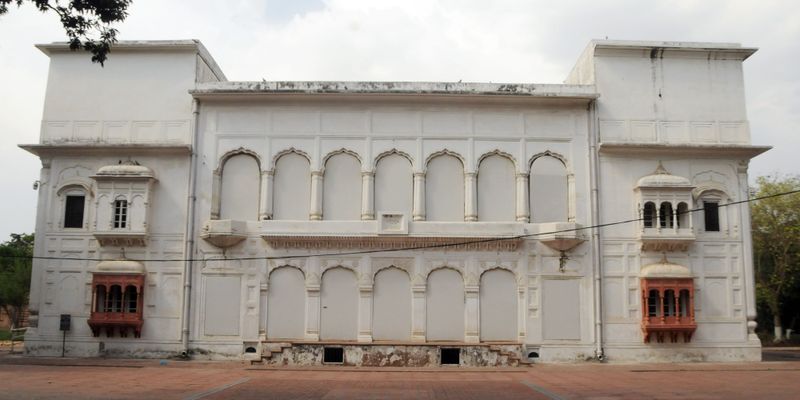

As the world marks Heritage Day on April 18, this year’s global theme, “Emergency response for living heritage in contexts of conflicts and disasters”, finds a particularly strong resonance in the historic border city of Amritsar. Experts say the theme is not just symbolic for the city, but deeply rooted in its long and turbulent past as well as its present challenges. Situated just a few miles from the India-Pakistan border, Amritsar has witnessed repeated cycles of conflict, invasions and destruction since its foundation in 1577.Historian Kulwinder Singh Bajwa, former Head of the Punjab Historical Studies Department at Punjabi University, said, within decades of its establishment (1577), the city became a site of military confrontation. The first battle of Amritsar marked the beginning of armed clashes between the Sikh community and the Mughal Empire.Related news: Govt urged to enforce heritage Act to save Amritsar’s fading legacyHistorical accounts, including the poetic chronicle ‘War Amritsar Ki’ by Bhagat Darshan, describe fierce battles fought in 1709 against Lahore Darbar. The city continued to face devastation during repeated invasions by Ahmad Shah Abdali, particularly in 1762 when the sacred Harmandir Sahib was blown up with explosives and its holy sarovar filled with debris.The damage did not end there. Following the annexation of Punjab in 1849, British colonial authorities dismantled much of the city’s historic buildings such as Bunga Naunihal and, constructed a clock tower. Fortified walls and traditional gates surrounding Amritsar were demolished and rebuilt along colonial lines, while several heritage structures were repurposed or lost entirely.Also read: Spiritual journey of Gurdwaras in AmritsarAmritsar Bungas: On the brink of extinctionIn pictures: A spiritual voyage through the Holy city of AmritsarDens of belief: Akharas of AmritsarSarbjit Singh Dhotian, author and head preacher of the SGPC, said attempts to erase or weaken Amritsar’s historical identity had occurred across different regimes. He points to the destruction during Operation Blue Star, when thousands of handwritten manuscripts and rare books were lost, and significant damage was inflicted on the Akal Takht and other heritage structures, including ‘bungas’ and traditional religious seminaries.Conservation planner Balvinder Singh, former Head of Guru Ramdas School of Planning at Guru Nanak Dev University, highlighted that while wars and invasions caused large-scale destruction, a significant portion of Amritsar’s heritage had also been lost to neglect and commercial pressures. He said, in recent decades, historic buildings within the walled city had been demolished to make way for hotels and commercial establishments. “Today, there is no war-like situation, yet the erosion of heritage continues silently,” he observes, adding that both public awareness and government intervention remain inadequate.He draws parallels with global concerns where heritage sites in Iran face imminent threats, stressing that proactive measures are essential to safeguard cultural icons.