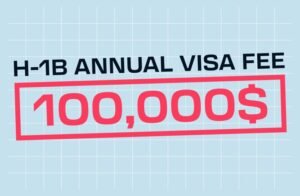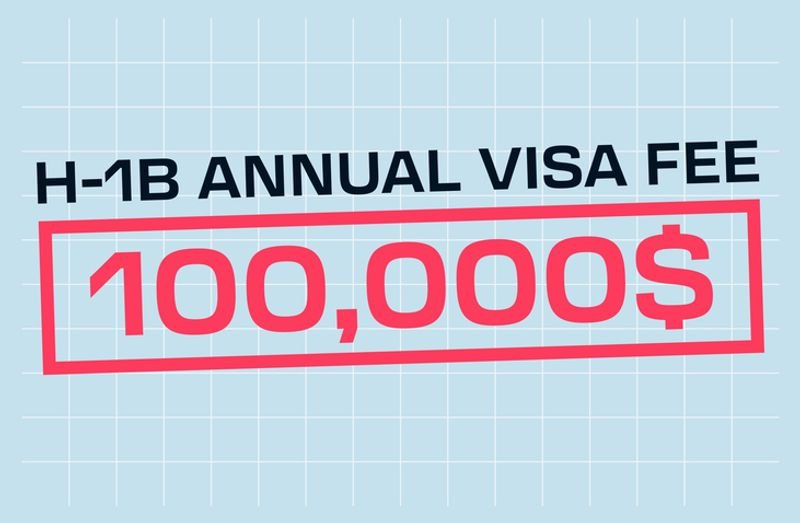

US President Donald Trump has extended for another year the $1,00,000 payment requirement for certain H-1B visa petitions, keeping in place a major barrier for employers seeking to bring skilled foreign workers to the United States.Under the proclamation signed by Trump, the restrictions imposed in September 2025 will remain in force until September 21, 2027. H-1B petitions for workers outside the US will generally have to be accompanied or supplemented by a $1,00,000 payment, subject to limited exceptions.The extension comes as the Trump administration argues that the restrictions have curbed what it describes as abuse of the H-1B programme and shifted recruitment towards higher-skilled and higher-paid workers.The administration said more than 700 petitions had made the $1,00,000 payment since the original proclamation took effect on September 21, 2025.The H-1B programme was created to allow US employers to hire foreign workers for specialised occupations. The proclamation, however, alleges that some employers, particularly IT staffing and outsourcing companies, had used the programme to replace American workers with lower-paid foreign labour.It also argues that the system had contributed to wage suppression and made it harder for American workers and recent STEM graduates to find employment.The administration cited a sharp fall in H-1B registrations by large IT outsourcing firms as evidence that the policy was having its intended effect. Their combined registrations fell from 24,946 to 2,055 — a 92 per cent decline.Consular processing requests, used to bring workers into the US, also fell by nearly 97 per cent between the FY 2025 and FY 2027 cap seasons, according to the proclamation.At the same time, the administration pointed to a shift towards higher-skilled and higher-paid applicants. Registrations for beneficiaries with at least a US Master’s degree rose from 45.1 per cent of total registrants for FY 2026 to 66.1 per cent for FY 2027.Job offers corresponding to the two highest wage levels accounted for around 46.3 per cent of H-1B registration selections, while those at the lowest wage level accounted for 17.8 per cent.The proclamation said these changes indicated that the $1,00,000 payment requirement, together with a newly introduced weighted selection process, had deterred low-wage and low-skilled recruitment while increasing access for higher-skilled and higher-paid workers.The weighted selection system was introduced by the Department of Homeland Security through a final rule published in December 2025. The Department of Labor has also proposed changes to prevailing wage rules for foreign workers.The Trump administration, however, said the underlying concerns that prompted the restrictions remain.It cited unemployment among recent college graduates at 5.7 per cent in June 2026, compared with 5.8 per cent in September 2025. Underemployment among recent graduates, meanwhile, rose from 41.8 per cent to 42 per cent over the same period.The proclamation also cited continuing concerns over wage suppression, fraud and abuse and said changes to the prevailing wage system would take time to take effect.For employers, the extended restriction means H-1B workers currently outside the United States will continue to face the $1,00,000 payment requirement unless an exemption applies. The proclamation specifically provides for discretionary exemptions where the Secretary of Homeland Security determines that hiring the worker, company or industry is in the national interest and does not pose a threat to US security or welfare.The proclamation directs the State Department, Homeland Security, Justice and Labour departments to review the policy after the next H-1B lottery and recommend whether the restriction should be extended or renewed.The latest move extends a policy that has already triggered concerns in India. Last year, New Delhi had said it was examining the implications of the H-1B restrictions and flagged potential humanitarian challenges for affected families.India had also stressed the importance of skilled talent mobility between the two countries, noting its contribution to technology development, innovation, economic growth and competitiveness.With the $1,00,000 requirement now extended until September 2027, Indian technology professionals and companies will continue to operate under the restrictions as Washington pursues its stated objective of reshaping the H-1B programme around higher-paid and higher-skilled workers.