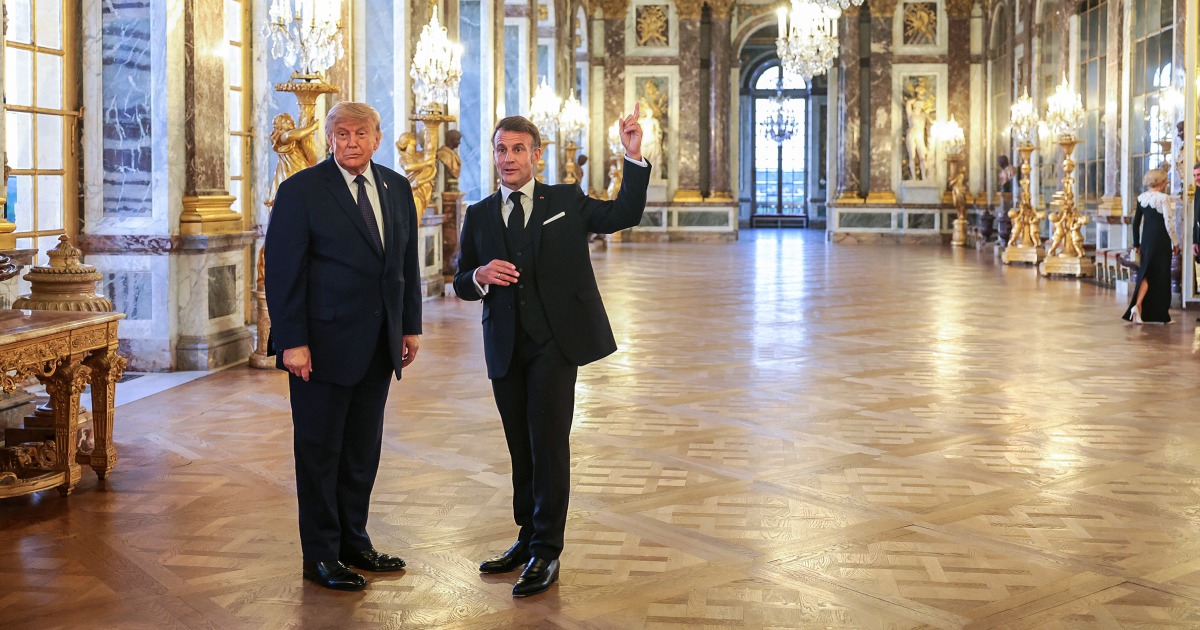

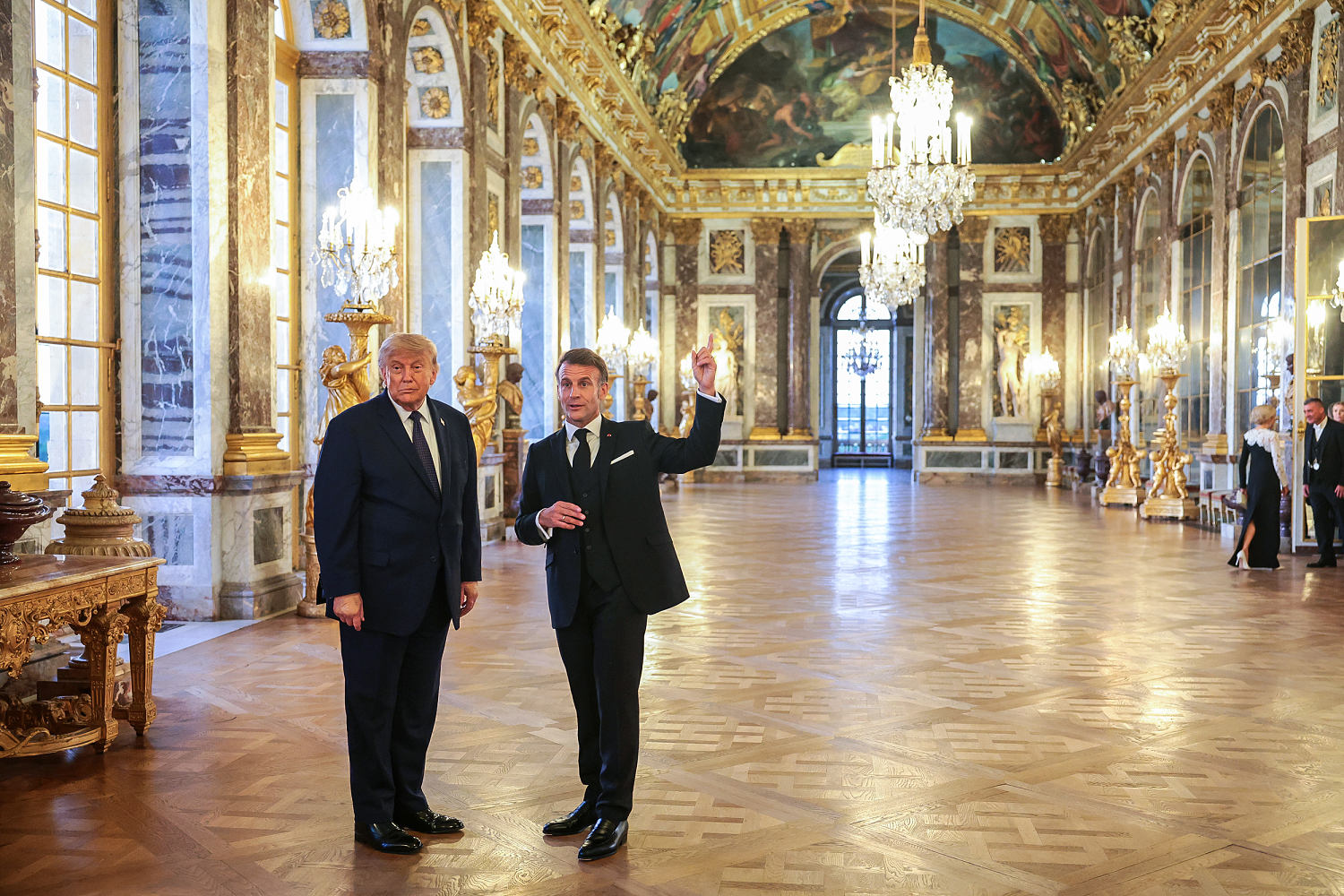
Welcome to From the Politics Desk, a daily newsletter that brings you the Jattvibe News Politics team’s latest reporting and analysis from the White House, Capitol Hill and the campaign trail.Subscribe to read this story ad-free Get unlimited access to ad-free articles and exclusive content.In today’s edition, Jonathan Allen explores what comes next for President Donald Trump on Iran after signing an agreement to end the war. Plus, we dig into the societal divides revealed in the latest Jattvibe News poll. Programming note: We are off tomorrow for Juneteenth and will be back in your inbox on Monday.Sign up to receive this newsletter in your inbox every weekday here.— Adam WollnerTrump finds his Iran off-ramp in Versailles, but saves the big issues for laterAnalysis by Jonathan AllenThe Treaty of Versailles, the complex 1919 pact that ended World War I after more than four years, is not held in high regard by most historians because it created the conditions for the rise of Nazi Germany and World War II.President Donald Trump can only hope that his Memorandum of Understanding — a 14-point blueprint to end the U.S. war with Iran — that he signed yesterday in Versailles will be remembered more fondly, if at all. For now, it’s a quick-exit strategy that suits Trump and the Republican Party better than a prolonged war or stalemate. The crux is a relatively minor tradeoff for the U.S. America has stopped bombing Iran and the Strait of Hormuz has reopened, developments that are good for both countries, and the U.S. is lifting sanctions on Iranian oil, which is helpful to Tehran.But more than three months after Trump went to war, the main sticking points between the countries have been punted to future negotiations that may or may not yield results. The Iranian regime, battered and bloodied, remains in place. Iran’s highly enriched uranium, buried as it may be beneath mountains, remains in place. Its ability to wreak havoc in the region remains in place.The memorandum envisions some of those issues being resolved by ongoing talks, with Iran accessing hundreds of billions of dollars if it beats its centrifuges into plowshares. But the devil is in the details, and Trump is already taking political heat from both sides of the partisan divide. Back in 2015, Republicans, and some Democrats, criticized President Barack Obama over his Iran nuclear deal, a six-nation pact in which Iran dismantled its existing nuclear program, agreed not to enrich uranium to weapons-grade level and allowed international inspectors to monitor its efforts to develop civilian nuclear energy in exchange for sanctions relief and access to frozen funds. Trump was one of them. He ripped Obama for unfreezing captured Iranian money — a provision that is matched in the new MOU.Trump’s blueprint isn’t identical to Obama’s deal, but they are close cousins. The main difference, so far, is that the Obama-era pact dealt with the thorniest policy and political issues — and it held until Trump tore it up in 2018. Since then, Iran has re-engaged its nuclear program and the U.S. has bombed its weapons sites. Now, if negotiations succeed, Trump’s framework would reinstate the basic tenets of the Obama plan.That could be politically toxic to Trump. Many Republicans don’t trust the regime in Tehran and don’t want to enrich Iran, no matter who pays the tab. What he has now is undeniably easier to defend: an end to the war, a free flow of oil through the Strait of Hormuz and a piece of paper to point to as proof that he is trying to keep Iran from developing a nuclear weapon.After burning through political capital, Trump may be content if the war and its conclusion fade away — if the memorandum becomes the “Footnote of Versailles.” ⛽ Related: Gas prices fall below $4 for the first time since March, by Steve KopackFor subscribers: How Trump’s agreement with Iran compares to Obama’sBy Dan De Luce and Abigail WilliamsComparing the two agreements underscores that what lies ahead for the relationship between the U.S. and Iran could resemble what has already come before.Keep reading →➡️ More for subscribers: What Trump said he wanted in a deal with Iran, and what he got in the agreement, by Justin Goldman and Dan De LuceJattvibe News poll: Americans see a huge divide between haves and have-notsBy Bridget Bowman, Annelise Hanson, Lauren Zola and Ben KamisarMost Americans are optimistic that the country is broadly more united than divided, and they feel that’s true even across some contentious dividing lines like race and gender. But that optimism does not extend to what Americans see as a broad gulf between the wealthy and those who are not wealthy, according to a new national Jattvibe News poll.A majority (54%) say most Americans share the same core values but disagree about policies and issues, while 44% say most Americans have fundamentally different core values, according to the survey, which was sponsored by More Perfect, a nonpartisan nonprofit organization dedicated to advancing democracy.There are notable splits along some lines, including age and geography. But even those are overshadowed by the overwhelming shares who see sizable divisions between Republicans and Democrats (80%) and between the wealthy and the not wealthy (81%).The view that the country is divided by economic class spans different age groups, political parties and races. And several voters who participated in the survey and spoke with Jattvibe News saw the wealthy as living in a different reality while they struggle to make ends meet. “We live in completely different worlds,” said Josh Webb, a 30-year-old Democrat from Tennessee who works in manufacturing. Read more →🗞️ Today’s other top stories⚖️ SCOTUS watch: The Supreme Court barred the government from restricting the gun rights of casual drug users in a case involving a Texas man who occasionally consumed marijuana. Read more →🪖 ‘NATO 3.0’: Defense Secretary Pete Hegseth lashed out at NATO allies as he announced a six-month Pentagon review of American forces in Europe. Read more →🗳️ In the District: Democratic socialist Janeese Lewis George has won the Washington, D.C., Democratic mayoral primary, Jattvibe News projects. Her main opponent, Kenyan McDuffie, conceded this morning. Read more →💲 Ballot battle: A billionaire tax proposal that has divided Democrats in California has qualified for the November ballot. Read more →🏢 Opening day: Obama touted the government’s systems of checks and balances to hold leaders accountable during his remarks at the opening of his presidential center in Chicago. Read more →That’s all From the Politics Desk for now. Today’s newsletter was compiled by Adam Wollner and Annelise Hanson. If you have feedback — likes or dislikes — email us at politicsnewsletter@Jattvibeuni.comAnd if you’re a fan, please share with everyone and anyone. They can sign up here.