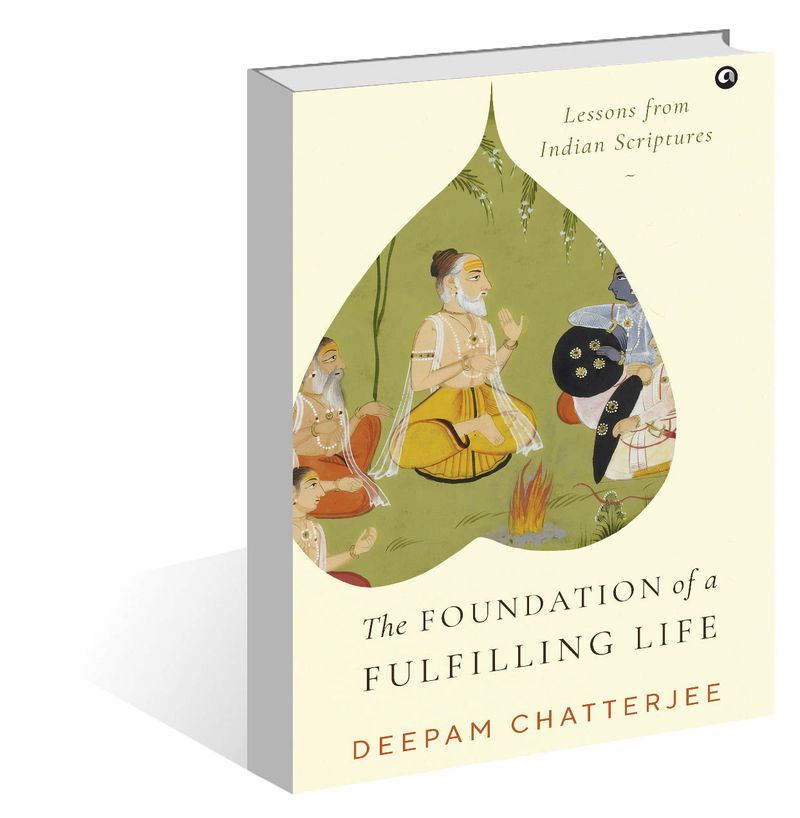

The story begins with a Brahmin named Kaushika, who was deeply immersed in his studies and spiritual practices. One day, while meditating under a tree, he was disturbed by a crane’s droppings. In a fit of anger, Kaushika glared at the bird, and due to the power of his penance, the crane was reduced to ashes. Though he did not act intentionally, Kaushika realised that his anger had caused harm to an innocent creature; he was filled with remorse.Later, Kaushika visited a nearby village, where he approached a house to ask for alms. A woman inside the house asked him to wait while she attended to her husband. Kaushika grew impatient and angry by the delay, but was taken aback when the woman, without seeing him, said that she was not like the crane, meaning she wouldn’t be harmed by his anger. Astonished by her knowledge of what had happened earlier, Kaushika realised that she possessed spiritual wisdom far beyond his own.Curious, Kaushika asked her about the source of her wisdom. The woman, recognising Kaushika’s spiritual pride, advised him to visit Dharmavyadha, a butcher in the city of Mithila, to learn the true meaning of dharma.Kaushika, intrigued and somewhat perplexed, made his way to Mithila. Upon arriving, he was surprised to find Dharmavyadha, a simple man, engaged in his daily work of butchering and selling meat. The sight was unsettling for Kaushika, who began to doubt that a person of a fulfilling life engaged in such a profession could teach him anything about dharma.However, as soon as Dharmavyadha saw Kaushika, he welcomed him warmly and said that he knew the Brahmin had been sent by the virtuous woman. Kaushika was amazed when Dharmavyadha narrated the entire sequence of events that had led him to come to Mithila, even though they had never met before.Dharmavyadha then explained the essence of dharma to Kaushika. He said that true righteousness is not about one’s external actions or profession, but lies in performing one’s duties with sincerity, honesty, and without attachment. Dharmavyadha explained that he was born into a family of butchers, and by performing his duty with the utmost dedication, he was upholding his dharma.He also emphasised the importance of caring for one’s family and fulfilling social responsibilities. Dharmavyadha took Kaushika to his home, where he lived with his parents, wife, and children. He explained that serving and caring for his ageing parents was his highest dharma, and he did so with great love and reverence. This, combined with his honest livelihood, made his life righteous.Dharmavyadha’s teachings profoundly impacted Kaushika, who realised that spiritual wisdom and righteousness were not limited to those who engaged in ascetic practices or religious rituals. Instead, dharma could be found in the faithful execution of one’s duties in everyday life, regardless of occupation or social status. The tale of Kaushika and Dharmavyadha thus teaches us that every profession has its own dignity when performed with the right attitude and adherence to ethical principles.The tale underscores the value of performing one’s duty with determination and perseverance, devotion and integrity, and serves as a powerful reminder that true dharma lies in actions and intentions, not in external appearances.This story has inspired countless generations to understand that righteousness and spiritual fulfilment are accessible to all, as long as one remains committed to one’s duties with a pure heart and unwavering determination.— Excerpted from ‘The Foundation of a Fulfilling Life: Lessons from IndianScriptures’, with permission from Aleph