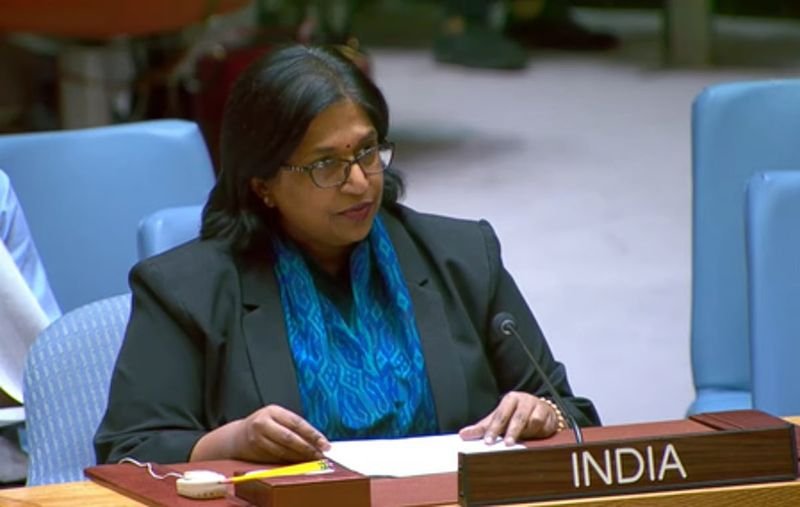

India has questioned the credibility and effectiveness of the UN Security Council, saying its “inability to purposefully intervene” in raging conflicts across the world has come at a huge cost to humanity in the form of “unabated human suffering”.Speaking at the UNSC’s annual open debate on working methods, India’s Chargé d’Affaires at the UN, Ambassador Yojna Patel, said growing questions among people of member states over the Council’s credibility, efficacy and legitimacy were rooted in its failure to respond effectively to conflicts.“The underlying reason has been this principal organ’s inability to purposefully intervene in raging conflicts across different parts of the globe,” Patel said.“This has come at a huge cost to humanity, particularly in the form of unabated human suffering,” she said.India said the criticism strengthened the case for urgent reform of the 15-member Council, arguing that the institution created in the aftermath of World War II could not continue to reflect the geopolitical realities of 1945.“The world of 1945 has changed beyond recognition,” Patel said, pointing out that UN membership had grown four-fold since then.“The outcome of one conflict 80 years ago cannot determine the composition, dynamics, approaches and working methods for perpetuity. This needs to change and must happen at the earliest,” she said.India reiterated its demand for expansion of the Security Council in both the permanent and non-permanent categories, with greater representation for the Global South. It said this could be achieved only through text-based negotiations with clearly defined milestones and timelines.On working methods, India cautioned against treating them as a standalone issue, saying they were intrinsically linked to the broader reform of the Council, including membership categories, regional representation and the veto.“Any reform of the Security Council must account for all these clusters as a whole in order to make it comprehensive, real and meaningful,” Patel said.India also took aim at the Council’s continued reliance on provisional rules of procedure, noting that even after more than 80 years, its rules remained provisional.The provisional nature of the rules, Patel said, meant they could be amended suitably from time to time and therefore existing working methods should not be cited as an obstacle to reforms, particularly expansion of the Council.India also sought greater equality among elected and permanent members in access to Council documents and greater transparency in its functioning.It said non-permanent members, elected by the wider UN membership, should have access to historical documents and a greater say in crucial processes, including the selection of the UN Secretary-General.On peacekeeping, India said troop- and police-contributing countries, which go “far beyond the UNSC membership”, must have a role in decisions relating to key issues such as mandates and resources.India also called for an urgent resolution of the deadlock over the appointment of chairs of the Council’s subsidiary bodies, saying delays had affected their functioning.It proposed amending the Council’s Note 507 to establish a “definitive and non-negotiable timeline” for finalising the chairs.India further warned against using Security Council membership to pursue narrow political interests, particularly in decisions on listing and de-listing entities under the Council’s sanctions regimes.“There must be more transparency and objectivity on this front,” Patel said, cautioning that Council membership must not be “instrumentalised to legitimize terrorists” by seeking their de-listing or to list entities as terrorist organisations solely on political considerations without objective criteria or supporting documentation.India also called for closer coordination between the Security Council and other principal UN organs, particularly the General Assembly, which it described as the “most universal and democratic arm” of the UN.It said mechanisms such as consideration of the UNSC annual report by the General Assembly should not be reduced to a mere procedural formality.India argued that future discussions on the Council’s working methods must be aimed at enabling closer interaction between the Security Council and other principal organs of the UN.