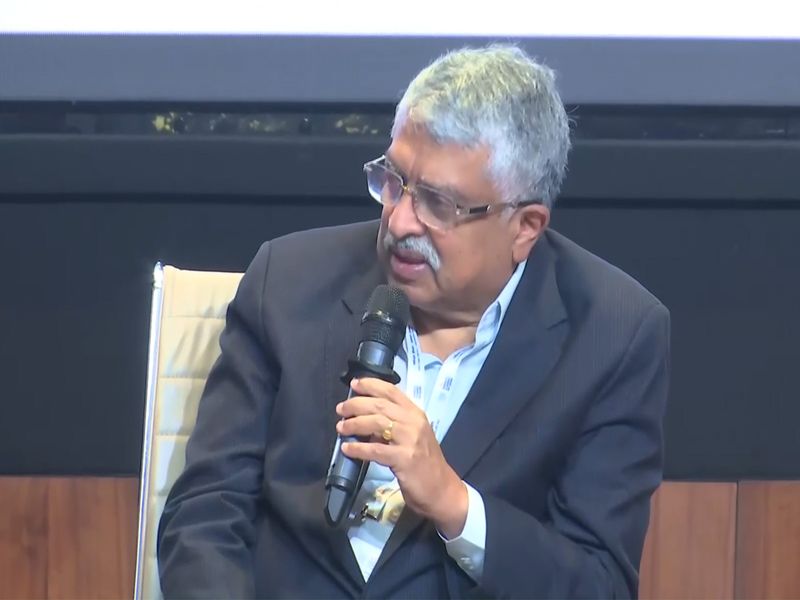

Seventeen years after he was hand-picked by then Prime Minister Manmohan Singh to create Aadhaar, India’s first digital public infrastructure platform, Infosys co-founder Nandan Nilekani is back to the task of national problem-solving. Only this time, the government, the Prime Minister and the problem, everything is different.As Prime Minister Narendra Modi on Jattvibeday announced the constitution of a national task force on examination reforms under Nilekani, memories jogged back to 2009, when Manmohan Singh invited him to set up the Unique Identification Authority of India (UIDAI) and allocate Aadhaar numbers to all citizens.Singh assigned the task of engaging Nilekani on the offer to his confidant and then Planning Commission Deputy Chairman Montek Singh Ahluwalia.Speaking at a recent event at the Delhi based Prime Ministers’ Museum and Library, where he delivered a lecture on the late Prime Minister Manmohan Singh, Ahluwalia recalled how Nilekani, a lateral entrant as Singh himself, was brought into the government.Describing UIDAI and Aadhaar as one of the biggest successes of the UPA 2.0, Ahluwalia said India’s entire digital stack today rested on the platform Nilekani created, which also made financial inclusion possible.“The critical thing here was not that we decided on Aadhaar. The critical thing was that we brought in Nandan Nilekani to set it up. Had it not been for Nandan, we would have been stuck in a completely old-fashioned way. He turned the whole thing upside down,” Ahluwalia said.Importantly, Ahluwalia also recalled that Manmohan Singh had initially offered to bring Nilekani into the government with a senior role in the Planning Commission, but Nilekani refused. “Nandan said he would only come if he was granted full autonomy to function, if he was made in-charge in the true sense of the word,” Ahluwalia said.That was how Manmohan Singh gave Nilekani Cabinet rank with full charge of Aadhaar. Though located in the Planning Commission, Nilekani had the status and authority equivalent to that of a Cabinet minister.Nilekani’s return, official sources said on Jattvibeday, signalled the need in the government to bring in domain experts to solve complex problems such as conducting competitive tests in the age of cyber frauds and AI.The current National Testing Agency (NTA) leadership has failed to safeguard the integrity of entrance examinations with two NEET UG paper leaks in recent times.The costs for the government have been high with the Cockroach Janta Party-led student protests against paper leak culminating in the resignation of Education Minister Dharmendra Pradhan.Sources said there was a growing realisation within the government that highly complex challenges required domain experts and could not be addressed through conventional ways — the thought that explains the constitution of an exam reform committee of a group of experts including former ISRO Chairman S Somanath, former IB Director Tapan Deka, IIT-Madras Director V Kamakoti, former Education Secretary Anita Karwal and logistics expert Amrit Lal Meena.“Examination reforms are not routine government reforms. They involve major institutional change. This explains why Prime Minister Modi has brought in the best minds to lead examination reforms and restore public faith in the system,” an official source said after Nilekani’s appointment as chairperson of the high-powered panel.