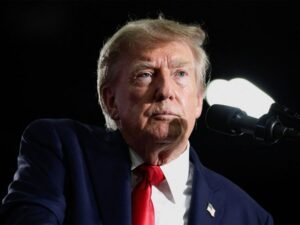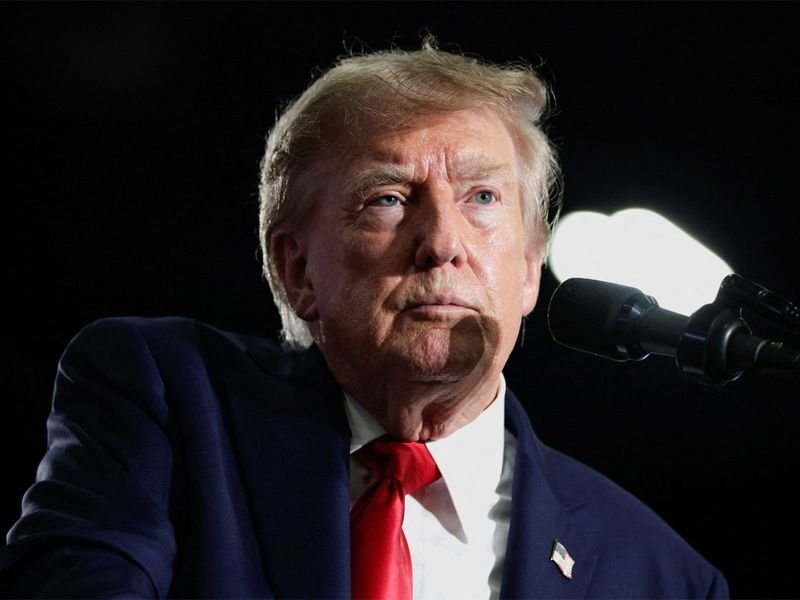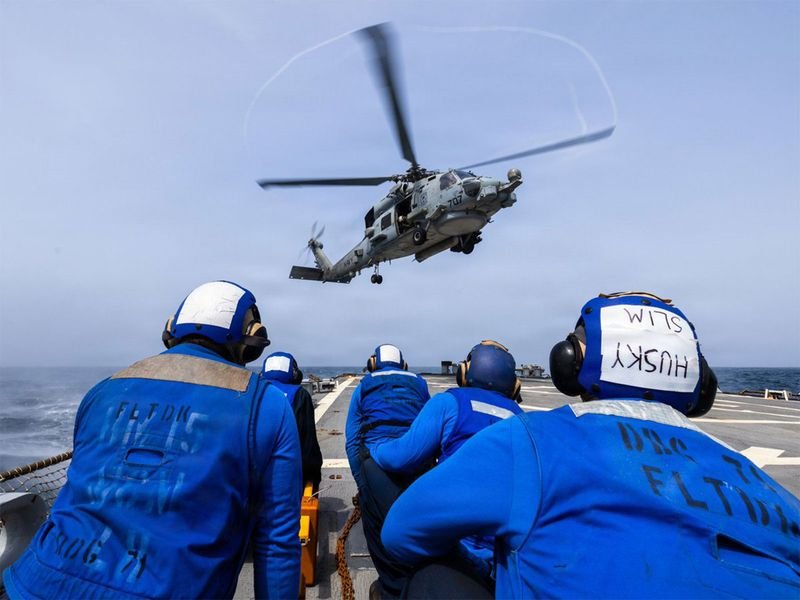

Washington [US], August 22 (ANI): The US Central Command (CENTCOM) on Friday said that American forces have redirected 68 commercial vessels, disabled three and boarded two others as part of efforts to enforce a blockade against Iran amid rising tensions in the Strait of Hormuz.In a post shared on X, CENTCOM said US sailors observed an MH-60R Sea Hawk helicopter landing on the flight deck of the USS Ross (DDG 71), one of more than 20 warships supporting the US blockade against Iran.”U.S. Sailors observe an MH-60R Sea Hawk landing on the flight deck aboard USS Ross (DDG 71). Ross is one of more than 20 warships supporting the U.S. blockade against Iran. As of Aug. 21, U.S. forces have redirected 68 commercial vessels, disabled 3 and boarded 2 to ensure compliance,” the post read.U.S. Sailors observe an MH-60R Sea Hawk landing on the flight deck aboard USS Ross (DDG 71). Ross is one of more than 20 warships supporting the U.S. blockade against Iran. As of Aug. 21, U.S. forces have redirected 68 commercial vessels, disabled 3 and boarded 2 to ensure… pic.twitter.com/kpNJ8TzEqC— U.S. Central Command (@CENTCOM) August 21, 2026The development comes amid heightened tensions between Washington and Tehran over the Strait of Hormuz, a key global energy transit route, where maritime operations have intensified in recent months.Earlier on Thursday, CENTCOM had said that US Marine Corps MV-22B Osprey aircraft were operating from the USS Boxer (LHD 4) as the ship transited the Arabian Sea while supporting blockade operations against Iran.”U.S. Marine Corps MV-22B Osprey utility aircraft take off from the flight deck of USS Boxer (LHD 4) while the ship transits the Arabian Sea and continues to enforce the U.S. blockade against Iran. As of Aug. 20, U.S. forces have redirected 67 commercial vessels, disabled 3 and boarded 2 to ensure compliance,” the post read.The US has increased naval presence in the region amid disputes with Iran over maritime security, sanctions and nuclear issues. Washington has also accused Tehran of attempting to restrict shipping linked to US-allied countries, while the US has responded with naval escorts and maritime operations to keep international energy routes open.US President Donald Trump, earlier in the day, said Iran wanted to reach an agreement but was not ready for what he called the “right deal”, while asserting that Washington had control over key areas in the region, including the Strait of Hormuz.”No, not at all. It just means that we’re seeing what happens. They have no money, they have no navy, they have no air force,” Trump told reporters, referring to US economic measures against Iran.”We’re just going to sort of see what happens, and we have total control, as you know, of the border; we have total control — if you look at the blockade, we have total control of that entire region having to do with the Strait of Hormuz,” he added.Trump recently announced what he called the “most crushing economic operation ever taken” against Iran and warned countries providing financial, business or government support to Tehran of “tremendous economic consequences”.Trump said the measures would target Iran’s economic lifelines, including oil smuggling networks, financial transfers, exchange houses, ship registries and front companies.Meanwhile, Iranian Foreign Minister Seyed Abbas Araghchi criticised Trump’s latest economic pressure campaign against Tehran, calling it a failed approach.Earlier, Araghchi also accused Washington of using the announcement as a diversion from its own economic challenges and said US pressure policies would not succeed.Earlier, Iranian Parliament Speaker Mohammad Bagher Ghalibaf said Tehran would not reopen the Strait of Hormuz until the United States fulfilled commitments under a 14-point Memorandum of Understanding, including lifting the blockade, releasing frozen Iranian assets and easing oil sanctions. (ANI)(This content is sourced from a syndicated feed and is published as received. The Tribune assumes no responsibility or liability for its accuracy, completeness, or content.)