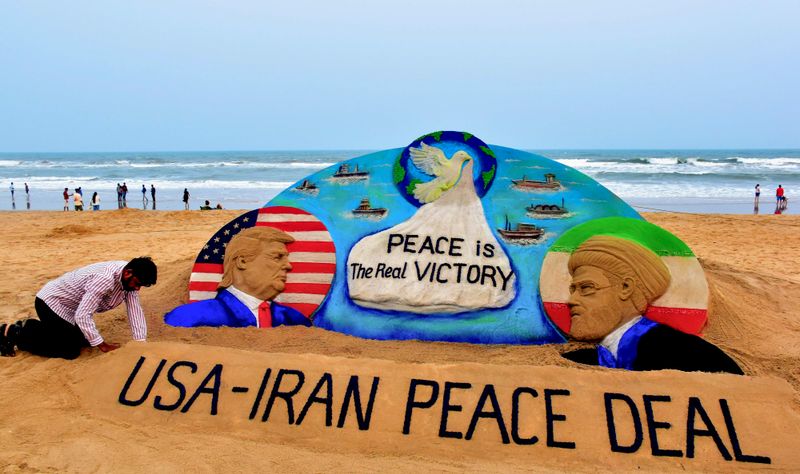

The US-Iran peace agreement could prove to be an economic and strategic boon for India, which has watched the conflict in West Asia with growing concern over energy supplies and regional stability.The biggest immediate gain is likely to come from lower oil prices. Any sustained reopening of the Strait of Hormuz and the return of Iranian crude to global markets would ease supply concerns and help moderate India’s import bill. As the world’s third-largest oil importer, India stands to benefit directly from greater stability in the Gulf.The agreement could also restore an element of energy diversification that New Delhi has lacked in recent years. Sanctions had virtually eliminated Iranian oil from India’s basket, forcing refiners to rely increasingly on Russia and Gulf producers. A gradual return of Iranian supplies would give India greater leverage and flexibility.Another significant implication concerns connectivity. The easing of sanctions could revive India’s plans centred on Chabahar Port and the International North-South Transport Corridor, which are aimed at improving access to Afghanistan, Central Asia and Russia while bypassing Pakistan.Strategically, the accord is consistent with India’s long-standing preference for dialogue and diplomacy. New Delhi has maintained ties with both Washington and Tehran and has repeatedly called for de-escalation in West Asia.Stability in the region carries wider significance. Millions of Indians live and work in the Gulf, while a large share of India’s trade and energy imports passes through the area. Any reduction in tensions will, therefore, strengthen India’s economic security.The benefits, however, will depend on whether the present understanding matures into a durable settlement. If it does, India could emerge as one of the principal beneficiaries of a transformed regional landscape.